
Articles | Volume 14, issue 5
https://doi.org/10.5194/esurf-14-837-2026
© Author(s) 2026. This work is distributed under
the Creative Commons Attribution 4.0 License.
the Creative Commons Attribution 4.0 License.
https://doi.org/10.5194/esurf-14-837-2026
© Author(s) 2026. This work is distributed under
the Creative Commons Attribution 4.0 License.
the Creative Commons Attribution 4.0 License.
Research article
| 
27 Oct 2026
Research article |
| 27 Oct 2026
| 27 Oct 2026
Influence of groundwater seasonality on suspended sediment dynamics, in a 20 km2 Mediterranean mountainous catchment
Ophélie Fischer
CORRESPONDING AUTHOR

Univ. Grenoble Alpes, CNRS, INRAE, IRD, Grenoble INP (Institute of Engineering and Management Univ. Grenoble Alpes), IGE, 38000 Grenoble, France
Cédric Legout
Univ. Grenoble Alpes, CNRS, INRAE, IRD, Grenoble INP (Institute of Engineering and Management Univ. Grenoble Alpes), IGE, 38000 Grenoble, France
Caroline Le Bouteiller
Univ. Grenoble Alpes, CNRS, INRAE, IRD, Grenoble INP (Institute of Engineering and Management Univ. Grenoble Alpes), IGE, 38000 Grenoble, France
Guillaume Nord
Univ. Grenoble Alpes, CNRS, INRAE, IRD, Grenoble INP (Institute of Engineering and Management Univ. Grenoble Alpes), IGE, 38000 Grenoble, France
Guilhem Freche
Univ. Grenoble Alpes, CNRS, INRAE, IRD, Grenoble INP (Institute of Engineering and Management Univ. Grenoble Alpes), IGE, 38000 Grenoble, France
Sophie Darfeuil
Univ. Grenoble Alpes, IRD, CNRS, INRAE, Grenoble INP (Institute of Engineering and Management Univ. Grenoble Alpes), IGE, 38000 Grenoble, France
Laure Jullien
Univ. Grenoble Alpes, CNRS, INRAE, IRD, Grenoble INP (Institute of Engineering and Management Univ. Grenoble Alpes), IGE, 38000 Grenoble, France
Zahra Rastegar
Univ. Grenoble Alpes, CNRS, INRAE, IRD, Grenoble INP (Institute of Engineering and Management Univ. Grenoble Alpes), IGE, 38000 Grenoble, France
Related authors
No articles found.
Anouk Marsal, Fabrizia Cavalli, Elise Di Antonio, Stephan Houdier, Pamela Dominutti, Sophie Darfeuil, Jean-Luc Jaffrezo, Stéphane Sauvage, Jean-Philippe Putaud, Ian S. Mudway, Athanasios Nenes, Aikaterini Bougiatioti, Nikolaos Mihalopoulos, André S. H. Prévôt, Despina Paraskevopoulou, Ana Cvitešić Kušan, Sanja Frka, Ana Kroflič, Ajda Delić, Blanka Tariba Lovaković, Andreja Jurič, Carolina Molina, Daniele Contini, Maria Rachele Guascito, Mathilde Lintz, Davy Rousset, Hartmut Herrmann, Eduardo J. d. S. Souza, Frédéric Ledoux, Marc Fadel, Haoran Yu, Jianzhen Yu, Maria Teresa Baeza Romero, Maria Cerrato-Alvarez, Marloes F. van Os, Mathilde N. Delaval, Yamaris Mercedes Mena Cabrera, Nicole Trieu, Greg Evans, Nuria Galindo, Noelia Gómez-Sanchez, Hana Hlaváčková, Pavel Mikuška, Shrutika Kadam, Pourya Shahpoury, Purificación López-Mahía, Jorge Moreda-Piñeiro, Rico K. Y. Cheung, Markus Kalberer, Micol Introna, Sarah S. Steimer, Zhuoying Lin, Suzanne E. Paulson, Saima Iram, Svetlana Stevanovic, Thomas Audoux, Laurent Y. Alleman, Jianing Liu, Ting Fang, P. S. Ganesh Subramanian, Vishal Verma, Tuukka Petäjä, Xavier Querol, Gerard Hoek, Roy M. Harrison, and Gaëlle Uzu
EGUsphere, https://doi.org/10.5194/egusphere-2026-3918, https://doi.org/10.5194/egusphere-2026-3918, 2026
Short summary
Short summary
This collaborative work from 26 worldwide laboratories assessed the measurement of atmospheric particles' oxidative potential (OP) using a common protocol. OP is a metric designed to inform on particles’ harmful effects. Over half of the laboratories obtained satisfactory results, and some critical steps such as liquid handling and OP mathematical determination were identified. Recommendations for future measurements and interlaboratory comparisons are also provided.
Julian Weng, Yufang Hao, Benjamin T. Brem, Tianqu Cui, Peeyush Khare, Lubna Dada, Kaspar R. Daellenbach, Sophie Darfeuil, Gaëlle Uzu, Jean-Luc Jaffrezo, Martin Steinbacher, Stefan Reimann, Thaleia Gkraikou, Konstantina Oikonomou, Jean Sciare, Martine Collaud Coen, Claudia Mohr, Andre S. H. Prévôt, Martin Gysel-Beer, Imad El Haddad, and Patrik Winiger
EGUsphere, https://doi.org/10.5194/egusphere-2026-3660, https://doi.org/10.5194/egusphere-2026-3660, 2026
Short summary
Short summary
Long-term observations at the Jungfraujoch High Altitude Research Station show that, alongside air mass transport, sustained oxidative processing shaped by atmospheric water vapor plays a central role in driving aerosol loading and composition. Combining detailed aerosol chemical characterization with process-level insights, we provide important observational benchmarks for improving atmospheric model performance in the remote free troposphere, where uncertainties remain particularly high.
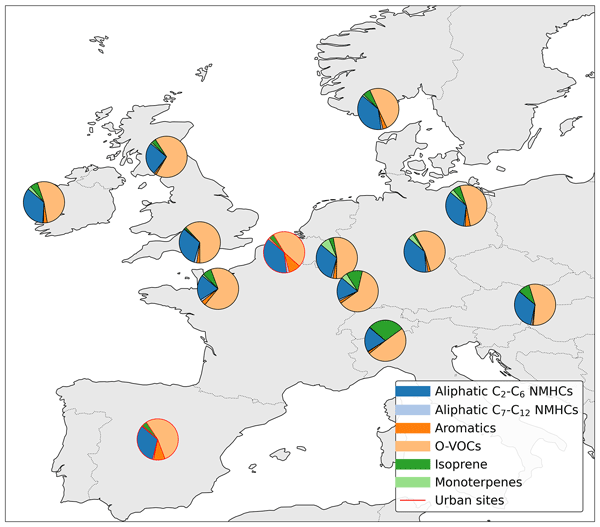
Wenche Aas, Thérèse Salameh, Robert Wegener, Heidi Hellén, Jean-Luc Jaffrezo, Pontus Roldin, Elisabeth Alonso-Blanco, Andres Alastuey, Crist Amelynck, Jgor Arduini, Benjamin Bergmans, Marie Bertrand, Agnes Borbon, Efstratios Bourtsoukidis, Laetitia Bouvier, David Butterfield, Iris Buxbaum, Darius Ceburnis, Anja Claude, Augustin Colette, Aurélie Colomb, Sophie Darfeuil, James Dernie, Maximilien Desservettaz, Elías Díaz-Ramiro, Marvin Dufresne, René Dubus, Mario Duval, Marie Dury, Anna Font, Kirsten N. Fossum, Evelyn Freney, Gotzon Gangoiti, Yao Ge, Maria Carmen Gomez, Francisco J. Gómez-Moreno, Marie Gohy, Valérie Gros, Paul Hamer, Bryan Hellack, Hartmut Herrmann, Robert Holla, Adéla Holubová, Niels R. Jensen, Tuija Jokinen, Matthew Jones, Uwe Käfer, Lukas Kesper, Dieter Klemp, Dagmar Kubistin, Angela Marinoni, Martina Mazzini, Vy Ngoc Thuy Dinh, Jurgita Ovadnevaite, Tuukka Petäjä, Miguel Portillo-Estrada, Jitka Přívozníková, Jean-Philippe Putaud, Stefan Reimann, Laura Renzi, Veronique Riffault, Stuart Ritchie, Chris Robins, Begoña Artíñano Rodríguez de Torres, Laurent Poulain, Julian Rüdiger, Agnieszka Sanocka, Estibaliz Saez de Camara Oleaga, Niels Schoon, Roger Seco, Ivan Simmons, Leïla Simon, David Simpson, Sverre Solberg, Emmanuel Tison, August Thomasson, Svetlana Tsyro, Marsailidh Twigg, Toni Tykkä, Bert Verreyken, Ågot Watne, Katie Williams, Ana Maria Yáñez-Serrano, Karen Yeung, Ilona Ylivinkka, and Karl Espen Yttri
Atmos. Chem. Phys., 26, 8717–8751, https://doi.org/10.5194/acp-26-8717-2026, https://doi.org/10.5194/acp-26-8717-2026, 2026
Short summary
Short summary
A one-week intensive measurement campaign during the 2022 European heatwave included monitoring of ozone, volatile organic compounds, aerosol chemical composition, and organic tracers to investigate air pollution sources. Results showed that emissions from vegetation and human activities contributed to peaks in ozone and secondary organic aerosol particles. Differences between measurements and model simulations underline the need for better characterization of sources and formation pathways.
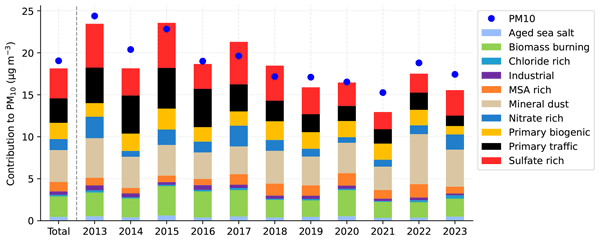
Vy Ngoc Thuy Dinh, Jean-Luc Jaffrezo, Pamela A. Dominutti, Rhabira Elazzouzi, Sophie Darfeuil, Céline Voiron, Anouk Marsal, Stéphane Socquet, Gladys Mary, Julie Cozic, Catherine Coulaud, Marc Durif, Olivier Favez, and Gaëlle Uzu
Atmos. Chem. Phys., 26, 247–268, https://doi.org/10.5194/acp-26-247-2026, https://doi.org/10.5194/acp-26-247-2026, 2026
Short summary
Short summary
Long-term particulate matter (PM) filter sampling at a French urban background and temperature measurements at different altitudes were used to investigate decadal trends of the main PM sources and related oxidative potential metrics. Positive Matrix Factorization analyses were conducted on the corresponding 11-year dataset, which determined ten PM sources. Temporal evolution of these sources is investigated, highlighting a strong downward trend of anthropogenic sources over 11 years.
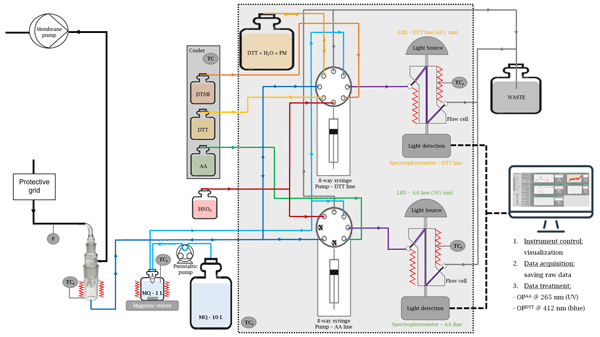
Albane Barbero, Guilhem Freche, Luc Piard, Lucile Richard, Takoua Mhadhbi, Anouk Marsal, Stephan Houdier, Julie Camman, Mathilde Brezins, Benjamin Golly, Jean-Luc Jaffrezo, and Gaëlle Uzu
Atmos. Meas. Tech., 18, 7085–7104, https://doi.org/10.5194/amt-18-7085-2025, https://doi.org/10.5194/amt-18-7085-2025, 2025
Short summary
Short summary
Air pollution can harm our health by triggering harmful chemical reactions in our lungs. To better understand this, we developed a new instrument that measures how air particles may cause such effects in near real time. Unlike current methods that may miss key signals, our system captures and analyzes air more efficiently and continuously. Our results show it works reliably, offering a promising new tool to monitor pollution’s health impacts more accurately.
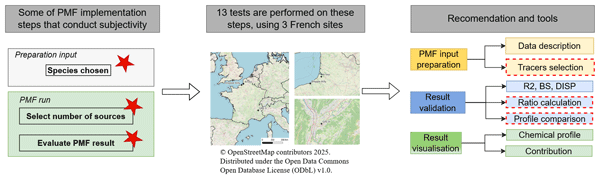
Vy Ngoc Thuy Dinh, Gaëlle Uzu, Pamela Dominutti, Stéphane Sauvage, Rhabira Elazzouzi, Sophie Darfeuil, Céline Voiron, Abdoulaye Samaké, Shouwen Zhang, Stéphane Socquet, Olivier Favez, and Jean-Luc Jaffrezo
Atmos. Meas. Tech., 18, 6817–6833, https://doi.org/10.5194/amt-18-6817-2025, https://doi.org/10.5194/amt-18-6817-2025, 2025
Short summary
Short summary
Positive matrix factorization (PMF) is widely used for apportion the source of particulate matter. However, the inherent model has some subjective aspects which should be reduce to ensure the robustness of the result. To do so, this study developed a systematic method, by performing tests on the input and the result validation. Finally, we proposed recommendations for input selection and result validation. A Python package is developed, providing advanced tools for input preparation, validation and visualization results.
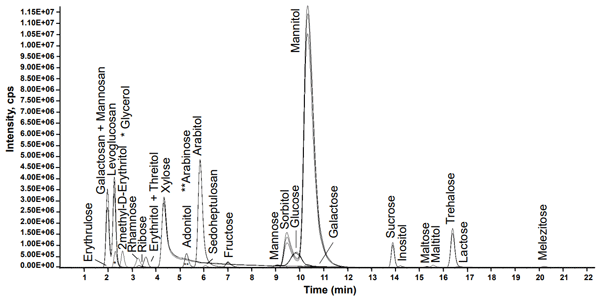
Pauline Bros, Sophie Darfeuil, Véronique Jacob, Rhabira Elazzouzi, Dielleza Tusha, Tristan Rousseau, Julian Weng, Patrik Winiger, Imad El Haddad, Christoph Hueglin, Gaëlle Uzu, and Jean-Luc Jaffrezo
Atmos. Meas. Tech., 18, 6315–6327, https://doi.org/10.5194/amt-18-6315-2025, https://doi.org/10.5194/amt-18-6315-2025, 2025
Short summary
Short summary
We present and validate an ultra-high-performance liquid chromatography tandem mass spectrometry method for the quantification of 21 sugars in atmospheric particulate matter. The method is fast, sensitive, and suitable for low-mass samples. Its application to a 6-year dataset from the Jungfraujoch site highlights its potential for source identification and understanding of biogenic and biomass burning tracers.
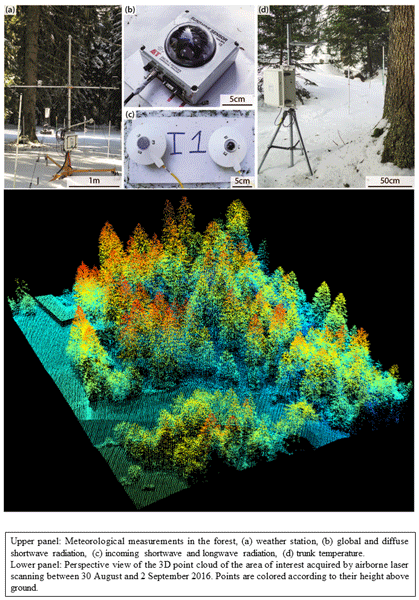
Jean Emmanuel Sicart, Victor Ramseyer, Ghislain Picard, Laurent Arnaud, Catherine Coulaud, Guilhem Freche, Damien Soubeyrand, Yves Lejeune, Marie Dumont, Isabelle Gouttevin, Erwan Le Gac, Frédéric Berger, Jean-Matthieu Monnet, Laurent Borgniet, Éric Mermin, Nick Rutter, Clare Webster, and Richard Essery
Earth Syst. Sci. Data, 15, 5121–5133, https://doi.org/10.5194/essd-15-5121-2023, https://doi.org/10.5194/essd-15-5121-2023, 2023
Short summary
Short summary
Forests strongly modify the accumulation, metamorphism and melting of snow in midlatitude and high-latitude regions. Two field campaigns during the winters 2016–17 and 2017–18 were conducted in a coniferous forest in the French Alps to study interactions between snow and vegetation. This paper presents the field site, instrumentation and collection methods. The observations include forest characteristics, meteorology, snow cover and snow interception by the canopy during precipitation events.
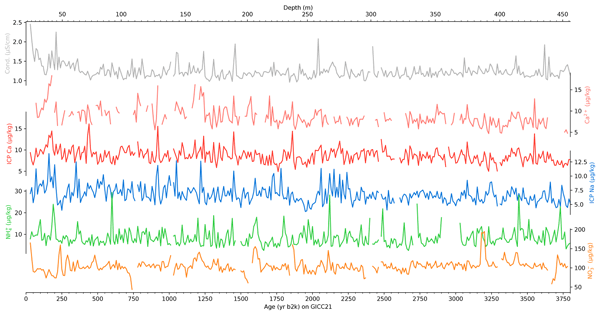
Tobias Erhardt, Camilla Marie Jensen, Florian Adolphi, Helle Astrid Kjær, Remi Dallmayr, Birthe Twarloh, Melanie Behrens, Motohiro Hirabayashi, Kaori Fukuda, Jun Ogata, François Burgay, Federico Scoto, Ilaria Crotti, Azzurra Spagnesi, Niccoló Maffezzoli, Delia Segato, Chiara Paleari, Florian Mekhaldi, Raimund Muscheler, Sophie Darfeuil, and Hubertus Fischer
Earth Syst. Sci. Data, 15, 5079–5091, https://doi.org/10.5194/essd-15-5079-2023, https://doi.org/10.5194/essd-15-5079-2023, 2023
Short summary
Short summary
The presented paper provides a 3.8 kyr long dataset of aerosol concentrations from the East Greenland Ice coring Project (EGRIP) ice core. The data consists of 1 mm depth-resolution profiles of calcium, sodium, ammonium, nitrate, and electrolytic conductivity as well as decadal averages of these profiles. Alongside the data a detailed description of the measurement setup as well as a discussion of the uncertainties are given.

Virginie Sellier, Oldrich Navratil, John Patrick Laceby, Cédric Legout, Anthony Foucher, Michel Allenbach, Irène Lefèvre, and Olivier Evrard
SOIL, 7, 743–766, https://doi.org/10.5194/soil-7-743-2021, https://doi.org/10.5194/soil-7-743-2021, 2021
Short summary
Short summary
Open-cast mining increases soil erosion and transfer of sediment in river systems. Providing a methodology to better understand the sediment dynamic of these catchments is essential to manage this pollution. In this study, different tracers such as elemental geochemistry or colour properties were tested to trace and quantify the mining source contributions to the sediment inputs in the Thio River catchment, one of the first areas exploited for nickel mining in New Caledonia (i.e. since 1880).
Cited articles
Andermann, C., Crave, A., Gloaguen, R., Davy, P., and Bonnet, S.: Connecting source and transport: Suspended sediments in the Nepal Himalayas, Earth Planet. Sc. Lett., 351, 158–170, https://doi.org/10.1016/j.epsl.2012.06.059, 2012. a, b, c, d
Ariagno, C., Le Bouteiller, C., van der Beek, P., and Klotz, S.: Sediment export in marly badland catchments modulated by frost-cracking intensity, Draix–Bléone Critical Zone Observatory, SE France, Earth Surf. Dynam., 10, 81–96, https://doi.org/10.5194/esurf-10-81-2022, 2022. a, b
Ariagno, C., Pasquet, S., Le Bouteiller, C., van Der Beek, P., and Klotz, S.: Seasonal dynamics of marly badlands illustrated by field records of hillslope regolith properties, Draix–Bléone Critical Zone Observatory, South-East France, Earth Surf. Proc. Land., 48, 1526–1539, https://doi.org/10.1002/esp.5564, 2023. a, b, c
Asselman, N. E.: Suspended sediment dynamics in a large drainage basin: the River Rhine, Hydrological processes, 13, 1437–1450, https://doi.org/10.1002/(SICI)1099-1085(199907)13:10<1437::AID-HYP821>3.0.CO;2-J, 1999. a, b, c, d
Assendelft, R. S. and van Meerveld, I.: Spatial and Temporal Variation in the Three Main Hydrological States of Temporary Streams in a Swiss Pre-Alpine Catchment, Hydrol. Process., 39, e70018, https://doi.org/10.1002/hyp.70018, 2025. a
Bača, P.: Hysteresis effect in suspended sediment concentration in the Rybárik basin, Slovakia/Effet d'hystérèse dans la concentration des sédiments en suspension dans le bassin versant de Rybárik (Slovaquie), Hydrolog. Sci. J., 53, 224–235, https://doi.org/10.1623/hysj.53.1.224, 2008. a, b, c, d, e, f, g
Baraer, M., McKenzie, J., Mark, B. G., Gordon, R., Bury, J., Condom, T., Gomez, J., Knox, S., and Fortner, S. K.: Contribution of groundwater to the outflow from ungauged glacierized catchments: A multi-site study in the tropical Cordillera Blanca, Peru, Hydrol. Process., 29, 2561–2581, https://doi.org/10.1002/hyp.10386, 2015. a, b
Barthold, F. K., Tyralla, C., Schneider, K., Vaché, K. B., Frede, H.-G., and Breuer, L.: How many tracers do we need for end member mixing analysis (EMMA)? A sensitivity analysis, Water Resour. Res., 47, https://doi.org/10.1029/2011WR010604, 2011. a, b
Batista, P. V., Laceby, J., and Evrard, O.: How to evaluate sediment fingerprinting source apportionments, J. Soil. Sediment., 22, 1315–1328, https://doi.org/10.1007/s11368-022-03157-4, 2022. a
Birkel, C., Correa Barahona, A., Duvert, C., Granados Bolaños, S., Chavarría Palma, A., Duran Quesada, A. M., Sánchez Murillo, R., and Biester, H.: End member and Bayesian mixing models consistently indicate near-surface flowpath dominance in a pristine humid tropical rainforest, Hydrol. Process., 35, e14153, https://doi.org/10.1002/hyp.14153, 2021. a, b, c
Borrelli, P., Robinson, D. A., Panagos, P., Lugato, E., Yang, J. E., Alewell, C., Wuepper, D., Montanarella, L., and Ballabio, C.: Land use and climate change impacts on global soil erosion by water (2015–2070), P. Natl. Acad. Sci. USA, 117, 21994–22001, https://doi.org/10.1073/pnas.2001403117, 2020. a
Brown, L. R.: World population growth, soil erosion, and food security, Science, 214, 995–1002, https://doi.org/10.1126/science.7302578, 1981. a
Bryan, R. B.: Soil erodibility and processes of water erosion on hillslope, Geomorphology, 32, 385–415, https://doi.org/10.1016/S0169-555X(99)00105-1, 2000. a
Carriere, A., Le Bouteiller, C., Tucker, G. E., Klotz, S., and Naaim, M.: Impact of vegetation on erosion: Insights from the calibration and test of a landscape evolution model in alpine badland catchments, Earth Surf. Proc. Land., 45, 1085–1099, https://doi.org/10.1002/esp.4741, 2020. a
Cayuela, C., Latron, J., Geris, J., and Llorens, P.: Spatio-temporal variability of the isotopic input signal in a partly forested catchment: Implications for hydrograph separation, Hydrol. Process., 33, 36–46, https://doi.org/10.1002/hyp.13309, 2019. a
Chaves, J., Neill, C., Germer, S., Neto, S. G., Krusche, A., and Elsenbeer, H.: Land management impacts on runoff sources in small Amazon watersheds, Hydrol. Process., 22, 1766–1775, https://doi.org/10.1002/hyp.6803, 2008. a
Christophersen, N. and Hooper, R. P.: Multivariate analysis of stream water chemical data: The use of principal components analysis for the end-member mixing problem, Water Resour. Res., 28, 99–107, https://doi.org/10.1029/91WR02518, 1992. a, b, c, d
Christophersen, N., Neal, C., Hooper, R. P., Vogt, R. D., and Andersen, S.: Modelling streamwater chemistry as a mixture of soilwater end-members – a step towards second-generation acidification models, J. Hydrol., 116, 307–320, https://doi.org/10.1016/0022-1694(90)90130-P, 1990. a, b, c
Collins, A. and Walling, D.: Fine-grained bed sediment storage within the main channel systems of the Frome and Piddle catchments, Dorset, UK, Hydrol. Process., 21, 1448–1459, https://doi.org/10.1002/hyp.6269, 2007. a
Collins, A. L. and Walling, D. E.: Documenting catchment suspended sediment sources: problems, approaches and prospects, Prog. Phys. Geog., 28, 159–196, https://doi.org/10.1191/0309133304pp409ra, 2004. a
Copard, Y., Eyrolle, F., Radakovitch, O., Poirel, A., Raimbault, P., Gairoard, S., and Di-Giovanni, C.: Badlands as a hot spot of petrogenic contribution to riverine particulate organic carbon to the Gulf of Lion (NW Mediterranean Sea), Earth Surf. Proc. Land., 43, 2495–2509, https://doi.org/10.1002/esp.4409, 2018. a
Cotel, S., Viville, D., Benarioumlil, S., Ackerer, P., and Pierret, M.-C.: Impact of the hydrological regime and forestry operations on the fluxes of suspended sediment and bedload of a small middle-mountain catchment, Sci. Total Environ., 743, 140228, https://doi.org/10.1016/j.scitotenv.2020.140228, 2020. a
Cras, A., Marc, V., and Travi, Y.: Hydrological behaviour of sub-Mediterranean alpine headwater streams in a badlands environment, J. Hydrol., 339, 130–144, https://doi.org/10.1016/j.jhydrol.2007.03.004, 2007. a, b
Dedkov, A. and Moszherin, V.: Erosion and sediment yield in mountain regions of the world, in: Erosion, debris flows and environment in mountain regions, IAHS Publ. no. 209, 29–36, 1992. a
Duvert, C., Gratiot, N., Evrard, O., Navratil, O., Némery, J., Prat, C., and Esteves, M.: Drivers of erosion and suspended sediment transport in three headwater catchments of the Mexican Central Highlands, Geomorphology, 123, 243–256, https://doi.org/10.1016/j.geomorph.2010.07.016, 2010. a, b, c
Eckhardt, K.: How to construct recursive digital filters for baseflow separation, Hydrol. Process., 19, 507–515, https://doi.org/10.1002/hyp.5675, 2005. a, b
Eekhout, J. P. and de Vente, J.: Global impact of climate change on soil erosion and potential for adaptation through soil conservation, Earth-Sci. Rev., 226, 103921, https://doi.org/10.1016/j.earscirev.2022.103921, 2022. a
El Azzi, D., Probst, J.-L., Teisserenc, R., Merlina, G., Baqué, D., Julien, F., Payre-Suc, V., and Guiresse, M.: Trace element and pesticide dynamics during a flood event in the save agricultural watershed: soil-river transfer pathways and controlling factors, Water Air Soil Poll., 227, 1–19, https://doi.org/10.1007/s11270-016-3144-0, 2016. a, b, c
Ellison, W.: Studies of raindrop erosion, Agric. Engng., 25, 131–136, 181–182, 1944. a
Elsenbeer, H., Lorieri, D., and Bonell, M.: Mixing model approaches to estimate storm flow sources in an overland flow-dominated tropical rain forest catchment, Water Resour. Res., 31, 2267–2278, https://doi.org/10.1029/95WR01651, 1995. a
Evrard, O., Navratil, O., Ayrault, S., Ahmadi, M., Némery, J., Legout, C., Lefèvre, I., Poirel, A., Bonté, P., and Esteves, M.: Combining suspended sediment monitoring and fingerprinting to determine the spatial origin of fine sediment in a mountainous river catchment, Earth Surf. Proc. Land., 36, 1072–1089, https://doi.org/10.1002/esp.2133, 2011. a
Fischer, O., Legout, C., Le-Bouteiller, C., Nord, G., and Klotz, S.: Contrasting Hydrosedimentary Dynamics in Two Mediterranean Watersheds: Insights From Flood Hydrograph Decompositions, Hydrol. Process., 40, e70580, https://doi.org/10.1002/hyp.70580, 2026. a, b
Foster, H. J., Lees, M. J., Wheater, H. S., Neal, C., and Reynolds, B.: A hydrochemical modelling framework for combined assessment of spatial and temporal variability in stream chemistry: application to Plynlimon, Wales, Hydrol. Earth Syst. Sci., 5, 49–58, https://doi.org/10.5194/hess-5-49-2001, 2001. a, b
Francke, T., Werb, S., Sommerer, E., and López-Tarazón, J. A.: Analysis of runoff, sediment dynamics and sediment yield of subcatchments in the highly erodible Isábena catchment, Central Pyrenees, J. Soil. Sediment., 14, 1909–1920, https://doi.org/10.1007/s11368-014-0990-5, 2014. a, b, c
Gaillardet, J., Braud, I., Hankard, F., Anquetin, S., Bour, O., Dorfliger, N., de Dreuzy, J. R., Galle, S., Galy, C., Gogo, S., Gourcy, L., Habets, F., Laggoun, F., Longuevergne, L., Le Borgne, T., Naaim-Bouvet, F., Nord, G., Simonneaux, V., Six, D., Tallec, T., Valentin, C., Abril, G., Allemand, P., Arènes, A., Arfib, B., Arnaud, L., Arnaud, N., Arnaud, P., Audry, S., Bailly Comte, V., Batiot, C., Battais, A., Bellot, H., Bernard, E., Bertrand, C., Bessière, H., Binet, S., Bodin, J., Bodin, X., Boithias, L., Bouchez, J., Boudevillain, B., Bouzou Moussa, I., Branger, F., Braun, J. J., Brunet, P., Caceres, B., Calmels, D., Cappelaere, B., Celle-Jeanton, H., Chabaux, F., Chalikakis, K., Champollion, C., Copard, Y., Cotel, C., Davy, P., Deline, P., Delrieu, G., Demarty, J., Dessert, C., Dumont, M., Emblanch, C., Ezzahar, J., Estèves, M., Favier, V., Faucheux, M., Filizola, N., Flammarion, P., Floury, P., Fovet, O., Fournier, M., Francez, A. J., Gandois, L., Gascuel, C., Gayer, E., Genthon, C., Gérard, M. F., Gilbert, D., Gouttevin, I., Grippa, M., Gruau, G., Jardani, A., Jeanneau, L., Join, J. L., Jourde, H., Karbou, F., Labat, D., Lagadeuc, Y., Lajeunesse, E., Lastennet, R., Lavado, W., Lawin, E., Lebel, T., Le Bouteiller, C., Legout, C., Lejeune, Y., Le Meur, E., Le Moigne, N., Lions, J., Lucas, A., Malet, J. P., Marais-Sicre, C., Maréchal, J. C., Marlin, C., Martin, P., Martins, J., Martinez, J. M., Massei, N., Mauclerc, A., Mazzilli, N., Molénat, J., Moreira-Turcq, P., Mougin, E., Morin, S., Ndam Ngoupayou, J., Panthou, G., Peugeot, C., Picard, G., Pierret, M. C., Porel, G., Probst, A., Probst, J. L., Rabatel, A., Raclot, D., Ravanel, L., Rejiba, F., René, P., Ribolzi, O., Riotte, J., Rivière, A., Robain, H., Ruiz, L., Sanchez-Perez, J. M., Santini, W., Sauvage, S., Schoeneich, P., Seidel, J. L., Sekhar, M., Sengtaheuanghoung, O., Silvera, N., Steinmann, M., Soruco, A., Tallec, G., Thibert, E., Valdes Lao, D., Vincent, C., Viville, D., Wagnon, P., and Zitouna, R.: OZCAR: The French network of critical zone observatories, Vadose Zone J., 17, 1–24, https://doi.org/10.2136/vzj2018.04.0067, 2018. a
Gallart, F., Llorens, P., Latron, J., and Regüés, D.: Hydrological processes and their seasonal controls in a small Mediterranean mountain catchment in the Pyrenees, Hydrol. Earth Syst. Sci., 6, 527–537, https://doi.org/10.5194/hess-6-527-2002, 2002. a, b, c
Gallart, F., Balasch, J. C., Regüés, D., Soler, M., and Castelltort, X.: Catchment dynamics in a Mediterranean mountain environment: the Vallcebre research basins (southeastern Pyrenees) II: temporal and spatial dynamics of erosion and stream sediment transport, in: Developments in Earth Surface Processes, Elsevier, 7, 17–29, https://doi.org/10.1016/S0928-2025(05)80008-2, 2005. a, b
Garcıa-Ruiz, J., Arnáez, J., Beguerıa, S., Seeger, M., Martı-Bono, C., Regüés, D., Lana-Renault, N., and White, S.: Runoff generation in an intensively disturbed, abandoned farmland catchment, Central Spanish Pyrenees, Catena, 59, 79–92, https://doi.org/10.1016/j.catena.2004.05.006, 2005. a
Gellis, A. C.: Factors influencing storm-generated suspended-sediment concentrations and loads in four basins of contrasting land use, humid-tropical Puerto Rico, Catena, 104, 39–57, https://doi.org/10.1016/j.catena.2012.10.018, 2013. a
Gilley, J. and Finker, S.: Estimating soil detachment caused by raindrop impact, T. ASAE, 28, 0140–0146, https://doi.org/10.13031/2013.32217, 1985. a
Glaser, C., Escher, B. I., Engelhardt, M., Liu, Y., Krauss, M., König, M., Schlichting, R., Zarfl, C., and Spahr, S.: Particle-associated organic contaminant and cytotoxicity transport in a river during storm events, J. Hydrol., 621, 129600, https://doi.org/10.1016/j.jhydrol.2023.129600, 2023. a
Gonzales, A. L., Nonner, J., Heijkers, J., and Uhlenbrook, S.: Comparison of different base flow separation methods in a lowland catchment, Hydrol. Earth Syst. Sci., 13, 2055–2068, https://doi.org/10.5194/hess-13-2055-2009, 2009. a
Goodrich, D. C., Lane, L. J., Shillito, R. M., Miller, S. N., Syed, K. H., and Woolhiser, D. A.: Linearity of basin response as a function of scale in a semiarid watershed, Water Resour. Res., 33, 2951–2965, https://doi.org/10.1029/97WR01422, 1997. a
Gourdin, E., Evrard, O., Huon, S., Lefèvre, I., Ribolzi, O., Reyss, J.-L., Sengtaheuanghoung, O., and Ayrault, S.: Suspended sediment dynamics in a Southeast Asian mountainous catchment: combining river monitoring and fallout radionuclide tracers, J. Hydrol., 519, 1811–1823, https://doi.org/10.1016/j.jhydrol.2014.09.056, 2014. a
Grangeon, T., Legout, C., Esteves, M., Gratiot, N., and Navratil, O.: Variability of the particle size of suspended sediment during highly concentrated flood events in a small mountainous catchment, J. Soil. Sediment., 12, 1549–1558, https://doi.org/10.1007/s11368-012-0562-5, 2012. a
Hachgenei, N., Nord, G., Spadini, L., Ginot, P., Voiron, C., and Duwig, C.: Transit time tracing using wetness-adaptive StorAge Selection functions–application to a Mediterranean catchment, J. Hydrol., 638, 131267, https://doi.org/10.1016/j.jhydrol.2024.131267, 2024. a
Haddad, H., Jodeau, M., Legout, C., Antoine, G., and Droppo, I. G.: Spatial variability of the erodibility of fine sediments deposited in two alpine gravel-bed rivers: The Isère and Galabre, Catena, 212, 106084, https://doi.org/10.1016/j.catena.2022.106084, 2022. a
He, Z., Unger-Shayesteh, K., Vorogushyn, S., Weise, S. M., Duethmann, D., Kalashnikova, O., Gafurov, A., and Merz, B.: Comparing Bayesian and traditional end-member mixing approaches for hydrograph separation in a glacierized basin, Hydrol. Earth Syst. Sci., 24, 3289–3309, https://doi.org/10.5194/hess-24-3289-2020, 2020. a
Hooper, R. P.: Applying the scientific method to small catchment studies: a review of the Panola Mountain experience, Hydrol. Process., 15, 2039–2050, https://doi.org/10.1002/hyp.255, 2001. a, b
Hooper, R. P.: Diagnostic tools for mixing models of stream water chemistry, Water Resour. Res., 39, https://doi.org/10.1029/2002WR001528, 2003. a, b, c
Inamdar, S., Dhillon, G., Singh, S., Dutta, S., Levia, D., Scott, D., Mitchell, M., Van Stan, J., and McHale, P.: Temporal variation in end-member chemistry and its influence on runoff mixing patterns in a forested, Piedmont catchment, Water Resour. Res., 49, 1828–1844, https://doi.org/10.1002/wrcr.20158, 2013. a, b
James, A. L. and Roulet, N. T.: Investigating the applicability of end-member mixing analysis (EMMA) across scale: A study of eight small, nested catchments in a temperate forested watershed, Water Resour. Res., 42, https://doi.org/10.1029/2005WR004419, 2006. a, b
Jansson, M. B.: Determining sediment source areas in a tropical river basin, Costa Rica, Catena, 47, 63–84, https://doi.org/10.1016/S0341-8162(01)00173-4, 2002. a, b
Joerin, C., Beven, K. J., Iorgulescu, I., and Musy, A.: Uncertainty in hydrograph separations based on geochemical mixing models, J. Hydrol., 255, 90–106, https://doi.org/10.1016/S0022-1694(01)00509-1, 2002. a
Kabeya, N., Shimizu, A., Zhang, J.-J., and Nobuhiro, T.: Effect of Hydrograph Separation on Suspended Sediment Concentration Predictions in a Forested Headwater with Thick Soil and Weathered Gneiss Layers, Water, 6, 1671–1684, https://doi.org/10.3390/w6061671, 2014. a, b, c
Kaffas, K., Murgia, I., Menapace, A., Macchioli Grande, M., Verdone, M., Dani, A., Manca di Villahermosa, F. S., Preti, F., Segura, C., Massari, C., Klaus, J., Borga, M., and Penna, D.: Controls on preferential flow and its role on streamflow generation in a Mediterranean forested catchment, J. Hydrol., 660B, 133469, https://doi.org/10.1016/j.jhydrol.2025.133469, 2025. a, b
Ke, Q. and Zhang, K.: Scale issues in runoff and sediment delivery (SIRSD): A systematic review and bibliometric analysis, Earth-Sci. Rev., 251, 104729, https://doi.org/10.1016/j.earscirev.2024.104729, 2024. a
Kendall, C., McDonnell, J. J., and Gu, W.: A look inside “black box” hydrograph separation models: a study at the Hydrohill catchment, Hydrol. Process., 15, 1877–1902, https://doi.org/10.1002/hyp.245, 2001. a
Klotz, S., Le Bouteiller, C., Mathys, N., Fontaine, F., Ravanat, X., Olivier, J.-E., Liébault, F., Jantzi, H., Coulmeau, P., Richard, D., Cambon, J.-P., and Meunier, M.: A high-frequency, long-term data set of hydrology and sediment yield: the alpine badland catchments of Draix-Bléone Observatory, Earth Syst. Sci. Data, 15, 4371–4388, https://doi.org/10.5194/essd-15-4371-2023, 2023. a
Lana-Renault, N., Regüés, D., Martí-Bono, C., Beguería, S., Latron, J., Nadal, E., Serrano, P., and García-Ruiz, J. M.: Temporal variability in the relationships between precipitation, discharge and suspended sediment concentration in a small Mediterranean mountain catchment, Hydrol. Res., 38, 139–150, https://doi.org/10.2166/nh.2007.003, 2007. a, b
Lawler, D.: The importance of high-resolution monitoring in erosion and deposition dynamics studies: examples from estuarine and fluvial systems, Geomorphology, 64, 1–23, https://doi.org/10.1016/j.geomorph.2004.04.005, 2005. a
Lefrançois, J., Grimaldi, C., Gascuel-Odoux, C., and Gilliet, N.: Suspended sediment and discharge relationships to identify bank degradation as a main sediment source on small agricultural catchments, Hydrol. Process., 21, 2923–2933, https://doi.org/10.1002/hyp.6509, 2007. a, b
Le Gall, M., Evrard, O., Foucher, A., Laceby, J. P., Salvador-Blanes, S., Manière, L., Lefèvre, I., Cerdan, O., and Ayrault, S.: Investigating the temporal dynamics of suspended sediment during flood events with 7Be and 210Pbxs measurements in a drained lowland catchment, Scientific Reports, 7, 42099, https://doi.org/10.1038/srep42099, 2017. a
Legout, C.: Hydrochemical datasets in the Galabre catchment of the Draix-Bléone observatory, EaSy Data [data set], https://doi.org/10.57932/08398b3a-9f01-426d-855b-702ef5191b55, 2025. a
Legout, C., Poulenard, J., Nemery, J., Navratil, O., Grangeon, T., Evrard, O., and Esteves, M.: Quantifying suspended sediment sources during runoff events in headwater catchments using spectrocolorimetry, J. Soil. Sediment., 13, 1478–1492, https://doi.org/10.1007/s11368-013-0728-9, 2013. a
Legout, C., Freche, G., Biron, R., Esteves, M., Navratil, O., Nord, G., Uber, M., Grangeon, T., Hachgenei, N., Boudevillain, B., Voiron, C., and Spadini, L.: A critical zone observatory dedicated to suspended sediment transport: The meso-scale Galabre catchment (southern French Alps), Hydrol. Process., 35, e14084, https://doi.org/10.1002/hyp.14084, 2021. a, b, c, d, e, f, g, h
Lenzi, M. A. and Marchi, L.: Suspended sediment load during floods in a small stream of the Dolomites (northeastern Italy), Catena, 39, 267–282, https://doi.org/10.1016/S0341-8162(00)00079-5, 2000. a
Liébault, F., Gomez, B., Page, M., Marden, M., Peacock, D., Richard, D., and Trotter, C. M.: Land-use change, sediment production and channel response in upland regions, River Res. Appl., 21, 739–756, https://doi.org/10.1002/rra.880, 2005. a
Liu, F., Conklin, M. H., and Shaw, G. D.: Insights into hydrologic and hydrochemical processes based on concentration-discharge and end-member mixing analyses in the mid-Merced River Basin, Sierra Nevada, California, Water Resour. Res., 53, 832–850, https://doi.org/10.1002/2016WR019437, 2017. a, b
Lloyd, C. E., Freer, J. E., Johnes, P. J., and Collins, A.: Using hysteresis analysis of high-resolution water quality monitoring data, including uncertainty, to infer controls on nutrient and sediment transfer in catchments, Sci. Total Environ., 543, 388–404, https://doi.org/10.1016/j.scitotenv.2015.11.028, 2016. a, b, c
Lukens, E., Neilson, B. T., Williams, K. H., and Brahney, J.: Evaluation of hydrograph separation techniques with uncertain end-member composition, Hydrol. Process., 36, e14693, https://doi.org/10.1002/hyp.14693, 2022. a, b
Lv, Y., Gao, L., Geris, J., Verrot, L., and Peng, X.: Assessment of water sources and their contributions to streamflow by end-member mixing analysis in a subtropical mixed agricultural catchment, Agr. Water Manage., 203, 411–422, https://doi.org/10.1016/j.agwat.2018.03.013, 2018. a
Mathys, N., Klotz, S., Esteves, M., Descroix, L., and Lapetite, J.-M.: Runoff and erosion in the Black Marls of the French Alps: observations and measurements at the plot scale, Catena, 63, 261–281, https://doi.org/10.1016/j.catena.2005.06.010, 2005. a, b
Mayor, Á. G., Bautista, S., and Bellot, J.: Scale-dependent variation in runoff and sediment yield in a semiarid Mediterranean catchment, J. Hydrol., 397, 128–135, https://doi.org/10.1016/j.jhydrol.2010.11.039, 2011. a
Misset, C., Recking, A., Legout, C., Poirel, A., Cazilhac, M., Esteves, M., and Bertrand, M.: An attempt to link suspended load hysteresis patterns and sediment sources configuration in alpine catchments, J. Hydrol., 576, 72–84, https://doi.org/10.1016/j.jhydrol.2019.06.039, 2019a. a, b, c
Misset, C., Recking, A., Legout, C., Valsangkar, N., Bodereau, N., Zanker, S., Poirel, A., and Borgniet, L.: The dynamics of suspended sediment in a typical alpine alluvial river reach: insight from a seasonal survey, Water Resour. Res., 55, 10918–10934, https://doi.org/10.1029/2019WR025222, 2019b. a
Mohr, C. H., Coppus, R., Iroumé, A., Huber, A., and Bronstert, A.: Runoff generation and soil erosion processes after clear cutting, J. Geophys. Res.-Earth, 118, 814–831, https://doi.org/10.1002/jgrf.20047, 2013. a
Nadal-Romero, E., Latron, J., Martí-Bono, C., and Regüés, D.: Temporal distribution of suspended sediment transport in a humid Mediterranean badland area: The Araguás catchment, Central Pyrenees, Geomorphology, 97, 601–616, https://doi.org/10.1016/j.geomorph.2007.09.009, 2008a. a, b, c, d, e, f, g, h, i, j, k, l, m
Navratil, O., Esteves, M., Legout, C., Gratiot, N., Nemery, J., Willmore, S., and Grangeon, T.: Global uncertainty analysis of suspended sediment monitoring using turbidimeter in a small mountainous river catchment, J. Hydrol., 398, 246–259, https://doi.org/10.1016/j.jhydrol.2010.12.025, 2011. a, b, c
Navratil, O., Evrard, O., Esteves, M., Legout, C., Ayrault, S., Némery, J., Mate-Marin, A., Ahmadi, M., Lefèvre, I., Poirel, A., and Bonté, P.: Temporal variability of suspended sediment sources in an alpine catchment combining river/rainfall monitoring and sediment fingerprinting, Earth Surf. Proc. Land., 37, 828–846, https://doi.org/10.1002/esp.3201, 2012. a, b, c, d
Ogunkoya, O. and Jenkins, A.: Analysis of storm hydrograph and flow pathways using a three-component hydrograph separation model, J. Hydrol., 142, 71–88, https://doi.org/10.1016/0022-1694(93)90005-T, 1993. a
Onderka, M., Krein, A., Wrede, S., Martínez-Carreras, N., and Hoffmann, L.: Dynamics of storm-driven suspended sediments in a headwater catchment described by multivariable modeling, J. Soil. Sediment., 12, 620–635, https://doi.org/10.1007/s11368-012-0480-6, 2012. a
Ortega, J., Bush, S. A., Segura, C., and Sullivan, P. L.: Subsurface Storage Drives Hydrologic Connectivity and Spatial Variability in Stream Chemistry, Hydrol. Process., 39, e70228, https://doi.org/10.1002/hyp.70228, 2025. a, b, c, d
Owens, P. N.: Soil erosion and sediment dynamics in the Anthropocene: a review of human impacts during a period of rapid global environmental change, J. Soil. Sediment., 20, 4115–4143, https://doi.org/10.1007/s11368-020-02815-9, 2020. a
Owens, P. N., Batalla, R., Collins, A., Gomez, B., Hicks, D., Horowitz, A., Kondolf, G., Marden, M., Page, M., Peacock, D., Petticrew, E., Salomons, W., and Trustrum, N.: Fine-grained sediment in river systems: environmental significance and management issues, River Res. Appl., 21, 693–717, https://doi.org/10.1002/rra.878, 2005. a
Park, J. and Hunt, J. R.: Coupling fine particle and bedload transport in gravel-bedded streams, J. Hydrol., 552, 532–543, https://doi.org/10.1016/j.jhydrol.2017.07.023, 2017. a, b, c, d
Pelletier, A. and Andréassian, V.: Hydrograph separation: an impartial parametrisation for an imperfect method, Hydrol. Earth Syst. Sci., 24, 1171–1187, https://doi.org/10.5194/hess-24-1171-2020, 2020. a, b
Penna, D.: A recipe for why and how to set up and sustain an experimental catchment, Hydrol. Process., 38, e15163, https://doi.org/10.1002/hyp.15163, 2024. a
Pimentel, D.: Soil erosion: a food and environmental threat, Environ. Dev. Sustain., 8, 119–137, https://doi.org/10.1007/s10668-005-1262-8, 2006. a
Pinder, G. F. and Jones, J. F.: Determination of the ground-water component of peak discharge from the chemistry of total runoff, Water Resour. Res., 5, 438–445, https://doi.org/10.1029/WR005i002p00438, 1969. a, b
Popp, A. L., Beria, H., Sprenger, M., Ala-Aho, P., Coenders-Gerrits, M., Groh, J., Klaus, J., Knapp, J. L. A., Koren, G., Bakiri, I., Xu Fei, E., Gillon, M., Harman, C., Hissler, C., Holmes, T., Jeelani, G., Kalvans, A., Montemagno, A., Öztürk, E. Z., Žvab Rožič, P., Stadnyk, T., Stumpp, C., Valiente, N., von Freyberg, J., Vreča, P., Zuecco, G., van Meerveld, I., Penna, D., and Kirchner, J. W.: Recent advances in tracer-aided mixing modeling of water in the Critical Zone, Rev. Geophys., 63, e2024RG000866, https://doi.org/10.1029/2024RG000866, 2025. a, b
Rademacher, L. K., Clark, J. F., Clow, D. W., and Hudson, G. B.: Old groundwater influence on stream hydrochemistry and catchment response times in a small Sierra Nevada catchment: Sagehen Creek, California, Water Resour. Res., 41, https://doi.org/10.1029/2003WR002805, 2005. a, b
Ribolzi, O., Andrieux, P., Valles, V., Bouzigues, R., Bariac, T., and Voltz, M.: Contribution of groundwater and overland flows to storm flow generation in a cultivated Mediterranean catchment. Quantification by natural chemical tracing, J. Hydrol., 233, 241–257, https://doi.org/10.1016/S0022-1694(00)00238-9, 2000. a, b, c, d, e
Ribolzi, O., Evrard, O., Huon, S., Rochelle-Newall, E., Henri-des Tureaux, T., Silvera, N., Thammahacksac, C., and Sengtaheuanghoung, O.: Use of fallout radionuclides (7Be, 210Pb) to estimate resuspension of Escherichia coli from streambed sediments during floods in a tropical montane catchment, Environ. Sci. Pollut. R., 23, 3427–3435, https://doi.org/10.1007/s11356-015-5595-z, 2016. a
Sabathier, R., Singer, M. B., Stella, J. C., Roberts, D. A., Caylor, K. K., Jaeger, K. L., and Olden, J. D.: High resolution spatiotemporal patterns of flow at the landscape scale in montane non-perennial streams, River Res. Appl., 39, 225–240, https://doi.org/10.1002/rra.4076, 2023. a
Sadaoui, M., Ludwig, W., Bourrin, F., and Raimbault, P.: Controls, budgets and variability of riverine sediment fluxes to the Gulf of Lions (NW Mediterranean Sea), J. Hydrol., 540, 1002–1015, https://doi.org/10.1016/j.jhydrol.2016.07.012, 2016. a
Shakesby, R. A.: Post-wildfire soil erosion in the Mediterranean: Review and future research directions, Earth-Sci. Rev., 105, 71–100, https://doi.org/10.1016/j.earscirev.2011.01.001, 2011. a
Singh, S. K. and Stenger, R.: Indirect methods to elucidate water flows and contaminant transfer pathways through meso-scale catchments – a review, Environmental Processes, 5, 683–706, https://doi.org/10.1007/s40710-018-0331-6, 2018. a, b
Slabon, A. and Hoffmann, T.: Uncertainties of annual suspended sediment transport estimates driven by temporal variability, Water Resour. Res., 60, e2022WR032628, https://doi.org/10.1029/2022WR032628, 2024. a
Soulsby, C. and Dunn, S. M.: Towards integrating tracer studies in conceptual rainfall-runoff models: recent insights from a sub-arctic catchment in the Cairngorm Mountains, Scotland, Hydrol. Process., 17, 403–416, https://doi.org/10.1002/hyp.1132, 2003. a
Sun, L., Yan, M., Cai, Q., and Fang, H.: Suspended sediment dynamics at different time scales in the Loushui River, south-central China, Catena, 136, 152–161, https://doi.org/10.1016/j.catena.2015.02.014, 2016. a
Syvitski, J. P., Vörösmarty, C. J., Kettner, A. J., and Green, P.: Impact of humans on the flux of terrestrial sediment to the global coastal ocean, Science, 308, 376–380, https://doi.org/10.1126/science.1109454, 2005. a
Szilagyi, J. and Parlange, M. B.: Baseflow separation based on analytical solutions of the Boussinesq equation, J. Hydrol., 204, 251–260, https://doi.org/10.1016/S0022-1694(97)00132-7, 1998. a
Tolorza, V., Carretier, S., Andermann, C., Ortega-Culaciati, F., Pinto, L., and Mardones, M.: Contrasting mountain and piedmont dynamics of sediment discharge associated with groundwater storage variation in the Biobío River, J. Geophys. Res.-Earth, 119, 2730–2753, https://doi.org/10.1002/2014JF003105, 2014. a
Tropeano, D.: High flow events and sediment transport in small streams in the “tertiary basin” area in piedmont (Northwest Italy), Earth Surf. Proc. Land., 16, 323–339, https://doi.org/10.1002/esp.3290160406, 1991. a
Trust, B., Katsanou, K., Cattapan, A., Venneker, R., Batsatsashvili, M., Bol, R., and Wenninger, J.: Quantifying groundwater contributions to streamflow using a multi-method hydrological approach, Environmental Processes, 12, 21, https://doi.org/10.1007/s40710-025-00764-4, 2025. a, b
Uber, M.: Suspended sediment production and transfer in mesoscale catchments: A new approach combining flux monitoring, fingerprinting and distributed numerical modeling, PhD thesis, Université Grenoble Alpes [2020–...], https://doi.org/10.70675/031c39fezfdb5z4c77zbf71zb19303031643, 2020. a
Uber, M., Nord, G., Legout, C., and Cea, L.: How do modeling choices and erosion zone locations impact the representation of connectivity and the dynamics of suspended sediments in a multi-source soil erosion model?, Earth Surf. Dynam., 9, 123–144, https://doi.org/10.5194/esurf-9-123-2021, 2021. a, b, c
Uhlenbrook, S. and Hoeg, S.: Quantifying uncertainties in tracer-based hydrograph separations: a case study for two-, three-and five-component hydrograph separations in a mountainous catchment, Hydrol. Process., 17, 431–453, https://doi.org/10.1002/hyp.1134, 2003. a
Vanacker, V., von Blanckenburg, F., Govers, G., Molina, A., Poesen, J., Deckers, J., and Kubik, P.: Restoring dense vegetation can slow mountain erosion to near natural benchmark levels, Geology, 35, 303–306, https://doi.org/10.1130/G23109A.1, 2007. a
Vercruysse, K., Grabowski, R. C., and Rickson, R. J.: Suspended sediment transport dynamics in rivers: Multi-scale drivers of temporal variation, Earth-Sci. Rev., 166, 38–52, https://doi.org/10.1016/j.earscirev.2016.12.016, 2017. a, b, c
von Freyberg, J., Studer, B., and Kirchner, J. W.: A lab in the field: high-frequency analysis of water quality and stable isotopes in stream water and precipitation, Hydrol. Earth Syst. Sci., 21, 1721–1739, https://doi.org/10.5194/hess-21-1721-2017, 2017. a, b
Walling, D. E., Owens, P. N., and Leeks, G. J.: The role of channel and floodplain storage in the suspended sediment budget of the River Ouse, Yorkshire, UK, Geomorphology, 22, 225–242, https://doi.org/10.1002/hyp.7178, 1998. a
Williams, G. P.: Sediment concentration versus water discharge during single hydrologic events in rivers, J. Hydrol., 111, 89–106, https://doi.org/10.1016/0022-1694(89)90254-0, 1989. a, b
Zhang, R., Li, Q., Chow, T. L., Li, S., and Danielescu, S.: Baseflow separation in a small watershed in New Brunswick, Canada, using a recursive digital filter calibrated with the conductivity mass balance method, Hydrol. Process., 27, 2659–2665, https://doi.org/10.1002/hyp.9417, 2013. a
Zuazo, V. H. D. and Pleguezuelo, C. R. R.: Soil-erosion and runoff prevention by plant covers: a review, in: Sustainable agriculture, edited by: Lichtfouse, E., Navarrete, M., Debaeke, P., Véronique, S., and Alberola, C., Springer, Dordrecht, 785–811, https://doi.org/10.1007/978-90-481-2666-8_48, 2009. a
Short summary
This study analyzes how the seasonal variability of groundwater input to river controls suspended sediment dynamics in a Mediterranean mountain catchment. Groundwater inputs play a crucial role in controlling conditions for riverbed sediment remobilization. This highlights the importance of separating groundwater and surface runoff before analyzing sediment export dynamics, and of integrating these seasonal hydrological controls into hydrosedimentary models.
This study analyzes how the seasonal variability of groundwater input to river controls...


Altmetrics
Final-revised paper
Preprint