
Articles | Volume 14, issue 3
https://doi.org/10.5194/esurf-14-329-2026
© Author(s) 2026. This work is distributed under
the Creative Commons Attribution 4.0 License.
the Creative Commons Attribution 4.0 License.
https://doi.org/10.5194/esurf-14-329-2026
© Author(s) 2026. This work is distributed under
the Creative Commons Attribution 4.0 License.
the Creative Commons Attribution 4.0 License.
Research article
| Highlight paper
| 
08 May 2026
Research article | Highlight paper |
| 08 May 2026
| 08 May 2026
Coastal process understanding through automated identification of recurring surface dynamics in permanent laser scanning data of a sandy beach
Daan Hulskemper
CORRESPONDING AUTHOR

Dept. of Geoscience and Remote Sensing, Delft University of Technology, Stevinweg 1, 2628 CN, Delft, the Netherlands
José A. Á. Antolínez
Dept. of Hydraulic Engineering, Delft University of Technology, Stevinweg 1, 2628 CN, Delft, the Netherlands
Roderik Lindenbergh
Dept. of Geoscience and Remote Sensing, Delft University of Technology, Stevinweg 1, 2628 CN, Delft, the Netherlands
Katharina Anders
Remote Sensing Applications, TUM School of Engineering and Design, Technical University of Munich, Lise Meitner Str. 9, 85521 Ottobrunn, Germany
Related authors
Alex De Jong, Roderik Lindenbergh, Sander Vos, and Daan Hulskemper
Int. Arch. Photogramm. Remote Sens. Spatial Inf. Sci., XLIX-B2-2026, 763–770, https://doi.org/10.5194/isprs-archives-XLIX-B2-2026-763-2026, https://doi.org/10.5194/isprs-archives-XLIX-B2-2026-763-2026, 2026
Daan Hulskemper, Hannah Weiser, Ronald Tabernig, Bernhard Höfle, Thomas de Jong, and Roderik Lindenbergh
ISPRS Ann. Photogramm. Remote Sens. Spatial Inf. Sci., XI-1-2026, 91–99, https://doi.org/10.5194/isprs-annals-XI-1-2026-91-2026, https://doi.org/10.5194/isprs-annals-XI-1-2026-91-2026, 2026
Alex De Jong, Roderik Lindenbergh, Sander Vos, and Daan Hulskemper
Int. Arch. Photogramm. Remote Sens. Spatial Inf. Sci., XLIX-B2-2026, 763–770, https://doi.org/10.5194/isprs-archives-XLIX-B2-2026-763-2026, https://doi.org/10.5194/isprs-archives-XLIX-B2-2026-763-2026, 2026
Mahmoud H. Ahmed, Roderik Lindenbergh, Massimo Menenti, and Joris Timmermans
ISPRS Ann. Photogramm. Remote Sens. Spatial Inf. Sci., XI-3-2026, 695–704, https://doi.org/10.5194/isprs-annals-XI-3-2026-695-2026, https://doi.org/10.5194/isprs-annals-XI-3-2026-695-2026, 2026
Felix Dahle, Roderik Lindenbergh, and Bert Wouters
ISPRS Ann. Photogramm. Remote Sens. Spatial Inf. Sci., XI-3-2026, 671–678, https://doi.org/10.5194/isprs-annals-XI-3-2026-671-2026, https://doi.org/10.5194/isprs-annals-XI-3-2026-671-2026, 2026
Xiaoyu Huang, Mathilde Letard, Dimitri Lague, Bernhard Höfle, Ronald Tabernig, Paul Leroy, and Katharina Anders
ISPRS Ann. Photogramm. Remote Sens. Spatial Inf. Sci., XI-2-2026, 623–630, https://doi.org/10.5194/isprs-annals-XI-2-2026-623-2026, https://doi.org/10.5194/isprs-annals-XI-2-2026-623-2026, 2026
Jiapan Wang, Xiaoyu Huang, Pim Maydhisudhiwongs, Mathilde Letard, Balthasar Teuscher, Prabin Gyawali, Martin Werner, and Katharina Anders
ISPRS Ann. Photogramm. Remote Sens. Spatial Inf. Sci., XI-2-2026, 545–552, https://doi.org/10.5194/isprs-annals-XI-2-2026-545-2026, https://doi.org/10.5194/isprs-annals-XI-2-2026-545-2026, 2026
Mathilde Letard, Peter Naylor, and Katharina Anders
ISPRS Ann. Photogramm. Remote Sens. Spatial Inf. Sci., XI-2-2026, 527–534, https://doi.org/10.5194/isprs-annals-XI-2-2026-527-2026, https://doi.org/10.5194/isprs-annals-XI-2-2026-527-2026, 2026
Daan Hulskemper, Hannah Weiser, Ronald Tabernig, Bernhard Höfle, Thomas de Jong, and Roderik Lindenbergh
ISPRS Ann. Photogramm. Remote Sens. Spatial Inf. Sci., XI-1-2026, 91–99, https://doi.org/10.5194/isprs-annals-XI-1-2026-91-2026, https://doi.org/10.5194/isprs-annals-XI-1-2026-91-2026, 2026
Lotte de Vugt, Edoardo Carraro, Ayoub Fatihi, Enrico Mattea, Eleanor Myall, Daniel Czerwonka-Schröder, and Katharina Anders
Int. Arch. Photogramm. Remote Sens. Spatial Inf. Sci., XLVIII-G-2025, 359–365, https://doi.org/10.5194/isprs-archives-XLVIII-G-2025-359-2025, https://doi.org/10.5194/isprs-archives-XLVIII-G-2025-359-2025, 2025
Jiapan Wang and Katharina Anders
ISPRS Ann. Photogramm. Remote Sens. Spatial Inf. Sci., X-G-2025, 929–936, https://doi.org/10.5194/isprs-annals-X-G-2025-929-2025, https://doi.org/10.5194/isprs-annals-X-G-2025-929-2025, 2025
Yushan Liu, Alireza Amiri-Simkooei, Roderik Lindenbergh, and Mirjam Snellen
Int. Arch. Photogramm. Remote Sens. Spatial Inf. Sci., XLVIII-2-W10-2025, 169–176, https://doi.org/10.5194/isprs-archives-XLVIII-2-W10-2025-169-2025, https://doi.org/10.5194/isprs-archives-XLVIII-2-W10-2025-169-2025, 2025
Lucas Terlinden-Ruhl, Anaïs Couasnon, Dirk Eilander, Gijs G. Hendrickx, Patricia Mares-Nasarre, and José A. Á. Antolínez
Nat. Hazards Earth Syst. Sci., 25, 1353–1375, https://doi.org/10.5194/nhess-25-1353-2025, https://doi.org/10.5194/nhess-25-1353-2025, 2025
Short summary
Short summary
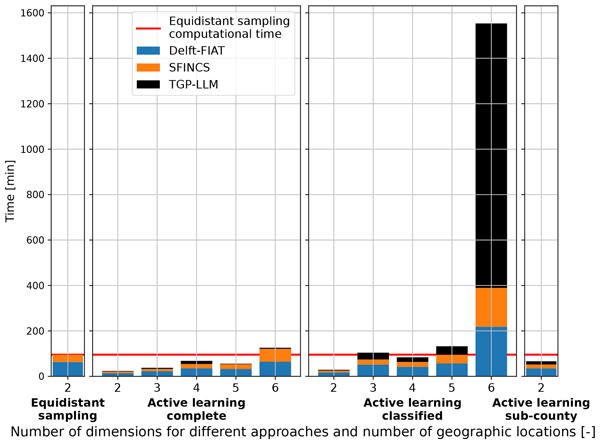
This study develops a conceptual framework that uses active learning to accelerate compound flood risk assessments. A case study of Charleston County shows that the framework achieves faster and more accurate risk quantification compared to the state-of-the-art. This win–win allows for an increase in the number of flooding parameters, which results in an 11.6 % difference in the expected annual damages. Therefore, this framework allows for more comprehensive compound flood risk assessments.
Robert McCall, Curt Storlazzi, Floortje Roelvink, Stuart G. Pearson, Roel de Goede, and José A. Á. Antolínez
Nat. Hazards Earth Syst. Sci., 24, 3597–3625, https://doi.org/10.5194/nhess-24-3597-2024, https://doi.org/10.5194/nhess-24-3597-2024, 2024
Short summary
Short summary
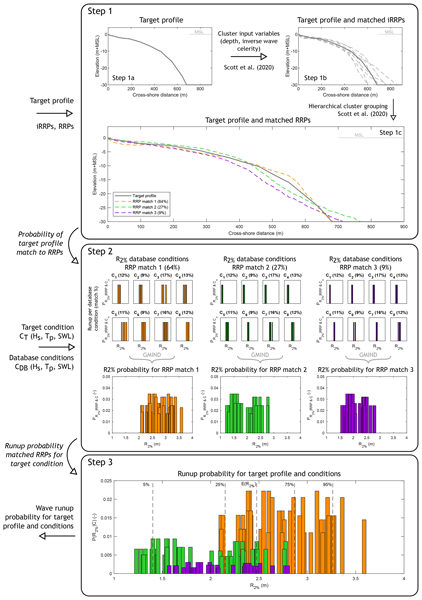
Accurate predictions of wave-driven flooding are essential to manage risk on low-lying, reef-lined coasts. Models to provide this information are, however, computationally expensive. We present and validate a modeling system that simulates flood drivers on diverse and complex reef-lined coasts as competently as a full-physics model but at a fraction of the computational cost to run. This development paves the way for application in large-scale early-warning systems and flood risk assessments.
Kees Nederhoff, Maarten van Ormondt, Jay Veeramony, Ap van Dongeren, José Antonio Álvarez Antolínez, Tim Leijnse, and Dano Roelvink
Geosci. Model Dev., 17, 1789–1811, https://doi.org/10.5194/gmd-17-1789-2024, https://doi.org/10.5194/gmd-17-1789-2024, 2024
Short summary
Short summary
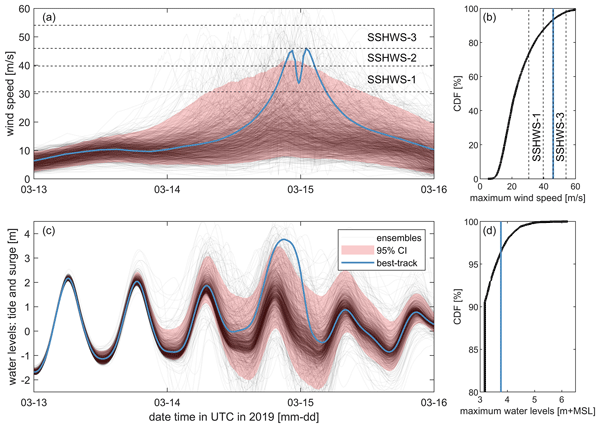
Forecasting tropical cyclones and their flooding impact is challenging. Our research introduces the Tropical Cyclone Forecasting Framework (TC-FF), enhancing cyclone predictions despite uncertainties. TC-FF generates global wind and flood scenarios, valuable even in data-limited regions. Applied to cases like Cyclone Idai, it showcases potential in bettering disaster preparation, marking progress in handling cyclone threats.
Adriaan L. van Natijne, Thom A. Bogaard, Thomas Zieher, Jan Pfeiffer, and Roderik C. Lindenbergh
Nat. Hazards Earth Syst. Sci., 23, 3723–3745, https://doi.org/10.5194/nhess-23-3723-2023, https://doi.org/10.5194/nhess-23-3723-2023, 2023
Short summary
Short summary
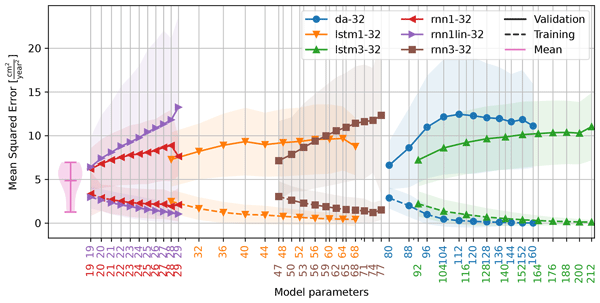
Landslides are one of the major weather-related geohazards. To assess their potential impact and design mitigation solutions, a detailed understanding of the slope is required. We tested if the use of machine learning, combined with satellite remote sensing data, would allow us to forecast deformation. Our results on the Vögelsberg landslide, a deep-seated landslide near Innsbruck, Austria, show that the formulation of such a machine learning system is not as straightforward as often hoped for.
Lukas Winiwarter, Katharina Anders, Daniel Czerwonka-Schröder, and Bernhard Höfle
Earth Surf. Dynam., 11, 593–613, https://doi.org/10.5194/esurf-11-593-2023, https://doi.org/10.5194/esurf-11-593-2023, 2023
Short summary
Short summary
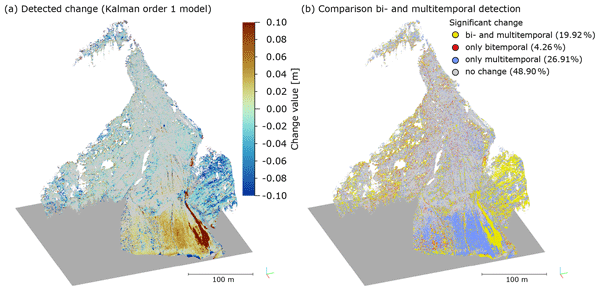
We present a method to extract surface change information from 4D time series of topographic point clouds recorded with a terrestrial laser scanner. The method uses sensor information to spatially and temporally smooth the data, reducing uncertainties. The Kalman filter used for the temporal smoothing also allows us to interpolate over data gaps or extrapolate into the future. Clustering areas where change histories are similar allows us to identify processes that may have the same causes.
J. P. Meinderts, R. Lindenbergh, D. H. van der Heide, A. Amiri-Simkooei, and L. Truong-Hong
Int. Arch. Photogramm. Remote Sens. Spatial Inf. Sci., XLVIII-2-W2-2022, 69–76, https://doi.org/10.5194/isprs-archives-XLVIII-2-W2-2022-69-2022, https://doi.org/10.5194/isprs-archives-XLVIII-2-W2-2022-69-2022, 2022
D. Hulskemper, K. Anders, J. A. Á. Antolínez, M. Kuschnerus, B. Höfle, and R. Lindenbergh
Int. Arch. Photogramm. Remote Sens. Spatial Inf. Sci., XLVIII-2-W2-2022, 53–60, https://doi.org/10.5194/isprs-archives-XLVIII-2-W2-2022-53-2022, https://doi.org/10.5194/isprs-archives-XLVIII-2-W2-2022-53-2022, 2022
Panagiotis Athanasiou, Ap van Dongeren, Alessio Giardino, Michalis Vousdoukas, Jose A. A. Antolinez, and Roshanka Ranasinghe
Nat. Hazards Earth Syst. Sci., 22, 3897–3915, https://doi.org/10.5194/nhess-22-3897-2022, https://doi.org/10.5194/nhess-22-3897-2022, 2022
Short summary
Short summary
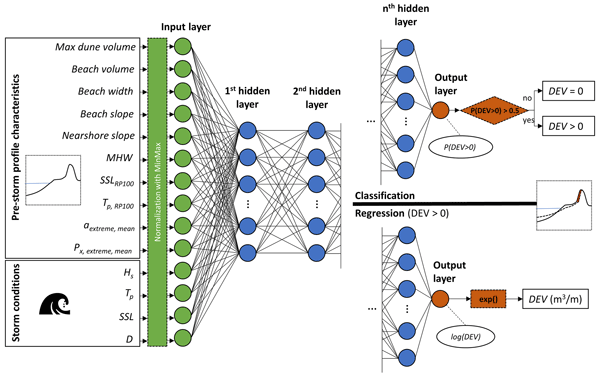
Sandy dunes protect the hinterland from coastal flooding during storms. Thus, models that can efficiently predict dune erosion are critical for coastal zone management and early warning systems. Here we develop such a model for the Dutch coast based on machine learning techniques, allowing for dune erosion estimations in a matter of seconds relative to available computationally expensive models. Validation of the model against benchmark data and observations shows good agreement.
L. Truong-Hong, R. C. Lindenbergh, and M. J. Vermeij
Int. Arch. Photogramm. Remote Sens. Spatial Inf. Sci., XLVIII-4-W4-2022, 161–168, https://doi.org/10.5194/isprs-archives-XLVIII-4-W4-2022-161-2022, https://doi.org/10.5194/isprs-archives-XLVIII-4-W4-2022-161-2022, 2022
V. Zahs, L. Winiwarter, K. Anders, M. Bremer, M. Rutzinger, M. Potůčková, and B. Höfle
Int. Arch. Photogramm. Remote Sens. Spatial Inf. Sci., XLIII-B2-2022, 1109–1116, https://doi.org/10.5194/isprs-archives-XLIII-B2-2022-1109-2022, https://doi.org/10.5194/isprs-archives-XLIII-B2-2022-1109-2022, 2022
M. Kuschnerus, R. Lindenbergh, Q. Lodder, E. Brand, and S. Vos
Int. Arch. Photogramm. Remote Sens. Spatial Inf. Sci., XLIII-B2-2022, 1055–1061, https://doi.org/10.5194/isprs-archives-XLIII-B2-2022-1055-2022, https://doi.org/10.5194/isprs-archives-XLIII-B2-2022-1055-2022, 2022
H. S. Kathmann, A. L. van Natijne, and R. C. Lindenbergh
Int. Arch. Photogramm. Remote Sens. Spatial Inf. Sci., XLIII-B2-2022, 1033–1040, https://doi.org/10.5194/isprs-archives-XLIII-B2-2022-1033-2022, https://doi.org/10.5194/isprs-archives-XLIII-B2-2022-1033-2022, 2022
K. Anders, L. Winiwarter, D. Schröder, and B. Höfle
Int. Arch. Photogramm. Remote Sens. Spatial Inf. Sci., XLIII-B2-2022, 973–980, https://doi.org/10.5194/isprs-archives-XLIII-B2-2022-973-2022, https://doi.org/10.5194/isprs-archives-XLIII-B2-2022-973-2022, 2022
A. Nurunnabi, F. N. Teferle, R. C. Lindenbergh, J. Li, and S. Zlatanova
Int. Arch. Photogramm. Remote Sens. Spatial Inf. Sci., XLIII-B1-2022, 59–66, https://doi.org/10.5194/isprs-archives-XLIII-B1-2022-59-2022, https://doi.org/10.5194/isprs-archives-XLIII-B1-2022-59-2022, 2022
F. Dahle, J. Tanke, B. Wouters, and R. Lindenbergh
ISPRS Ann. Photogramm. Remote Sens. Spatial Inf. Sci., V-2-2022, 237–244, https://doi.org/10.5194/isprs-annals-V-2-2022-237-2022, https://doi.org/10.5194/isprs-annals-V-2-2022-237-2022, 2022
L. Winiwarter, K. Anders, D. Schröder, and B. Höfle
ISPRS Ann. Photogramm. Remote Sens. Spatial Inf. Sci., V-2-2022, 79–86, https://doi.org/10.5194/isprs-annals-V-2-2022-79-2022, https://doi.org/10.5194/isprs-annals-V-2-2022-79-2022, 2022
A. Nurunnabi, F. N. Teferle, D. F. Laefer, R. C. Lindenbergh, and A. Hunegnaw
Int. Arch. Photogramm. Remote Sens. Spatial Inf. Sci., XLVI-2-W1-2022, 401–408, https://doi.org/10.5194/isprs-archives-XLVI-2-W1-2022-401-2022, https://doi.org/10.5194/isprs-archives-XLVI-2-W1-2022-401-2022, 2022
A. Nurunnabi, F. N. Teferle, J. Li, R. C. Lindenbergh, and S. Parvaz
Int. Arch. Photogramm. Remote Sens. Spatial Inf. Sci., XLVI-4-W5-2021, 397–404, https://doi.org/10.5194/isprs-archives-XLVI-4-W5-2021-397-2021, https://doi.org/10.5194/isprs-archives-XLVI-4-W5-2021-397-2021, 2021
L. Truong-Hong, N. Nguyen, R. Lindenbergh, P. Fisk, and T. Huynh
Int. Arch. Photogramm. Remote Sens. Spatial Inf. Sci., XLVI-4-W4-2021, 119–124, https://doi.org/10.5194/isprs-archives-XLVI-4-W4-2021-119-2021, https://doi.org/10.5194/isprs-archives-XLVI-4-W4-2021-119-2021, 2021
Cited articles
Abdulsalam, M. B., Jaramillo, C., De Freitas, L., González, M., and Antolínez, J. A. A.: Assessing shoreline orientation variation across diverse coastal environments, Coast. Eng., 200, 104770, https://doi.org/10.1016/j.coastaleng.2025.104770, 2025. a
Anders, K., Winiwarter, L., Mara, H., Lindenbergh, R., Vos, S. E., and Höfle, B.: Fully automatic spatiotemporal segmentation of 3D LiDAR time series for the extraction of natural surface changes, ISPRS J. Photogramm., 173, 297–308, https://doi.org/10.1016/j.isprsjprs.2021.01.015, 2021. a, b, c, d, e, f, g, h, i, j, k
Anders, K., Winiwarter, L., and Höfle, B.: Improving change analysis from near-continuous 3D time series by considering full temporal information, IEEE Geosci. Remote S., 19, 1–5, https://doi.org/10.1109/LGRS.2022.3148920, 2022. a, b, c
Anders, K., Kempf, D., Albert, W., Andriushchenko, P., Huang, X., Hulskemper, D., Isensee, T., Kapitan, D., Tabernig, R., Weiser, H., Winiwarter, L., Zahs, V., and Höfle, B.: py4dgeo: Open-source scientific software for topographic change analysis in 3D/4D geographic point clouds, SoftwareX, 34, 102670, https://doi.org/10.1016/j.softx.2026.102670, 2026. a, b, c
Anderson, D., Ruggiero, P., Antolínez, J. A. A., Méndez, F. J., and Allan, J.: A Climate Index Optimized for Longshore Sediment Transport Reveals Interannual and Multidecadal Littoral Cell Rotations, J. Geophys. Res.-Earth, 123, 1958–1981, https://doi.org/10.1029/2018JF004689, 2018. a
Berndt, D. J. and Clifford, J.: Using dynamic time warping to find patterns in time series, in: Proceedings of the 3rd International Conference on Knowledge Discovery and Data Mining, AAAIWS'94, AAAI Press, Seattle, WA, 359–370, 1994. a
Campello, R. J. G. B., Moulavi, D., Zimek, A., and Sander, J.: Hierarchical Density Estimates for Data Clustering, Visualization, and Outlier Detection, ACM T. Knowl. Discov. D., 10, 1–51, https://doi.org/10.1145/2733381, 2015. a
Castelle, B. and Masselink, G.: Morphodynamics of wave-dominated beaches, Cambridge Prisms: Coastal Futures, 1, https://doi.org/10.1017/cft.2022.2, 2023. a
Castelle, B., Kras, E., Masselink, G., Scott, T., Konstantinou, A., and Luijendijk, A.: Satellite-derived sandy shoreline trends and interannual variability along the Atlantic coast of Europe, Sci. Rep., 14, 13002, https://doi.org/10.1038/s41598-024-63849-4, 2024. a
Chowdhury, P., Lakku, N. K. G., Lincoln, S., Seelam, J. K., and Behera, M. R.: Climate change and coastal morphodynamics: Interactions on regional scales, Sci. Total Environ., 899, 166432, https://doi.org/10.1016/j.scitotenv.2023.166432, 2023. a
Christiaanse, J. C., Antolínez, J. A. A., Luijendijk, A. P., Athanasiou, P., Duarte, C. M., and Aarninkhof, S.: Distribution of global sea turtle nesting explained from regional-scale coastal characteristics, Sci. Rep., 14, 752, https://doi.org/10.1038/s41598-023-50239-5, 2024. a
Christiaanse, J. C., Reniers, A. J. H. M., Aarninkhof, S. G. J., Ostertag, E. F., Nel, R., Duarte, C. M., and Antolínez, J. A. A.: Aiding sea turtle conservation through coastal management, Front. Mar. Sci., 12, 1669885, https://doi.org/10.3389/fmars.2025.1669885, 2025. a
Coco, G. and Murray, A. B.: Patterns in the sand: From forcing templates to self-organization, Geomorphology, 91, 271–290, https://doi.org/10.1016/j.geomorph.2007.04.023, 2007. a
Coelingh, J., Van Wijk, A., and Holtslag, A.: Analysis of wind speed observations on the North Sea coast, J. Wind Eng. Ind. Aerod., 73, 125–144, https://doi.org/10.1016/S0167-6105(97)00285-7, 1998. a
Cohn, N. and Anderson, D.: Projecting the Longevity of Coastal Foredunes Under Stochastic Meteorological and Oceanographic Forcing, Earths Future, 13, e2024EF005335, https://doi.org/10.1029/2024EF005335, 2025. a
Cohn, N., Ruggiero, P., de Vries, S., and García-Medina, G.: Beach Growth Driven By Intertidal Sandbar Welding, Proceedings of Coastal Dynamics 2017, edited by: Aagaard, T., Deigaard, R., and Fuhrman, D., Helsingør, Denmark, 1059–1069, 2017. a
Cohn, N., Ruggiero, P., García-Medina, G., Anderson, D., Serafin, K. A., and Biel, R.: Environmental and morphologic controls on wave-induced dune response, Geomorphology, 329, 108–128, https://doi.org/10.1016/j.geomorph.2018.12.023, 2019. a
De Almeida, L., González, M., and Medina, R.: Morphometric characterization of foredunes along the coast of northern Spain, Geomorphology, 338, 68–78, https://doi.org/10.1016/j.geomorph.2019.04.019, 2019. a
Delgado-Fernandez, I.: A review of the application of the fetch effect to modelling sand supply to coastal foredunes, Aeolian Res., 2, 61–70, https://doi.org/10.1016/j.aeolia.2010.04.001, 2010. a, b
De Schipper, M. A., Ludka, B. C., Raubenheimer, B., Luijendijk, A. P., and Schlacher, T. A.: Beach nourishment has complex implications for the future of sandy shores, Nat. Rev. Earth Environ., 2, 70–84, https://doi.org/10.1038/s43017-020-00109-9, 2020. a
De Vries, S., Arens, S., De Schipper, M., and Ranasinghe, R.: Aeolian sediment transport on a beach with a varying sediment supply, Aeolian Res., 15, 235–244, https://doi.org/10.1016/j.aeolia.2014.08.001, 2014. a
Dubarbier, B., Castelle, B., Marieu, V., and Ruessink, G.: Process-based modeling of cross-shore sandbar behavior, Coast. Eng., 95, 35–50, https://doi.org/10.1016/j.coastaleng.2014.09.004, 2015. a
Eitel, J. U., Höfle, B., Vierling, L. A., Abellán, A., Asner, G. P., Deems, J. S., Glennie, C. L., Joerg, P. C., LeWinter, A. L., Magney, T. S., Mandlburger, G., Morton, D. C., Müller, J., and Vierling, K. T.: Beyond 3-D: The new spectrum of lidar applications for earth and ecological sciences, Remote Sens. Environ., 186, 372–392, https://doi.org/10.1016/j.rse.2016.08.018, 2016. a
Fryer, D., Strümke, I., and Nguyen, H.: Shapley values for feature selection: The good, the bad, and the axioms, arXiv [preprint], https://doi.org/10.48550/arXiv.2102.10936, 2021. a
Höfle, B., Vetter, M., Pfeifer, N., Mandlburger, G., and Stötter, J.: Water surface mapping from airborne laser scanning using signal intensity and elevation data, Earth Surf. Proc. Land., 34, 1635–1649, https://doi.org/10.1002/esp.1853, 2009. a
Höfle, B., Kempf, D., Anders, K., Tabernig, R., Isensee, T., Huang, X., and Weiser, H.: py4dgeo: library for change analysis in 4D point clouds, version 1.1.0, MIT, GitHub [code], https://github.com/3dgeo-heidelberg/py4dgeo (last access: 5 May 2026), 2026. a
Hulskemper, D., Anders, K., Antolínez, J. A. Á., Kuschnerus, M., Höfle, B., and Lindenbergh, R.: CHARACTERIZATION OF MORPHOLOGICAL SURFACE ACTIVITIES DERIVED FROM NEAR-CONTINUOUS TERRESTRIAL LIDAR TIME SERIES, Int. Arch. Photogramm. Remote Sens. Spatial Inf. Sci., XLVIII-2/W2-2022, 53–60, https://doi.org/10.5194/isprs-archives-XLVIII-2-W2-2022-53-2022, 2022. a, b, c
Hulskemper, D., Antolínez, J. A. A., Lindenbergh, R., and Anders, K.: Grouped 4D Objects-By-Change Derived from the Noordwijk Sandy Beach Permanent Laser Scanning Dataset, 4TU.ResearchData [data set], https://doi.org/10.4121/7cf573ec-ce73-4dcf-86ea-553f159c417c, 2026. a
Karniadakis, G. E., Kevrekidis, I. G., Lu, L., Perdikaris, P., Wang, S., and Yang, L.: Physics-informed machine learning, Nat. Rev. Phys., 3, 422–440, https://doi.org/10.1038/s42254-021-00314-5, 2021. a
Kennard, R. W. and Stone, L. A.: Computer aided design of experiments, Technometrics, 11, 137–148, https://doi.org/10.1080/00401706.1969.10490666, 1969. a
KNMI: Uurgegevens van het weer in Nederland, KNMI, https://www.knmi.nl/nederland-nu/klimatologie/uurgegevens (last access: 5 May 2026), 2024. a
Kohonen, T.: The self-organizing map, P. IEEE, 78, 1464–1480, https://doi.org/10.1109/5.58325, 1990. a
Kohonen, T.: Learning vector quantization, in: Self-organizing maps, Springer Berlin Heidelberg, Berlin, Heidelberg, ISBN 978-3-642-97610-0, 175–189, https://doi.org/10.1007/978-3-642-97610-0_6, 1995. a
Kromer, R. A., Abellán, A., Hutchinson, D. J., Lato, M., Chanut, M.-A., Dubois, L., and Jaboyedoff, M.: Automated terrestrial laser scanning with near-real-time change detection – monitoring of the Séchilienne landslide, Earth Surf. Dynam., 5, 293–310, https://doi.org/10.5194/esurf-5-293-2017, 2017. a
Kuschnerus, M.: Assessing Geomorphologic Processes with Permanent Laser Scanning: A Case Study on the Dutch Coast, PhD thesis, Delft University of Technology, https://doi.org/10.4233/UUID:31B3D8F8-1C0E-4A02-8089-D18034FA8850, 2024. a, b, c
Kuschnerus, M., Lindenbergh, R., and Vos, S.: Coastal change patterns from time series clustering of permanent laser scan data, Earth Surf. Dynam., 9, 89–103, https://doi.org/10.5194/esurf-9-89-2021, 2021. a, b, c, d
Kuschnerus, M., Lindenbergh, R., Vos, S., and Hanssen, R.: Statistically assessing vertical change on a sandy beach from permanent laser scanning time series, ISPRS Open Journal of Photogrammetry and Remote Sensing, 11, 100055, https://doi.org/10.1016/j.ophoto.2023.100055, 2024b. a
Lague, D., Brodu, N., and Leroux, J.: Accurate 3D comparison of complex topography with terrestrial laser scanner: Application to the Rangitikei canyon (N-Z), ISPRS J. Photogramm., 82, 10–26, https://doi.org/10.1016/j.isprsjprs.2013.04.009, 2013. a, b
Lansu, E. M., Reijers, V. C., Höfer, S., Luijendijk, A., Rietkerk, M., Wassen, M. J., Lammerts, E. J., and Van Der Heide, T.: A global analysis of how human infrastructure squeezes sandy coasts, Nat. Commun., 15, 432, https://doi.org/10.1038/s41467-023-44659-0, 2024. a, b
Lazarus, E. D. and Goldstein, E. B.: Is There a Bulldozer in your Model?, J. Geophys. Res.-Earth, 124, 696–699, https://doi.org/10.1029/2018JF004957, 2019. a
Lesser, G. R. and Roelvink, J. A.: Development and validation of a three-dimensional morphological model, Coast. Eng., https://doi.org/10.1016/j.coastaleng.2004.07.014, 2004. a
Lindenbergh, R., Anders, K., Campos, M., Czerwonka-Schröder, D., Höfle, B., Kuschnerus, M., Puttonen, E., Prinz, R., Rutzinger, M., Voordendag, A., and Vos, S.: Permanent terrestrial laser scanning for near-continuous environmental observations: Systems, methods, challenges and applications, ISPRS Open Journal of Photogrammetry and Remote Sensing, 17, 100094, https://doi.org/10.1016/j.ophoto.2025.100094, 2025. a, b
Lindenbergh, R. C., Soudarissanane, S. S., De Vries, S., Gorte, B. G., and De Schipper, M. A.: Aeolian beach sand transport monitored by terrestrial laser scanning, Photogramm. Rec., 26, 384–399, https://doi.org/10.1111/j.1477-9730.2011.00659.x, 2011. a
Luijendijk, A., Hagenaars, G., Ranasinghe, R., Baart, F., Donchyts, G., and Aarninkhof, S.: The State of the World's Beaches, Sci. Rep., 8, 6641, https://doi.org/10.1038/s41598-018-24630-6, 2018. a
Masselink, G., Kroon, A., and Davidson-Arnott, R.: Morphodynamics of intertidal bars in wave-dominated coastal settings – A review, Geomorphology, 73, 33–49, https://doi.org/10.1016/j.geomorph.2005.06.007, 2006. a
Mentaschi, L., Vousdoukas, M. I., Pekel, J.-F., Voukouvalas, E., and Feyen, L.: Global long-term observations of coastal erosion and accretion, Sci. Rep., 8, 12876, https://doi.org/10.1038/s41598-018-30904-w, 2018. a
Moore, L. J., Hacker, S. D., Breithaupt, J., de Vries, S., Miller, T., Ruggiero, P., and Zinnert, J. C.: Ecomorphodynamics of coastal foredune evolution, Nat. Rev. Earth Environ., 1–16, https://doi.org/10.1038/s43017-025-00672-z, 2025. a
Moulavi, D., Jaskowiak, P. A., Campello, R. J. G. B., Zimek, A., and Sander, J.: Density-Based Clustering Validation, in: Proceedings of the 2014 SIAM International Conference on Data Mining, Society for Industrial and Applied Mathematics, ISBN 978-1-61197-344-0, 839–847, https://doi.org/10.1137/1.9781611973440.96, 2014. a
Murtagh, F. and Contreras, P.: Algorithms for hierarchical clustering: an overview, WIREs Data Min. Knowl., 2, 86–97, https://doi.org/10.1002/widm.53, 2012. a
O'Dea, A., Brodie, K. L., and Hartzell, P.: Continuous Coastal Monitoring with an Automated Terrestrial Lidar Scanner, Journal of Marine Science and Engineering, 7, 37, https://doi.org/10.3390/jmse7020037, 2019. a
Palalane, J. and Larson, M.: A Long-Term Coastal Evolution Model with Longshore and Cross-Shore Transport, J. Coastal Res., 36, 411, https://doi.org/10.2112/JCOASTRES-D-17-00020.1, 2019. a
Pedregosa, F., Varoquaux, G., Gramfort, A., Michel, V., Thirion, B., Grisel, O., Blondel, M., Prettenhofer, P., Weiss, R., Dubourg, V., Vanderplas, J., Passos, A., Cournapeau, D., Brucher, M., Perrot, M., and Duchesnay, E.: Scikit-learn: Machine learning in Python, J. Mach. Learn. Res., 12, 2825–2830, 2011. a
Poppema, D. W., Wijnberg, K. M., Mulder, J. P., Vos, S. E., and Hulscher, S. J.: The effect of building geometry on the size of aeolian deposition patterns: Scale model experiments at the beach, Coast. Eng., 168, 103866, https://doi.org/10.1016/j.coastaleng.2021.103866, 2021. a, b
Ranasinghe, R.: On the need for a new generation of coastal change models for the 21st century, Sci. Rep., 10, 2010, https://doi.org/10.1038/s41598-020-58376-x, 2020. a
Rijkswaterstaat: Waterinfo, Rijkswaterstaat, https://waterinfo.rws.nl/ (last access: 5 May 2026), 2024. a
Roelvink, D. and Costas, S.: Coupling nearshore and aeolian processes: XBeach and duna process-based models, Environ. Model. Softw., 115, 98–112, https://doi.org/10.1016/j.envsoft.2019.02.010, 2019. a
Silva, A. N., Taborda, R., Bertin, X., and Dodet, G.: Seasonal to Decadal Variability of Longshore Sand Transport at the Northwest Coast of Portugal, J. Waterw. Port Coast., 138, 464–472, https://doi.org/10.1061/(ASCE)WW.1943-5460.0000152, 2012. a
Small, C. and Nicholls, R. J.: A Global Analysis of Human Settlement in Coastal Zones, J. Coastal Res., 19, 584–599, http://www.jstor.org/stable/4299200 (last access: 5 May 2026), 2003. a
Splinter, K. D. and Coco, G.: Challenges and Opportunities in Coastal Shoreline Prediction, Front. Mar. Sci., 8, 788657, https://doi.org/10.3389/fmars.2021.788657, 2021. a
Sušelj, K., Sood, A., and Heinemann, D.: North Sea near-surface wind climate and its relation to the large-scale circulation patterns, Theor. Appl. Climatol., 99, 403–419, https://doi.org/10.1007/s00704-009-0149-2, 2010. a
Tabernig, R., Albert, W., Weiser, H., and Höfle, B. H.: A hierarchical approach for near real-time 3D surface change analysis of permanent laser scanning point clouds, Proceedings of the 6th Joint International Symposium on Deformation Monitoring – JISDM 2025, https://doi.org/10.5445/IR/1000180377, 2025a. a
Tabernig, R., Albert, W., Weiser, H., Fritzmann, P., Anders, K., Rutzinger, M., and Höfle, B.: Temporal aggregation of point clouds improves permanent laser scanning of landslides in forested areas, Science of Remote Sensing, 100254, https://doi.org/10.1016/j.srs.2025.100254, 2025b. a
Tereszkiewicz, P. A. and Ellis, J. T.: More than surface roughness: making a case for wrack as a geomorphic engineer in the beach-dune system, J. Coast. Conserv., 29, 11, https://doi.org/10.1007/s11852-025-01100-6, 2025. a
Thorndike, R. L.: Who belongs in the family?, Psychometrika, 18, 267–276, https://doi.org/10.1007/BF02289263, 1953. a
Truong, C., Oudre, L., and Vayatis, N.: Selective review of offline change point detection methods, Signal Process., 167, 107299, https://doi.org/10.1016/j.sigpro.2019.107299, 2020. a
Turner, I. L., Harley, M. D., Short, A. D., Simmons, J. A., Bracs, M. A., Phillips, M. S., and Splinter, K. D.: A multi-decade dataset of monthly beach profile surveys and inshore wave forcing at Narrabeen, Australia, Sci. Data, 3, 160024, https://doi.org/10.1038/sdata.2016.24, 2016. a
Ulm, M., Elias, M., Eltner, A., Lotsari, E., and Anders, K.: Automated change detection in photogrammetric 4D point clouds – Transferability and extension of 4D objects-by-change for monitoring riverbank dynamics using low-cost cameras, Applied Geomatics, 17, 367–378, https://doi.org/10.1007/s12518-025-00623-9, 2025. a, b
Van De Lageweg, W., Bryan, K., Coco, G., and Ruessink, B.: Observations of shoreline–sandbar coupling on an embayed beach, Mar. Geol., 344, 101–114, https://doi.org/10.1016/j.margeo.2013.07.018, 2013. a
Van Westen, B., De Vries, S., Cohn, N., Van IJzendoorn, C., Strypsteen, G., and Hallin, C.: AeoLiS: Numerical modelling of coastal dunes and aeolian landform development for real-world applications, Environ. Model. Softw., 179, 106093, https://doi.org/10.1016/j.envsoft.2024.106093, 2024. a
Vettigli, G.: MiniSom: minimalistic and NumPy-based implementation of the self organizing map, GitHub [code], https://github.com/JustGlowing/minisom/ (last access: 5 May 2026), 2018. a
Voordendag, A., Goger, B., Klug, C., Prinz, R., Rutzinger, M., Sauter, T., and Kaser, G.: Uncertainty assessment of a permanent long-range terrestrial laser scanning system for the quantification of snow dynamics on Hintereisferner (Austria), Front. Earth Sci., 11, 1085416, https://doi.org/10.3389/feart.2023.1085416, 2023. a
Vos, K., Splinter, K. D., Palomar-Vázquez, J., Pardo-Pascual, J. E., Almonacid-Caballer, J., Cabezas-Rabadán, C., Kras, E. C., Luijendijk, A. P., Calkoen, F., Almeida, L. P., Pais, D., Klein, A. H. F., Mao, Y., Harris, D., Castelle, B., Buscombe, D., and Vitousek, S.: Benchmarking satellite-derived shoreline mapping algorithms, Commun. Earth Environ., 4, 345, https://doi.org/10.1038/s43247-023-01001-2, 2023a. a
Vos, S., Spaans, L., Reniers, A., Holman, R., Mccall, R., and De Vries, S.: Cross-Shore Intertidal Bar Behavior along the Dutch Coast: Laser Measurements and Conceptual Model, Journal of Marine Science and Engineering, 8, 864, https://doi.org/10.3390/jmse8110864, 2020. a
Vos, S., Anders, K., Kuschnerus, M., Lindenbergh, R., Höfle, B., Aarninkhof, S., and De Vries, S.: A high-resolution 4D terrestrial laser scan dataset of the Kijkduin beach-dune system, The Netherlands, Sci. Data, 9, 191, https://doi.org/10.1038/s41597-022-01291-9, 2022. a, b
Vos, S., Anders, K., Wulf, A. D., Vries, S. D., and Lindenbergh, R.: Spatio-Temporal Variation Of Aeolian Shoreward Sand Transport Measured Using Near-Continuous Laser Scanning, Coastal Engineering Proceedings, p. 24, https://doi.org/10.9753/icce.v37.papers.24, 2023b. a
Vos, S., Van IJzendoorn, C., Lindenbergh, R., and De Wulf, A.: Non-uniform dune development in the presence of standalone beach buildings, Geomorphology, 466, 109402, https://doi.org/10.1016/j.geomorph.2024.109402, 2024. a
Vousdoukas, M. I., Mentaschi, L., Voukouvalas, E., Verlaan, M., Jevrejeva, S., Jackson, L. P., and Feyen, L.: Global probabilistic projections of extreme sea levels show intensification of coastal flood hazard, Nat. Commun., 9, 2360, https://doi.org/10.1038/s41467-018-04692-w, 2018. a
Vousdoukas, M. I., Ranasinghe, R., Mentaschi, L., Plomaritis, T. A., Athanasiou, P., Luijendijk, A., and Feyen, L.: Sandy coastlines under threat of erosion, Nat. Clim. Change, 10, 260–263, https://doi.org/10.1038/s41558-020-0697-0, 2020. a
Walker, I. J., Davidson-Arnott, R. G., Bauer, B. O., Hesp, P. A., Delgado-Fernandez, I., Ollerhead, J., and Smyth, T. A.: Scale-dependent perspectives on the geomorphology and evolution of beach-dune systems, Earth-Sci. Rev., 171, 220–253, https://doi.org/10.1016/j.earscirev.2017.04.011, 2017. a
Wang, J. and Anders, K.: Unsupervised Deep Clustering on Spatiotemporal Objects Extracted from 4D Point Clouds for Automatic Identification of Topographic Processes in Natural Environments, ISPRS Ann. Photogramm. Remote Sens. Spatial Inf. Sci., X-G-2025, 929–936, https://doi.org/10.5194/isprs-annals-X-G-2025-929-2025, 2025. a, b
Wijnberg, K. M.: Environmental controls on decadal morphologic behaviour of the Holland coast, Mar. Geol., 189, 227–247, https://doi.org/10.1016/S0025-3227(02)00480-2, 2002. a
Winiwarter, L., Anders, K., Czerwonka-Schröder, D., and Höfle, B.: Full four-dimensional change analysis of topographic point cloud time series using Kalman filtering, Earth Surf. Dynam., 11, 593–613, https://doi.org/10.5194/esurf-11-593-2023, 2023. a
Woodroffe, C. D., Evelpidou, N., Delgado-Fernandez, I., Green, D., Sengupta, D., Karkani, A., and Ciavola, P.: Coastline changes: a reconsideration of the prevalence of recession on sandy shorelines, Cambridge Prisms: Coastal Futures, 1–31, https://doi.org/10.1017/cft.2025.10010, 2025. a
Wright, L. and Short, A.: Morphodynamic variability of surf zones and beaches: A synthesis, Mar. Geol., 56, 93–118, https://doi.org/10.1016/0025-3227(84)90008-2, 1984. a
Xu, N., Wang, L., Xu, H., Ma, Y., Li, Y., and Wang, X. H.: Deriving Accurate Intertidal Topography for Sandy Beaches Using ICESat-2 Data and Sentinel-2 Imagery, Journal of Remote Sensing, 4, 0305, https://doi.org/10.34133/remotesensing.0305, 2024. a
Editorial statement
Hulskemper et al. report on a data-driven investigation and predictive modelling of Earth surface dynamics captured by high-resolution 4D remote sensing datasets. Their study shows how to integrate massive remote sensing observations to increase our process understanding in coastal morphodynamic research.
Hulskemper et al. report on a data-driven investigation and predictive modelling of Earth...
Short summary
We developed a new method to automatically detect and group short-term topographic changes on sandy beaches using hourly 3D laser scans collected over three years. By distinguishing variations in patterns of sand deposition and erosion, the approach allows scientists to study how beaches change at different moments in time and link these changes to environmental conditions like winds, waves or bulldozers, improving understanding and prediction of dynamics of sandy beaches.
We developed a new method to automatically detect and group short-term topographic changes on...


