
Articles | Volume 14, issue 5
https://doi.org/10.5194/esurf-14-685-2026
© Author(s) 2026. This work is distributed under
the Creative Commons Attribution 4.0 License.
the Creative Commons Attribution 4.0 License.
https://doi.org/10.5194/esurf-14-685-2026
© Author(s) 2026. This work is distributed under
the Creative Commons Attribution 4.0 License.
the Creative Commons Attribution 4.0 License.
Research article
| 
02 Sep 2026
Research article |
| 02 Sep 2026
| 02 Sep 2026
Fluvio-alluvial source-sink relationships at the Skeleton Coast of northern Namibia: a parametric analysis
Joel Mohren
CORRESPONDING AUTHOR

Chair of Physical Geography and Geoecology, RWTH Aachen University, Aachen, 52062, Germany
Janek Walk
Chair of Geomorphology, Institute of Geography and Geology, University of Würzburg, Würzburg, 97074, Germany
Department of Geography and Regional Research, University of Vienna, Vienna, 1010, Austria
Chair of Physical Geography and Geoecology, RWTH Aachen University, Aachen, 52062, Germany
Julian Krieger
Chair of Physical Geography and Geoecology, RWTH Aachen University, Aachen, 52062, Germany
Wolfgang Römer
Chair of Physical Geography and Geoecology, RWTH Aachen University, Aachen, 52062, Germany
Anna Nguno
Geological Survey of Namibia, P/Bag 13297, Windhoek, Namibia
Frank Lehmkuhl
Chair of Physical Geography and Geoecology, RWTH Aachen University, Aachen, 52062, Germany
Related authors
Aline Zinelabedin, Joel Mohren, Maria Wierzbicka-Wieczorek, Tibor Janos Dunai, Stefan Heinze, and Benedikt Ritter
Earth Surf. Dynam., 13, 257–276, https://doi.org/10.5194/esurf-13-257-2025, https://doi.org/10.5194/esurf-13-257-2025, 2025
Short summary
Short summary
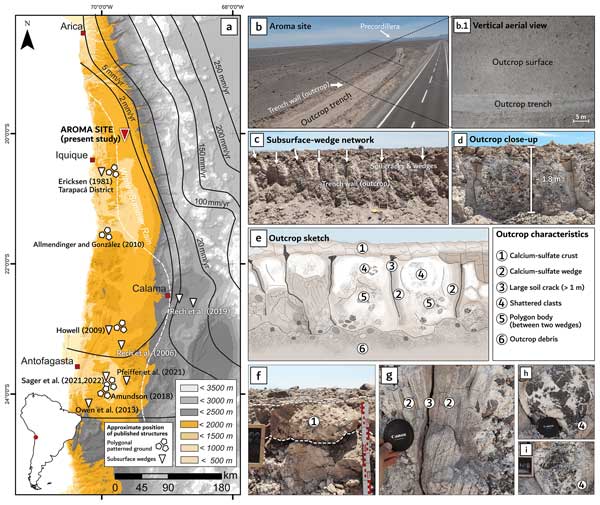
In order to interpret the formation processes of subsurface salt wedges and polygonal patterned grounds from the northern Atacama Desert, we present a multi-methodological approach. Due to the high salt content of the wedges, we suggest that their formation is dominated by subsurface salt dynamics requiring moisture. We assume that the climatic conditions during the wedge growth were slightly wetter than today, offering the potential to use the wedges as palaeoclimate archives.
Joel Mohren, Hendrik Wiesel, Wulf Amelung, L. Keith Fifield, Alexandra Sandhage-Hofmann, Erik Strub, Steven A. Binnie, Stefan Heinze, Elmarie Kotze, Chris Du Preez, Stephen G. Tims, and Tibor J. Dunai
Biogeosciences, 22, 1077–1094, https://doi.org/10.5194/bg-22-1077-2025, https://doi.org/10.5194/bg-22-1077-2025, 2025
Short summary
Short summary
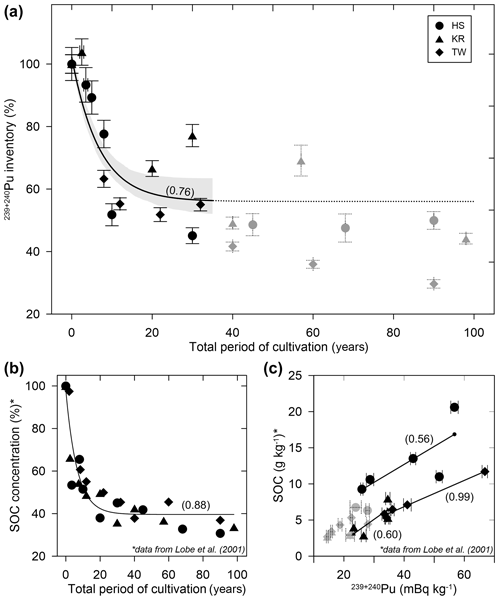
We measured concentrations of nuclear fallout in soil samples taken from arable land in South Africa. We find that during the second half of the 20th century, the data strongly correlate with the organic matter content of the soils. The finding implies that wind erosion strongly influenced the loss of organic matter in the soils we investigated. Furthermore, the exponential decline of fallout concentrations and organic matter content over time peaks shortly after native grassland is ploughed.
Zakieh Rashidi Koochi, Christian Büdel, Janek Walk, Markus Fuchs, Mehdi Torabi, Alireza Karimi, Roland Baumhauer, and Georg Stauch
E&G Quaternary Sci. J., 74, 193–212, https://doi.org/10.5194/egqsj-74-193-2025, https://doi.org/10.5194/egqsj-74-193-2025, 2025
Short summary
Short summary
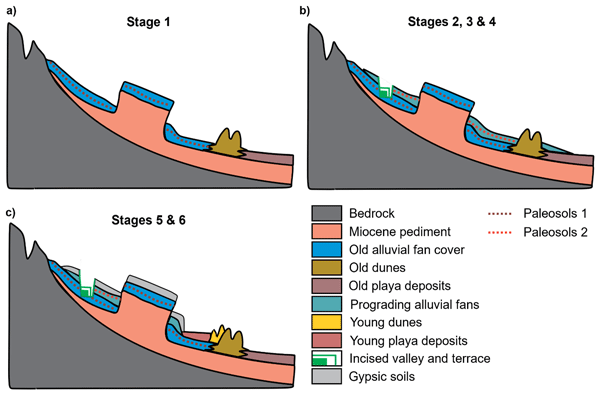
This study investigates the Khur Basin in central Iran, a crucial area for understanding landscape history, past environmental changes, and potential human migration. By analysing the sedimentary archives and mapping landforms, six stages of landscape development were identified, linked to the climate shifts over the late Quaternary period. The findings provide a detailed understanding of how a desert environment, including alluvial fans, dunes, and playas, developed in response to changing climates.
Johannes Keßels, Anna Swieder, Philipp Schulte, Götz Alper, Christopher Tober, Susanne Friederich, and Frank Lehmkuhl
E&G Quaternary Sci. J., 74, 129–145, https://doi.org/10.5194/egqsj-74-129-2025, https://doi.org/10.5194/egqsj-74-129-2025, 2025
Short summary
Short summary
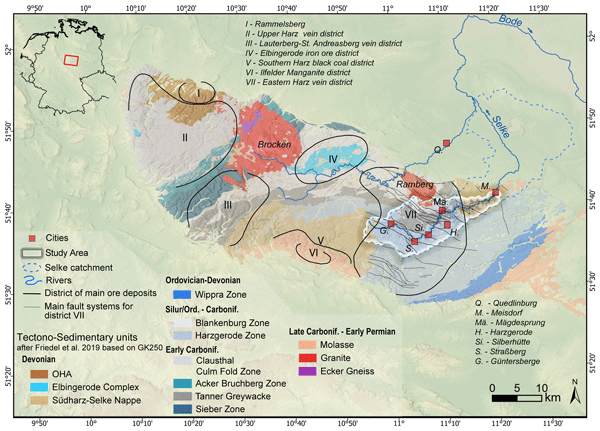
This paper presents the current state of research on mining history in the Selke River catchment as part of the eastern Harz vein district. We used different archives to compile and localise information about former mines/mining fields and smelting sites. The extraction and operation periods of these sites provide further information on possible signals in the overbank deposits due to mining activity, providing a basis for further analysis and interpretation of alluvial deposits.
Aline Zinelabedin, Joel Mohren, Maria Wierzbicka-Wieczorek, Tibor Janos Dunai, Stefan Heinze, and Benedikt Ritter
Earth Surf. Dynam., 13, 257–276, https://doi.org/10.5194/esurf-13-257-2025, https://doi.org/10.5194/esurf-13-257-2025, 2025
Short summary
Short summary
In order to interpret the formation processes of subsurface salt wedges and polygonal patterned grounds from the northern Atacama Desert, we present a multi-methodological approach. Due to the high salt content of the wedges, we suggest that their formation is dominated by subsurface salt dynamics requiring moisture. We assume that the climatic conditions during the wedge growth were slightly wetter than today, offering the potential to use the wedges as palaeoclimate archives.
Joel Mohren, Hendrik Wiesel, Wulf Amelung, L. Keith Fifield, Alexandra Sandhage-Hofmann, Erik Strub, Steven A. Binnie, Stefan Heinze, Elmarie Kotze, Chris Du Preez, Stephen G. Tims, and Tibor J. Dunai
Biogeosciences, 22, 1077–1094, https://doi.org/10.5194/bg-22-1077-2025, https://doi.org/10.5194/bg-22-1077-2025, 2025
Short summary
Short summary
We measured concentrations of nuclear fallout in soil samples taken from arable land in South Africa. We find that during the second half of the 20th century, the data strongly correlate with the organic matter content of the soils. The finding implies that wind erosion strongly influenced the loss of organic matter in the soils we investigated. Furthermore, the exponential decline of fallout concentrations and organic matter content over time peaks shortly after native grassland is ploughed.
Frank Lehmkuhl, Philipp Schulte, Wolfgang Römer, and Stephan Pötter
E&G Quaternary Sci. J., 72, 203–218, https://doi.org/10.5194/egqsj-72-203-2023, https://doi.org/10.5194/egqsj-72-203-2023, 2023
Short summary
Short summary
Research in loess landscapes provides evidence for the paleoenvironmental settings for past human societies and for the paleoclimate evolution of the past. Archeological and geoscientific investigations must consider different relief settings due to erosion, slope wash, accumulation of sediments and relocation of artifacts. The Lower Rhine Embayment can serve as a blueprint for such research as a typical loess landscape of Central Europe.
Mathias Vinnepand, Peter Fischer, Ulrich Hambach, Olaf Jöris, Carol-Ann Craig, Christian Zeeden, Barry Thornton, Thomas Tütken, Charlotte Prud'homme, Philipp Schulte, Olivier Moine, Kathryn E. Fitzsimmons, Christian Laag, Frank Lehmkuhl, Wolfgang Schirmer, and Andreas Vött
E&G Quaternary Sci. J., 72, 163–184, https://doi.org/10.5194/egqsj-72-163-2023, https://doi.org/10.5194/egqsj-72-163-2023, 2023
Short summary
Short summary
Loess–palaeosol sequences (LPSs) represent continental and non-aquatic archives providing detailed information on Quaternary environmental and climate changes. We present an integrative approach combining sedimentological, rock magnetic, and bulk geochemical data, as well as information on Sr and Nd isotope composition. The approach adds to a comprehensive understanding of LPS formation including changes in dust composition and associated circulation patterns during Quaternary climate changes.
Stephan Pötter, Katharina Seeger, Christiane Richter, Dominik Brill, Mathias Knaak, Frank Lehmkuhl, and Philipp Schulte
E&G Quaternary Sci. J., 72, 77–94, https://doi.org/10.5194/egqsj-72-77-2023, https://doi.org/10.5194/egqsj-72-77-2023, 2023
Short summary
Short summary
We reconstructed a wetland environment for a late Middle to Upper Pleniglacial (approx. 30–20 ka) loess sequence in western Germany. Typically, these sequences reveal terrestrial conditions with soil formation processes during this time frame. The here-investigated section, however, was influenced by periodical flooding, leading to marshy conditions and a stressed ecosystem. Our results show that the landscape of the study area was much more fragmented during this time than previously thought.
Cited articles
Abrams, M., Crippen, R., and Fujisada, H.: ASTER Global Digital Elevation Model (GDEM) and ASTER Global Water Body Dataset (ASTWBD), Remote Sensing, 12, https://doi.org/10.3390/rs12071156, 2020.
Allen, P. A.: Time scales of tectonic landscapes and their sediment routing systems, Geological Society, London, Special Publications, 296, 7–28, https://doi.org/10.1144/sp296.2, 2008.
Andersen, H. and Cermak, J.: First fully diurnal fog and low cloud satellite detection reveals life cycle in the Namib, Atmos. Meas. Tech., 11, 5461–5470, https://doi.org/10.5194/amt-11-5461-2018, 2018.
Andersen, H., Cermak, J., Solodovnik, I., Lelli, L., and Vogt, R.: Spatiotemporal dynamics of fog and low clouds in the Namib unveiled with ground- and space-based observations, Atmos. Chem. Phys., 19, 4383–4392, https://doi.org/10.5194/acp-19-4383-2019, 2019.
Arboleda-Zapata, M., Guillemoteau, J., Lucía, A., Eberle, J., Tronicke, J., and Korup, O.: Tracing past extreme floods on an alluvial fan using geophysical surveying, Earth Surf. Proc. Land., 48, 3273–3286, https://doi.org/10.1002/esp.5695, 2023.
Backhaus, K., Erichson, B., Gensler, S., Weiber, R., and Weiber, T.: Clusteranalyse, in: Multivariate Analysemethoden: Eine anwendungsorientierte Einführung, Springer Fachmedien Wiesbaden, Wiesbaden, 495–581, https://doi.org/10.1007/978-3-658-47929-9_8, 2025a.
Backhaus, K., Erichson, B., Gensler, S., Weiber, R., and Weiber, T.: Einführung in die empirische Datenanalyse, in: Multivariate Analysemethoden: Eine anwendungsorientierte Einführung, Springer Fachmedien Wiesbaden, Wiesbaden, 1–61, https://doi.org/10.1007/978-3-658-47929-9_1, 2025b.
Bahrami, S.: Tectonic controls on the morphometry of alluvial fans around Danehkhoshk anticline, Zagros, Iran, Geomorphology, 180–181, 217–230, https://doi.org/10.1016/j.geomorph.2012.10.012, 2013a.
Bahrami, S.: Analyzing the drainage system anomaly of Zagros basins: Implications for active tectonics, Tectonophysics, 608, 914–928, https://doi.org/10.1016/j.tecto.2013.07.026, 2013b.
Bartz, M., Walk, J., Binnie, S., Brill, D., Stauch, G., Lehmkuhl, F., Hoffmeister, D., and Brückner, H.: Late Pleistocene alluvial fan evolution along the coastal Atacama Desert (N Chile), Global Planet. Change, 190, 103091, https://doi.org/10.1016/j.gloplacha.2019.103091, 2020a.
Bartz, M., Duval, M., Brill, D., Zander, A., King, G. E., Rhein, A., Walk, J., Stauch, G., Lehmkuhl, F., and Brückner, H.: Testing the potential of K-feldspar pIR-IRSL and quartz ESR for dating coastal alluvial fan complexes in arid environments, Quatern. Int., 556, https://doi.org/10.1016/j.quaint.2020.03.037, 2020b.
Bierman, P. R. and Caffee, M.: Slow Rates of Rock Surface Erosion and Sediment Production across the Namib Desert and Escarpment, Southern Africa, Am. J. Sci., 301, 326–358, https://doi.org/10.2475/ajs.301.4-5.326, 2001.
Blümel, W. D.: Wüsten, Wüsten, Ulmer, Stuttgart, Deutschland, 327 pp., https://doi.org/10.36198/9783838538822, 2013.
Blümel, W. D., Hüser, K., and Eitel, B.: Uniab-Schwemmfächer und Skelettküsten-Erg : Zusammenspiel von äolischer und fluvialer Dynamik in der nördlichen Namib, in: Beiträge zur Quartärforschung, Regensburger Geographische Schriften, 37–55, ISBN: 3-88246-214-0, 2000.
Bowman, D.: Definitions and Setting, in: Principles of Alluvial Fan Morphology, Springer Netherlands, Dordrecht, 1–11, https://doi.org/10.1007/978-94-024-1558-2_1, 2019a.
Bowman, D.: Fan Morphometry, in: Principles of Alluvial Fan Morphology, Springer Netherlands, Dordrecht, 37–42, https://doi.org/10.1007/978-94-024-1558-2_4, 2019b.
Bowman, D.: The Climatic Control, in: Principles of Alluvial Fan Morphology, Springer Netherlands, Dordrecht, 91–96, https://doi.org/10.1007/978-94-024-1558-2_12, 2019c.
Bowman, D.: Slope Gradients, in: Principles of Alluvial Fan Morphology, Springer Netherlands, Dordrecht, 25–35, https://doi.org/10.1007/978-94-024-1558-2_3, 2019d.
Brun, P., Zimmermann, N. E., Hari, C., Pellissier, L., and Karger, D. N.: CHELSA-BIOCLIM+ A novel set of global climate-related predictors at kilometre-resolution, EnviDat [data set], https://doi.org/10.16904/envidat.332, 2022a.
Brun, P., Zimmermann, N. E., Hari, C., Pellissier, L., and Karger, D. N.: Global climate-related predictors at kilometer resolution for the past and future, Earth Syst. Sci. Data, 14, 5573–5603, https://doi.org/10.5194/essd-14-5573-2022, 2022b.
Bull, W. B.: Geomorphology of segmented alluvial fans in Western Fresno County, California, Geol. Surv. Prof. Pap., 352, 89–128, https://doi.org/10.3133/pp352E, 1964.
Bull, W. B.: The alluvial-fan environment, Prog. Phys. Geog., 1, 222–270, https://doi.org/10.1177/030913337700100202, 1977.
Caliński, T. and Harabasz, J.: A dendrite method for cluster analysis, Commun. Stat., 3, 1–27, https://doi.org/10.1080/03610927408827101, 1974.
Chen, D., Wei, J., Wang, W., Shi, W., Li, H., and Zhan, X.: Comparison of Methods for Determining the Thresholds of Geochemical Anomalies and the Prospecting Direction – A Case of Gold Deposits in the Gouli Exploration Area, Qinghai Province, Minerals, 9, https://doi.org/10.3390/min9060368, 2019.
Church, M. and Mark, D. M.: On size and scale in geomorphology, Progress in Physical Geography: Earth and Environment, 4, 342–390, 10.1177/030913338000400302, 1980.
Cleff, T.: Cluster Analysis, in: Applied Statistics and Multivariate Data Analysis for Business and Economics: A Modern Approach Using SPSS, Stata, and Excel, edited by: Cleff, T., Springer International Publishing, Cham, 407–431, https://doi.org/10.1007/978-3-030-17767-6_12, 2019.
Collins, D. B. G. and Bras, R. L.: Climatic and ecological controls of equilibrium drainage density, relief, and channel concavity in dry lands, Water Resour. Res., 46, https://doi.org/10.1029/2009wr008615, 2010.
Crema, S. and Cavalli, M.: SedInConnect: a stand-alone, free and open source tool for the assessment of sediment connectivity, Comput. Geosci., 111, 39–45, https://doi.org/10.1016/j.cageo.2017.10.009, 2018.
Crosta, G. B. and Frattini, P.: Controls on modern alluvial fan processes in the central Alps, northern Italy, Earth Surf. Proc. Land., 29, 267–293, https://doi.org/10.1002/esp.1009, 2004.
Crosta, G. B., Hermanns, R., Frattini, P., Valbuzzi, E., and Valagussa, A.: Large Slope Instabilities in Northern Chile: Inventory, Characterization and Possible Triggers, World Landslide Forum 3, Cham, 175–181, https://doi.org/10.1007/978-3-319-04996-0_28, 2014.
D'Arcy, M., Whittaker, A. C., Roda-Boluda, D. C., and Bristow, C.: Measuring alluvial fan sensitivity to past climate changes using a self-similarity approach to grain-size fining, Death Valley, California, Sedimentology, 64, 388–424, https://doi.org/10.1111/sed.12308, 2016.
D'Arcy, M., Mason, P. J., Roda-Boluda, D. C., Whittaker, A. C., Lewis, J. M. T., and Najorka, J.: Alluvial fan surface ages recorded by Landsat-8 imagery in Owens Valley, California, Remote Sens. Environ., 216, 401–414, https://doi.org/10.1016/j.rse.2018.07.013, 2018.
D'Arcy, M. K., Schildgen, T. F., Turowski, J. M., and DiNezio, P.: Inferring the timing of abandonment of aggraded alluvial surfaces dated with cosmogenic nuclides, Earth Surf. Dynam., 7, 755–771, https://doi.org/10.5194/esurf-7-755-2019, 2019.
D'Arcy, M. K., Schildgen, T. F., Bonnet, S., Duesing, W., Tofelde, S., Roda-Boluda, D. C., Wittmann, H., Mey, J., Murray, A. S., Alonso, R. N., and Strecker, M. R.: A 300 kyr record of past hydroclimate change from alluvial fans in the southern Central Andes, Earth Surf. Proc. Land., 50, https://doi.org/10.1002/esp.70006, 2025.
Dilts, T. E.: Flow Accumulation for Both Positive and Negative Values Toolbox for ArcGIS 10.1, University of Nevada Reno, http://www.arcgis.com/home/item.html?id=40d33968c44e4c9395c9c1ff1edd2bbe (last access: 31 July 2025), 2015.
Dupont, L. M., Donner, B., Vidal, L., Pérez, E. M., and Wefer, G.: Linking desert evolution and coastal upwelling: Pliocene climate change in Namibia, Geology, 33, 461–464, https://doi.org/10.1130/g21401.1, 2005.
Earls, J. and Dixon, B.: Spatial Interpolation of Rainfall Data Using ArcGIS: A Comparative Study, Proceedings of the 27th Annual ESRI International User Conference, 01/01, 1–9, https://proceedings.esri.com/library/userconf/proc07/papers/papers/pap_1451.pdf (last access: 7 April 2025), 2007.
Eckardt, F. D. and Spiro, B.: The origin of sulphur in gypsum and dissolved sulphate in the Central Namib Desert, Namibia, Sediment. Geol., 123, 255–273, https://doi.org/10.1016/S0037-0738(98)00137-7, 1999.
Egozcue, J. J., Pawlowsky-Glahn, V., Mateu-Figueras, G., and Barceló-Vidal, C.: Isometric Logratio Transformations for Compositional Data Analysis, Math. Geol., 35, 279–300, https://doi.org/10.1023/A:1023818214614, 2003.
Eitel, B., Kadereit, A., Blümel, W. D., Hüser, K., and Kromer, B.: The Amspoort Silts, northern Namib desert (Namibia): formation, age and palaeoclimatic evidence of river-end deposits, Geomorphology, 64, 299–314, https://doi.org/10.1016/j.geomorph.2004.07.006, 2005.
Erb, I.: Partial correlations in compositional data analysis, Applied Computing and Geosciences, 6, https://doi.org/10.1016/j.acags.2020.100026, 2020.
Farr, T. G., Rosen, P. A., Caro, E., Crippen, R., Duren, R., Hensley, S., Kobrick, M., Paller, M., Rodriguez, E., Roth, L., Seal, D., Shaffer, S., Shimada, J., Umland, J., Werner, M., Oskin, M., Burbank, D., and Alsdorf, D.: The Shuttle Radar Topography Mission, Rev. Geophys., 45, https://doi.org/10.1029/2005rg000183, 2007.
Franke, D., Hornung, J., Hinderer, M., and Mountney, N.: A combined study of radar facies, lithofacies and three-dimensional architecture of an alpine alluvial fan (Illgraben fan, Switzerland), Sedimentology, 62, 57–86, https://doi.org/10.1111/sed.12139, 2014.
Frankel, K. L. and Dolan, J. F.: Characterizing arid region alluvial fan surface roughness with airborne laser swath mapping digital topographic data, J. Geophys. Res.-Earth, 112, https://doi.org/10.1029/2006jf000644, 2007.
Fryirs, K. A. and Brierley, G. J.: Geomorphic Analysis of River Systems: An Approach to Reading the Landscape, John Wiley & Sons, Chichester, UK, https://doi.org/10.1002/9781118305454, 2012.
Gao, H., Liu, F., Yan, T., Qin, L., and Li, Z.: Drainage Density and Its Controlling Factors on the Eastern Margin of the Qinghai–Tibet Plateau, Frontiers in Earth Science, 9, https://doi.org/10.3389/feart.2021.755197, 2022.
Gay, A., Cerdan, O., Mardhel, V., and Desmet, M.: Application of an index of sediment connectivity in a lowland area, J. Soil. Sediment., 16, 280–293, https://doi.org/10.1007/s11368-015-1235-y, 2015.
Geological Survey of Namibia (GSN): Geological Map of Area 2114 Omaruru. Scale 1:250.000, Geological Survey of Namibia, Windhoek, OCLC 58696362, 1996.
Geological Survey of Namibia (GSN): Geological Map of Area 1912 Sesfontein. Scale 1:250.000, Geological Survey of Namibia, Windhoek, 1998.
Geological Survey of Namibia (GSN): Geological Map of Area 2016 Otjiwarongo. Scale 1:250.000, Geological Survey of Namibia, Windhoek, 2002a.
Geological Survey of Namibia (GSN): Geological Map of Area 1712 Swartbooisdrif. Scale 1:250.000, Geological Survey of Namibia, Windhoek, 2002b.
Geological Survey of Namibia (GSN): Geological Map of Area 2014 Fransfontein. Scale 1:250.000, Geological Survey of Namibia, Windhoek, 2006a.
Geological Survey of Namibia (GSN): Geological Map of Area 2116 Okahandja. Scale 1:250.000, Geological Survey of Namibia, Windhoek, 2006b.
Geological Survey of Namibia (GSN): Geological Map of Area 1914 Tsumeb. Scale 1:250.000, Geological Survey of Namibia, Windhoek, 2008.
Geological Survey of Namibia (GSN): Geological Map of Area 1914 Kamanjab. Scale 1:250.000, Geological Survey of Namibia, Windhoek, 2009.
Geological Survey of Namibia (GSN): Geological Map of Area 2013 Cape Cross. Scale 1:250.000, Geological Survey of Namibia, Windhoek, 2010a.
Geological Survey of Namibia (GSN): Geological Map of Area 1814 Etosha West. Scale 1:250.000, Geological Survey of Namibia, Windhoek, 2010b.
Geological Survey of Namibia (GSN): Geological Map of Area 1714 Oshakati. Scale 1:250.000, Geological Survey of Namibia, Windhoek, 2011a.
Geological Survey of Namibia (GSN): Geological Map of Area 1812 Opuwo. Scale 1:250.000, Geological Survey of Namibia, Windhoek, 2011b.
Geppert, M., Hartmann, K., Kirchner, I., Pfahl, S., Struck, U., and Riedel, F.: Precipitation Over Southern Africa: Moisture Sources and Isotopic Composition, J. Geophys. Res.-Atmos., 127, https://doi.org/10.1029/2022jd037005, 2022.
Gere, A.: Recommendations for validating hierarchical clustering in consumer sensory projects, Curr. Res. Food Sci., 6, 100522, https://doi.org/10.1016/j.crfs.2023.100522, 2023.
Ghahraman, K. and Nagy, B.: Tectonic controls on the morphometry of alluvial fans in an arid region, northeast Iran, Phys. Geogr., 45, 581–604, https://doi.org/10.1080/02723646.2024.2370653, 2024.
Gingele, F. X.: Holocene climatic optimum in Southwest Africa—evidence from the marine clay mineral record, Palaeogeogr. Palaeocl., 122, 77–87, https://doi.org/10.1016/0031-0182(96)00076-4, 1996.
Goudie, A. and Viles, H.: The Etendeka Plateau, in: Landscapes and Landforms of Namibia, Springer Netherlands, Dordrecht, 73–75, https://doi.org/10.1007/978-94-017-8020-9_9, 2015a.
Goudie, A. and Viles, H.: Climate, in: Landscapes and Landforms of Namibia, Springer Netherlands, Dordrecht, 37–46, https://doi.org/10.1007/978-94-017-8020-9_3, 2015b.
Goudie, A. and Viles, H.: Salt Weathering in the Namib: Soutrivier and the Coastal Salt Pans, in: Landscapes and Landforms of Namibia, Springer Netherlands, Dordrecht, 97–101, https://doi.org/10.1007/978-94-017-8020-9_13, 2015c.
Goudie, A. and Viles, H.: Geology, in: Landscapes and Landforms of Namibia, Springer Netherlands, Dordrecht, 27–35, https://doi.org/10.1007/978-94-017-8020-9_2, 2015d.
Goudie, A. and Viles, H.: Landscapes, in: Landscapes and Landforms of Namibia, Springer Netherlands, Dordrecht, 3–25, https://doi.org/10.1007/978-94-017-8020-9_1, 2015e.
Gupta, R. P.: Interpretation of SAR Imagery, in: Remote Sensing Geology, Springer Berlin Heidelberg, Berlin, Heidelberg, 235–252, https://doi.org/10.1007/978-3-662-55876-8_16, 2018.
Hack, J. T.: Studies of longitudinal stream profiles in Virginia and Maryland, U.S. Geological Survey Professional Paper, Report 294B, https://doi.org/10.3133/pp294B, 1957.
Harrison, M. S. J.: A generalized classification of South African summer rain-bearing synoptic systems, J. Climatol., 4, 547–560, https://doi.org/10.1002/joc.3370040510, 1984.
Hart, N. C. G., Reason, C. J. C., and Fauchereau, N.: Tropical–Extratropical Interactions over Southern Africa: Three Cases of Heavy Summer Season Rainfall, Mon. Weather Rev., 138, 2608–2623, https://doi.org/10.1175/2010mwr3070.1, 2010.
Harvey, A. M.: The Role of Alluvial Fans in the Mountain Fluvial Systems of Southeast Spain: Implications of Climatic Change, Earth Surf. Proc. Land., 21, 543–553, https://doi.org/10.1002/(SICI)1096-9837(199606)21:6<543::AID-ESP641>3.0.CO;2-F, 1996.
Harvey, A. M.: Differential effects of base-level, tectonic setting and climatic change on Quaternary alluvial fans in the northern Great Basin, Nevada, USA, in: Alluvial Fans: Geomorphology, Sedimentology, Dynamics, edited by: Harvey, A. M., Mather, A. E., and Stokes, M., Geological Society of London, https://doi.org/10.1144/gsl.Sp.2005.251.01.09, 2005.
Harvey, A. M.: The coupling status of alluvial fans and debris cones: a review and synthesis, Earth Surf. Proc. Land., 37, 64–76, https://doi.org/10.1002/esp.2213, 2011.
Harvey, A. M., Wigand, P. E., and Wells, S. G.: Response of alluvial fan systems to the late Pleistocene to Holocene climatic transition: contrasts between the margins of pluvial Lakes Lahontan and Mojave, Nevada and California, USA, CATENA, 36, 255–281, https://doi.org/10.1016/S0341-8162(99)00049-1, 1999a.
Harvey, A. M., Silva, P. G., Mather, A. E., Goy, J. L., Stokes, M., and Zazo, C.: The impact of Quaternary sea-level and climatic change on coastal alluvial fans in the Cabo de Gata ranges, southeast Spain, Geomorphology, 28, 1–22, https://doi.org/10.1016/S0169-555X(98)00100-7, 1999b.
Harvey, A. M., Foster, G., Hannam, J., and Mather, A. E.: The Tabernas alluvial fan and lake system, southeast Spain: applications of mineral magnetic and pedogenic iron oxide analyses towards clarifying the Quaternary sediment sequences, Geomorphology, 50, 151–171, https://doi.org/10.1016/S0169-555X(02)00212-X, 2003.
Heine, K.: Climate change over the past 135,000 years in the Namib Desert (Namibia) derived from proxy data, Palaeoeco. A., 25, 171–198, 1998.
Heine, K.: Flood reconstructions in the Namib Desert, Namibia and Little Ice Age climatic implications: Evidence from slackwater deposits and desert soil sequences, J. Geol. Soc. India, 64, 535–548, 2004.
Hemp, A. and Hemp, J.: Weather or not-Global climate databases: Reliable on tropical mountains?, PLoS One, 19, e0299363, https://doi.org/10.1371/journal.pone.0299363, 2024.
Höhle, J. and Höhle, M.: Accuracy assessment of digital elevation models by means of robust statistical methods, ISPRS J. Photogramm., 64, 398–406, https://doi.org/10.1016/j.isprsjprs.2009.02.003, 2009.
Horton, R. E.: Drainage-basin characteristics, Transactions, American Geophysical Union, 13, 350–361, 1932.”
Howard, A. D.: Badland Morphology and Evolution: Interpretation Using a Simulation Model, Earth Surf. Proc. Land., 22, 211–227, https://doi.org/10.1002/(sici)1096-9837(199703)22:3<211::aid-esp749>3.0.co;2-e, 1997.
Jackson Jr., L. E., Kostaschuk, R. A., and MacDonald, G. M.: Identification of debris flow hazard on alluvial fans in the Canadian Rocky Mountains, in: Debris Flows/Avalanches: Process, Recognition, and Mitigation, edited by: Costa, J. E. and Wieczorek, G. F., Geological Society of America, https://doi.org/10.1130/REG7-p115, 1987.
Jacobsen, P., Jacobsen, K., and Seely, M.: Ephemeral Rivers and their catchments, Desert Research Foundation of Namibia, Windhoek, Windhoek, ISBN 99916-709-4-7, 1995.
Karger, D. N., Nobis, M. P., Normand, S., Graham, C. H., and Zimmermann, N. E.: CHELSA-TraCE21k: Downscaled transient temperature and precipitation data since the last glacial maximum, EnviDat [data set], https://doi.org/10.16904/envidat.211, 2020.
Karger, D. N., Nobis, M. P., Normand, S., Graham, C. H., and Zimmermann, N. E.: CHELSA-TraCE21k – high-resolution (1 km) downscaled transient temperature and precipitation data since the Last Glacial Maximum, Clim. Past, 19, 439–456, https://doi.org/10.5194/cp-19-439-2023, 2023.
Karger, D. N., Conrad, O., Böhner, J., Kawohl, T., Kreft, H., Soria-Auza, R. W., Zimmermann, N. E., Linder, H. P., and Kessler, M.: Climatologies at high resolution for the earth's land surface areas, Scientific Data, 4, 170122, https://doi.org/10.1038/sdata.2017.122, 2017.
Karymbalis, E., Ferentinou, M., Giles, P. T., Ventra, D., and Clarke, L. E.: Use of morphometric variables and self-organizing maps to identify clusters of alluvial fans and catchments in the north Peloponnese, Greece, in: Geology and Geomorphology of Alluvial and Fluvial Fans: Terrestrial and Planetary Perspectives, Geological Society of London, https://doi.org/10.1144/sp440.7, 2016.
Karymbalis, E., Ferentinou, M., Fubelli, G., Giles, P., Tsanakas, K., Valkanou, K., Batzakis, D.-V., and Karalis, S.: Classification of Trichonis Lake graben (Western Greece) alluvial fans and catchments using geomorphometry and artificial intelligence, Z. Geomorphol., 63, 295–312, https://doi.org/10.1127/zfg/2022/0748, 2022.
Kempf, J.: Morphotectonics and denudation in the landform history of the Namibian Great Escarpment landscapes, Z. Geomorphol., 54, 347–375, 2010.
Klopper, D., Formenti, P., Namwoonde, A., Cazaunau, M., Chevaillier, S., Feron, A., Gaimoz, C., Hease, P., Lahmidi, F., Mirande-Bret, C., Triquet, S., Zeng, Z., and Piketh, S. J.: Chemical composition and source apportionment of atmospheric aerosols on the Namibian coast, Atmos. Chem. Phys., 20, 15811–15833, https://doi.org/10.5194/acp-20-15811-2020, 2020.
Kramm, T. and Hoffmeister, D.: A Relief Dependent Evaluation of Digital Elevation Models on Different Scales for Northern Chile, ISPRS Int. J. Geo-Inf., 8, https://doi.org/10.3390/ijgi8100430, 2019.
Krapf, C.: Ephemeral river systems at the Skeleton Coast, NW-Namibia: Sedimentological and geomorphological studies on the braided river dominated Koigab Fan, the Cenozoic succession in the Uniabmond area and comparative studies on fluvio-aeolian interaction between ephemeral rivers and the Skeleton Coast Erg, Dissertation, Bayerische Julius-Maximilian-Universität Würzburg, 200 pp., urn:nbn:de:bvb:20-opus-6013, 2003.
Krapf, C. B. E., Stollhofen, H., and Stanistreet, I. G.: Contrasting styles of ephemeral river systems and their interaction with dunes of the Skeleton Coast erg (Namibia), Quatern. Int., 104, 41–52, https://doi.org/10.1016/s1040-6182(02)00134-9, 2003.
Krapf, C. B. E., Stanistreet, I. G., and Stollhofen, H.: Morphology and Fluvio-Aeolian Interaction of the Tropical Latitude, Ephemeral Braided-River Dominated Koigab Fan, North-West Namibia, in: Fluvial Sedimentology VII, edited by: Jarvis, I., Blum, M. D., Marriott, S. B., and Leclair, S. F., John Wiley & Sons, Ltd, 99–120, https://doi.org/10.1002/9781444304350.ch6, 2005.
Lancaster, J., Lancaster, N., and Seely, M. K.: Climate of the central Namib Desert, Madoqua, 14, 5–61, 1984.
Lancaster, N.: Dunes on the skeleton coast, Namibia (South West Africa): Geomorphology and grain size relationships, Earth Surf. Proc. Land., 7, 575–587, https://doi.org/10.1002/esp.3290070606, 1982.
Lehmkuhl, F. and Owen, L. A.: Alluvial fan types, distribution, and formation: a global perspective, Z. Geomorphol., 64, 95–142, https://doi.org/10.1127/zfg/2024/0826, 2024.
Leier, A. L., DeCelles, P. G., and Pelletier, J. D.: Mountains, monsoons, and megafans, Geology, 33, https://doi.org/10.1130/g21228.1, 2005.
Li, B., Wang, L., Kaseke, K. F., Vogt, R., Li, L., and K. Seely, M.: The impact of fog on soil moisture dynamics in the Namib Desert, Adv. Water Resour., 113, 23–29, https://doi.org/10.1016/j.advwatres.2018.01.004, 2018.
Lustig, L. K.: Clastic sedimentation in deep springs valley, California, US Government Printing Office, Washington D.C., Geological Survey Professional Paper 352-F, 131–192, 1965.
Macron, C., Pohl, B., Richard, Y., and Bessafi, M.: How do Tropical Temperate Troughs Form and Develop over Southern Africa?, J. Climate, 27, 1633–1647, https://doi.org/10.1175/jcli-d-13-00175.1, 2014.
Melton, M. A.: The Geomorphic and Paleoclimatic Significance of Alluvial Deposits in Southern Arizona, J. Geol., 73, 1–38, https://doi.org/10.1086/627044, 1965.
Mendelsohn, J., Jarvis, A., Roberts, C., and Robertson, T.: Atlas of Namibia. A portrait of the land and its people, 2, David Philip Publishers, ISBN-10: 192028916X; ISBN-13: 978-1920289164, 2003.
Miller, R. M.: The geology of Namibia: Volume 3 – Palaeozoic to Cenozoic, Ministry of Mines and Energy, Geological Survey, Windhoek, ISBN: 978-0-86976-733-7, 2008.
Miller, R. M., Krapf, C., Hoey, T., Fitchett, J., Nguno, A. K., Muyambas, R., Ndeutepo, A., Medialdea, A., Whitehead, A., and Stengel, I.: A sedimentological record of fluvial-aeolian interactions and climate variability in the hyperarid northern Namib Desert, Namibia, S. Afr. J. Geol., 124, 575–610, https://doi.org/10.25131/sajg.124.0008, 2021.
Miller, V. C.: A quantitative geomorphic study of drainage basin characteristics in the Clinch Mountain Area, Virginia and Tennessee, Department of Geology, Columbia University, New York, Contract N6 ONR 271-30, Technical Report 3, 1–30, 1953.
Mohren, J., Binnie, S. A., Ritter, B., and Dunai, T. J.: Development of a steep erosional gradient over a short distance in the hyperarid core of the Atacama Desert, northern Chile, Global Planet. Change, 184, 103068, https://doi.org/10.1016/j.gloplacha.2019.103068, 2020.
Molloy, I. and Stepinski, T. F.: Automatic mapping of valley networks on Mars, Comput. Geosci., 33, 728–738, https://doi.org/10.1016/j.cageo.2006.09.009, 2007.
Montgomery, D. C., Peck, E. A., and Vining, G. G.: Introduction to linear regression analysis, John Wiley & Sons, ISBN-10: 0470542810, ISBN-13: 978-0470542811, 2021.
Neumann, T. A., Martino, A. J., Markus, T., Bae, S., Bock, M. R., Brenner, A. C., Brunt, K. M., Cavanaugh, J., Fernandes, S. T., Hancock, D. W., Harbeck, K., Lee, J., Kurtz, N. T., Luers, P. J., Luthcke, S. B., Magruder, L., Pennington, T. A., Ramos-Izquierdo, L., Rebold, T., Skoog, J., and Thomas, T. C.: The Ice, Cloud, and Land Elevation Satellite - 2 Mission: A Global Geolocated Photon Product Derived From the Advanced Topographic Laser Altimeter System, Remote Sens. Environ., 233, https://doi.org/10.1016/j.rse.2019.111325, 2019.
Olivier, J.: Spatial distribution of fog in the Namib, J. Arid Environ., 29, 129–138, https://doi.org/10.1016/S0140-1963(05)80084-9, 1995.
Owen, L. A., Kamp, U., Spencer, J. Q., and Haserodt, K.: Timing and style of Late Quaternary glaciation in the eastern Hindu Kush, Chitral, northern Pakistan: a review and revision of the glacial chronology based on new optically stimulated luminescence dating, Quatern. Int., 97–98, 41–55, https://doi.org/10.1016/S1040-6182(02)00050-2, 2002.
Owen, L. A., Finkel, R. C., Haizhou, M., and Barnard, P. L.: Late Quaternary landscape evolution in the Kunlun Mountains and Qaidam Basin, Northern Tibet: A framework for examining the links between glaciation, lake level changes and alluvial fan formation, Quatern. Int., 154–155, 73–86, https://doi.org/10.1016/j.quaint.2006.02.008, 2006.
Owen, L. A., Frankel, K. L., Knott, J. R., Reynhout, S., Finkel, R. C., Dolan, J. F., and Lee, J.: Beryllium-10 terrestrial cosmogenic nuclide surface exposure dating of Quaternary landforms in Death Valley, Geomorphology, 125, 541–557, https://doi.org/10.1016/j.geomorph.2010.10.024, 2011.
Owen, L. A., Clemmens, S. J., Finkel, R. C., and Gray, H.: Late Quaternary alluvial fans at the eastern end of the San Bernardino Mountains, Southern California, Quaternary Sci. Rev., 87, 114–134, https://doi.org/10.1016/j.quascirev.2014.01.003, 2014.
Patton, P. C. and Baker, V. R.: Morphometry and floods in small drainage basins subject to diverse hydrogeomorphic controls, Water Resour. Res., 12, 941–952, https://doi.org/10.1029/WR012i005p00941, 1976.
Pike, R. J. and Wilson, S. E.: Elevation-Relief Ratio, Hypsometric Integral, and Geomorphic Area-Altitude Analysis, GSA Bulletin, 82, 1079–1084, https://doi.org/10.1130/0016-7606(1971)82[1079:ERHIAG]2.0.CO;2, 1971.
Pipaud, I. and Lehmkuhl, F.: Object-based delineation and classification of alluvial fans by application of mean-shift segmentation and support vector machines, Geomorphology, 293, 178–200, https://doi.org/10.1016/j.geomorph.2017.05.013, 2017.
Rech, J. A., Quade, J., and Hart, W. S.: Isotopic evidence for the source of Ca and S in soil gypsum, anhydrite and calcite in the Atacama Desert, Chile, Geochim. Cosmochim. Ac., 67, 575–586, https://doi.org/10.1016/S0016-7037(02)01175-4, 2003.
Rizzoli, P., Martone, M., Gonzalez, C., Wecklich, C., Borla Tridon, D., Bräutigam, B., Bachmann, M., Schulze, D., Fritz, T., Huber, M., Wessel, B., Krieger, G., Zink, M., and Moreira, A.: Generation and performance assessment of the global TanDEM-X digital elevation model, ISPRS J. Photogramm., 132, 119–139, https://doi.org/10.1016/j.isprsjprs.2017.08.008, 2017.
Ryder, J. M.: Some Aspects of the Morphometry of Paraglacial Alluvial Fans in South-central British Columbia, Can. J. Earth Sci., 8, 1252–1264, https://doi.org/10.1139/e71-114, 1971.
Saito, K.: Classification of alluvial fans in Tohoku district based on cluster analysis, Geographical Review of Japan, 53, 721–729, https://doi.org/10.4157/grj.53.721, 1980.
Santi Malnis, P. and Rothis, L. M.: Relationship Between Lithological and Morphometric Aspects of Mascasín Saline Watershed and Its Feeder Depositional Systems, San Juan and La Rioja Provinces, Argentina, Geomatics, 5, https://doi.org/10.3390/geomatics5010001, 2024.
Scheepers, A. and Rust, I.: The Uniab River Fan: an unusual alluvial fan on the hyper-arid Skeleton Coast, Namibia, in: Varieties of Fluvial Form, edited by: Miller, A. and Gupta, A., John Wiley & Sons Ltd, 273–294, ISBN 978-0-471-97351-5, 1999.
Schumm, S. A.: Evolution of Drainage Systems and Slopes in Badlands at Perth Amboy, New Jersey, Geol. Soc. Am. Bull., 67, 597, https://doi.org/10.1130/0016-7606(1956)67[597:EODSAS]2.0.CO;2, 1956.
Sepúlveda, S. A. and Padilla, C.: Rain-induced debris and mudflow triggering factors assessment in the Santiago cordilleran foothills, Central Chile, Nat. Hazards, 47, 201–215, https://doi.org/10.1007/s11069-007-9210-6, 2008.
Silva, P., Harvey, A., Zazo, C., and Goy, J.: Geomorphology, depositional style and morphometric relationships of Quaternary alluvial fans in the Guadalentin depression (Murcia, southeast Spain), Z. Geomorphol., 36, 325–341, https://doi.org/10.1127/zfg/36/1992/325, 1992.
Smith, K. G.: Standards for grading texture of erosional topography, Am. J. Sci., 248, 655–668, https://doi.org/10.2475/ajs.248.9.655, 1950.
Sokal, R. R. and Rohlf, F. J.: The Comparison of Dendrograms by Objective Methods, Taxon, 11, 33–40, https://doi.org/10.2307/1217208, 1962.
Stanistreet, I. G. and Stollhofen, H.: Hoanib River flood deposits of Namib Desert interdunes asanalogues for thin permeability barrier mudstone layers inaeolianite reservoirs, Sedimentology, 49, 719–736, https://doi.org/10.1046/j.1365-3091.2002.00458.x, 2002.
Stokes, M. and Mather, A. E.: Controls on modern tributary-junction alluvial fan occurrence and morphology: High Atlas Mountains, Morocco, Geomorphology, 248, 344–362, https://doi.org/10.1016/j.geomorph.2015.08.003, 2015.
Stollhofen, H., Stanistreet, I. G., von Hagke, C., and Nguno, A.: Pliocene–Pleistocene climate change, sea level and uplift history recorded by the Horingbaai fan-delta, NW Namibia, Sediment. Geol., 309, 15–32, https://doi.org/10.1016/j.sedgeo.2014.05.008, 2014.
Strahler, A. N.: Hypsometric (area-altitude) analysis of erosional topography, GSA Bulletin, 63, 1117–1142, https://doi.org/10.1130/0016-7606(1952)63[923:DBOG]2.0.CO;2, 1952a.
Strahler, A. N.: Dynamic Basis of Geomorphology, GSA Bulletin, 63, 923-938, 10.1130/0016-7606(1952)63[923:Dbog]2.0.Co;2, 1952b.
Stuut, J.-B. W. and Lamy, F.: Climate variability at the southern boundaries of the Namib (southwestern Africa) and Atacama (northern Chile) coastal deserts during the last 120,000 yr, Quaternary Res., 62, 301–309, https://doi.org/10.1016/j.yqres.2004.08.001, 2004.
Stuut, J.-B. W., Prins, M. A., Schneider, R. R., Weltje, G. J., Jansen, J. H. F., and Postma, G.: A 300-kyr record of aridity and wind strength in southwestern Africa: inferences from grain-size distributions of sediments on Walvis Ridge, SE Atlantic, Mar. Geol., 180, 221–233, https://doi.org/10.1016/S0025-3227(01)00215-8, 2002.
Svendsen, J., Stollhofen, H., Krapf, C. B. E., and Stanistreet, I. G.: Mass and hyperconcentrated flow deposits record dune damming and catastrophic breakthrough of ephemeral rivers, Skeleton Coast Erg, Namibia, Sediment. Geol., 160, 7–31, https://doi.org/10.1016/s0037-0738(02)00334-2, 2003.
Tadono, T., Ishida, H., Oda, F., Naito, S., Minakawa, K., and Iwamoto, H.: Precise Global DEM Generation by ALOS PRISM, ISPRS Ann. Photogramm. Remote Sens. Spatial Inf. Sci., II-4, 71–76, https://doi.org/10.5194/isprsannals-II-4-71-2014, 2014.
Theilen-Willige, B.: Overview of Fault Zones Based on Remote Sensing Data as Contribution to the Safety of Infrastructure and Land Use in Southern Egypt, Prevention and Treatment of Natural Disasters, 3, 17–50, https://doi.org/10.54963/ptnd.v3i1.227, 2024.
Todd, M. and Washington, R.: Circulation anomalies associated with tropical-temperate troughs in southern Africa and the south west Indian Ocean, Clim. Dynam., 15, 937–951, https://doi.org/10.1007/s003820050323, 1999.
Träger-Chatterjee, C., Müller, R. W., Trentmann, J., and Bendix, J.: Evaluation of ERA-40 and ERA-interim re-analysis incoming surface shortwave radiation datasets with mesoscale remote sensing data, Meteorol. Z., 19, 631–640, https://doi.org/10.1127/0941-2948/2010/0466, 2010.
Ullmann, T. and Stauch, G.: Surface Roughness Estimation in the Orog Nuur Basin (Southern Mongolia) Using Sentinel-1 SAR Time Series and Ground-Based Photogrammetry, Remote Sensing, 12, 3200, https://doi.org/10.3390/rs12193200, 2020.
Ullmann, T., Sauerbrey, J., Hoffmeister, D., May, S. M., Baumhauer, R., and Bubenzer, O.: Assessing Spatiotemporal Variations of Sentinel-1 InSAR Coherence at Different Time Scales over the Atacama Desert (Chile) between 2015 and 2018, Remote Sensing, 11, https://doi.org/10.3390/rs11242960, 2019.
Valkanou, K., Karymbalis, E., Papanastassiou, D., Gaki-Papanastassiou, K., and Giles, P.: Analysis of relationships among coastal alluvial fans and their contributing catchments in North Evoikos Gulf (Central Greece), Bulletin of the Geological Society of Greece, 47, 344–355, https://doi.org/10.12681/bgsg.10961, 2013.
Vogel, J. C.: Evidence of past climatic change in the Namib Desert, Palaeogeogr. Palaeocl., 70, 355–366, https://doi.org/10.1016/0031-0182(89)90113-2, 1989.
Walk, J., Bartz, M., Stauch, G., Binnie, A., Brückner, H., and Lehmkuhl, F.: Weathering under coastal hyperaridity – Late Quaternary development of spectral, textural, and gravelometric alluvial fan surface characteristics, Quaternary Sci. Rev., 277, https://doi.org/10.1016/j.quascirev.2021.107339, 2022.
Walk, J., Stauch, G., Reyers, M., Vásquez, P., Sepúlveda, F. A., Bartz, M., Hoffmeister, D., Brückner, H., and Lehmkuhl, F.: Gradients in climate, geology, and topography affecting coastal alluvial fan morphodynamics in hyperarid regions – The Atacama perspective, Global Planet. Change, 185, https://doi.org/10.1016/j.gloplacha.2019.102994, 2020.
Walk, J., Schulte, P., Bartz, M., Binnie, A., Kehl, M., Mörchen, R., Sun, X., Stauch, G., Tittmann, C., Bol, R., Brückner, H., and Lehmkuhl, F.: Pedogenesis at the coastal arid-hyperarid transition deduced from a Late Quaternary chronosequence at Paposo, Atacama Desert, Catena, 228, https://doi.org/10.1016/j.catena.2023.107171, 2023.
Walling, D. E.: The sediment delivery problem, J. Hydrol., 65, 209–237, https://doi.org/10.1016/0022-1694(83)90217-2, 1983.
Walsh, E. V., Burrough, S. L., and Thomas, D. S. G.: A chronological database assessing the late Quaternary palaeoenvironmental record from fluvial sediments in southwestern Africa, Earth-Sci. Rev., 236, https://doi.org/10.1016/j.earscirev.2022.104288, 2023.
Watson, A.: Gypsum crusts in deserts, J. Arid Environ., 2, 3–20, https://doi.org/10.1016/S0140-1963(18)31700-2, 1979.
Whipple, K. X. and Trayler, C. R.: Tectonic control of fan size: the importance of spatially variable subsidence rates, Basin Res., 8, 351–366, https://doi.org/10.1046/j.1365-2117.1996.00129.x, 1996.
Wild, A. L., Braun, J., Whittaker, A. C., and Castelltort, S.: Grain size dynamics using a new planform model – Part 1: GravelScape description and validation, Earth Surf. Dynam., 13, 875–887, https://doi.org/10.5194/esurf-13-875-2025, 2025a.
Wild, A. L., Braun, J., Whittaker, A. C., and Castelltort, S.: Grain size dynamics using a new planform model – Part 3: Stratigraphy and flexural foreland evolution, Earth Surf. Dynam., 13, 907–922, https://doi.org/10.5194/esurf-13-907-2025, 2025b.
Wild, A. L., Braun, J., Whittaker, A. C., Prieur, M., and Castelltort, S.: Grain size dynamics using a new planform model – Part 2: Determining the relative control of autogenic processes and subsidence, Earth Surf. Dynam., 13, 889–905, https://doi.org/10.5194/esurf-13-889-2025, 2025c.
Wilkinson, M. J. and Currit, N.: A Global Megafans Map, in: Fluvial Megafans on Earth and Mars, edited by: Wilkinson, J. and Gunnell, Y., Cambridge University Press, 13–20, https://doi.org/10.1017/9781108525923.004, 2023.
Wilkinson, M. J., Salvatore, M., and Vilalta, R.: 16 - Megafans on Mars, in: Fluvial Megafans on Earth and Mars, edited by: Wilkinson, J. and Gunnell, Y., Cambridge University Press, 308–336, https://doi.org/10.1017/9781108525923.020, 2023.
Woor, S., Thomas, D. S. G., Parton, A., and Leenman, A.: Morphology and controls of the mountain-front fan systems of the Hajar Mountains, south-east Arabia, Earth-Sci. Rev., 237, https://doi.org/10.1016/j.earscirev.2023.104316, 2023a.
Woor, S., Thomas, D. S. G., Durcan, J. A., Burrough, S. L., and Parton, A.: The aggradation of alluvial fans in response to monsoon variability over the last 400 ka in the Hajar Mountains, south-east Arabia, Quaternary Sci. Rev., 322, https://doi.org/10.1016/j.quascirev.2023.108384, 2023b.
Yammani, S. R. and Nagabathula, S.: Assessing the level of river basin evolution, erosion susceptibility and its correlation with morphometric characteristics using Geoinformatics techniques, Discover Geoscience, 2, https://doi.org/10.1007/s44288-024-00029-x, 2024.
Zanandrea, F., Michel, G. P., Kobiyama, M., and Cardozo, G. L.: Evaluation of different DTMs in sediment connectivity determination in the Mascarada River Watershed, southern Brazil, Geomorphology, 332, 80–87, https://doi.org/10.1016/j.geomorph.2019.02.005, 2019.
Short summary
We studied how streams and sediment systems along Namibia’s Skeleton Coast link inland sources with coastal plains where sediments are deposited. Using statistical tools, we identified distinct groups of systems with varying connection strengths. Fan gradient proved more important than climate or rock type, helping to assess how desert landscapes record past environmental change over time.
We studied how streams and sediment systems along Namibia’s Skeleton Coast link inland sources...


