
Articles | Volume 13, issue 6
https://doi.org/10.5194/esurf-13-1281-2025
© Author(s) 2025. This work is distributed under
the Creative Commons Attribution 4.0 License.
the Creative Commons Attribution 4.0 License.
https://doi.org/10.5194/esurf-13-1281-2025
© Author(s) 2025. This work is distributed under
the Creative Commons Attribution 4.0 License.
the Creative Commons Attribution 4.0 License.
Research article
| 
05 Dec 2025
Research article |
| 05 Dec 2025
| 05 Dec 2025
Variation of sediment supply by periglacial debris flows at Zelunglung in the eastern syntaxis of Himalayas since the 1950 Assam Earthquake

Institute of Mountain Hazards and Environment, Chinese Academy of Sciences, Chengdu, 610213, China
University of Chinese Academy of Sciences, Beijing 100049, China
Hao Li
Institute of Mountain Hazards and Environment, Chinese Academy of Sciences, Chengdu, 610213, China
University of Chinese Academy of Sciences, Beijing 100049, China
Shuang Liu
Institute of Mountain Hazards and Environment, Chinese Academy of Sciences, Chengdu, 610213, China
University of Chinese Academy of Sciences, Beijing 100049, China
Li Wei
Institute of Mountain Hazards and Environment, Chinese Academy of Sciences, Chengdu, 610213, China
University of Chinese Academy of Sciences, Beijing 100049, China
Xiaopeng Zhang
Institute of Mountain Hazards and Environment, Chinese Academy of Sciences, Chengdu, 610213, China
University of Chinese Academy of Sciences, Beijing 100049, China
Limin Zhang
Department of Civil and Environmental Engineering, The Hong Kong University of Science and Technology, Clear Water Bay, Hong Kong, China
Bo Zhang
Institute of Mountain Hazards and Environment, Chinese Academy of Sciences, Chengdu, 610213, China
University of Chinese Academy of Sciences, Beijing 100049, China
Manish Raj Gouli
Institute of Mountain Hazards and Environment, Chinese Academy of Sciences, Chengdu, 610213, China
University of Chinese Academy of Sciences, Beijing 100049, China
Related authors
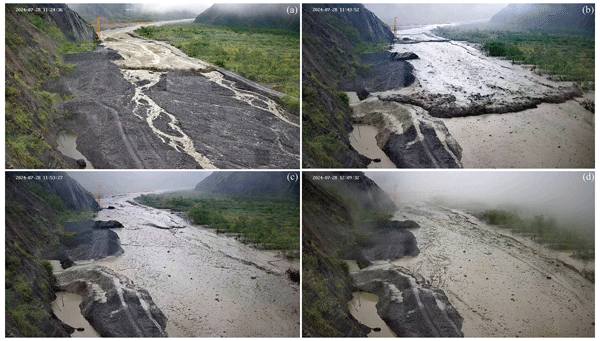
Li Wei, Dongri Song, Peng Cui, Lijun Su, Gordon G. D. Zhou, Kaiheng Hu, Fangqiang Wei, Yong Hong, Guoqiang Ou, Jun Zhang, Zhicheng Kang, Xiaojun Guo, Wei Zhong, Xiaoyu Li, Yaonan Zhang, Chao Shi, and Hui Tang
Earth Syst. Sci. Data, 17, 7331–7358, https://doi.org/10.5194/essd-17-7331-2025, https://doi.org/10.5194/essd-17-7331-2025, 2025
Short summary
Short summary
This research presents a unique 64-year (1961–2024) debris-flow dataset for Jiangjia Ravine, Dongchuan, Yunnan, China. The dataset includes detailed measurements of debris-flow kinematic parameters (velocity, depth, and discharge), physical–mechanical properties (particle size, yield stress, and viscosity), seismic data, and hydrometeorological records (e.g., minute-by-minute rainfall and soil moisture). The dataset is publicly accessible via the National Cryosphere Desert Data Center (NCDC).
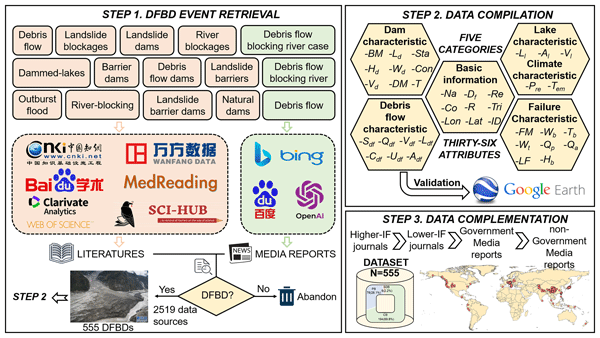
Haiguang Cheng, Kaiheng Hu, Shuang Liu, Xiaopeng Zhang, Hao Li, Qiyuan Zhang, Lan Ning, Manish Raj Gouli, Pu Li, Anna Yang, Peng Zhao, Junyu Liu, and Li Wei
Earth Syst. Sci. Data, 17, 1573–1593, https://doi.org/10.5194/essd-17-1573-2025, https://doi.org/10.5194/essd-17-1573-2025, 2025
Short summary
Short summary
After reviewing 2519 literature and media reports, we compiled the first comprehensive global dataset of 555 debris flow barrier dams (DFBDs) from 1800 to 2023. Our dataset meticulously documents 38 attributes of DFBDs, and we have utilized Google Earth for validation. Additionally, we discussed the applicability of landslide dam stability and peak-discharge models to DFBDs. This dataset offers a rich foundation of data for future studies on DFBDs.
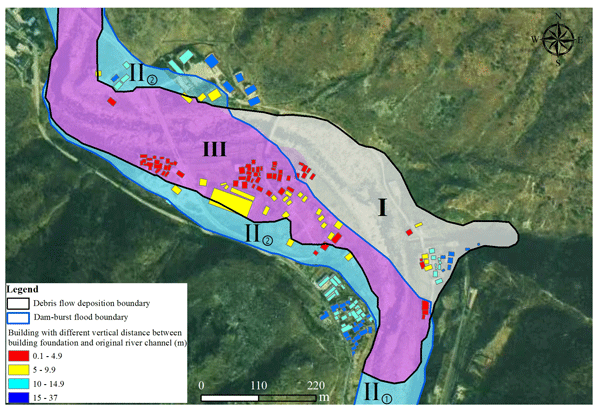
Li Wei, Kaiheng Hu, Shuang Liu, Lan Ning, Xiaopeng Zhang, Qiyuan Zhang, and Md. Abdur Rahim
Nat. Hazards Earth Syst. Sci., 24, 4179–4197, https://doi.org/10.5194/nhess-24-4179-2024, https://doi.org/10.5194/nhess-24-4179-2024, 2024
Short summary
Short summary
The damage patterns of the buildings were classified into three types: (I) buried by primary debris flow, (II) inundated by secondary dam-burst flood, and (III) sequentially buried by debris flow and inundated by dam-burst flood. The threshold of the impact pressures in Zones (II) and (III) where vulnerability is equal to 1 is 84 kPa and 116 kPa, respectively. Heavy damage occurs at an impact pressure greater than 50 kPa, while slight damage occurs below 30 kPa.
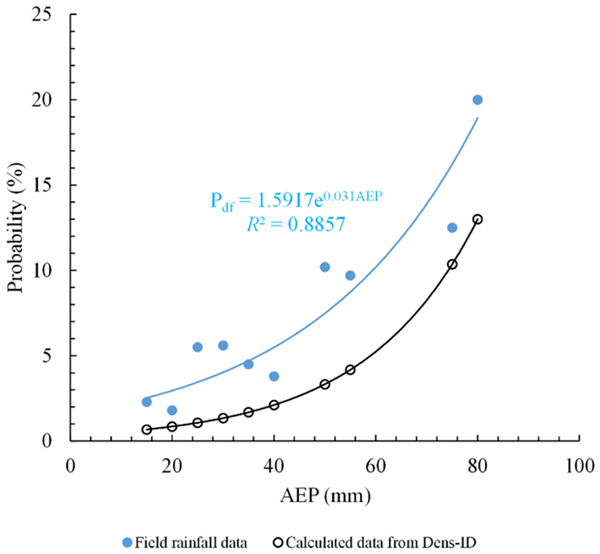
Shaojie Zhang, Xiaohu Lei, Hongjuan Yang, Kaiheng Hu, Juan Ma, Dunlong Liu, and Fanqiang Wei
Hydrol. Earth Syst. Sci., 28, 2343–2355, https://doi.org/10.5194/hess-28-2343-2024, https://doi.org/10.5194/hess-28-2343-2024, 2024
Short summary
Short summary
Antecedent effective precipitation (AEP) plays an important role in debris flow formation, but the relationship between AEP and the debris flow occurrence (Pdf) is still not quantified. We used numerical calculation and the Monte Carlo integration method to solve this issue. The relationship between Pdf and AEP can be described by the piecewise function, and debris flow is a small-probability event comparing to rainfall frequency because the maximum Pdf in Jiangjia Gully is only 15.88 %.
Kaiheng Hu, Manish Raj Gouli, Hao Li, Yong Nie, Yifan Shu, Shuang Liu, Pu Li, and Xiaopeng Zhang
EGUsphere, https://doi.org/10.5194/egusphere-2024-884, https://doi.org/10.5194/egusphere-2024-884, 2024
Preprint archived
Short summary
Short summary
An integrated approach comprising a field survey, remote sensing, and hydrodynamic modeling was applied to investigate the Rijieco Glacial Lake Outburst Flood (GLOF) in 1991. The flood caused devastating ecological consequences, like sedimentation and the expansion of an inland lake, which has not yet recovered after three decades. The results help understand the ecological impacts of outburst floods on the Tibetan inland lake system and make future flood hazard assessments more robust.
Shaojie Zhang, Hongjuan Yang, Dunlong Liu, Kaiheng Hu, and Fangqiang Wei
Hydrol. Earth Syst. Sci. Discuss., https://doi.org/10.5194/hess-2022-57, https://doi.org/10.5194/hess-2022-57, 2022
Manuscript not accepted for further review
Short summary
Short summary
We use a numerical model to find that the relationships of AEP-α and AEP-β can be respectively described by the specific function. The I-D threshold curve can regularly move in the I-D coordinate system rather than a conventional threshold curve stay the same regardless of AEP variation. This work is helpful to understand the influence mechanism of AEP on I-D threshold curve and are beneficial to improve the prediction capacity of the I-D threshold.
Nitesh Khadka, Vishnu Prasad Pandey, C. Scott Watson, Guoxiong Zheng, Tianpei Wu, Keshab Sharma, Lauren D. Rawlins, Simon Allen, Manish Raj Gouli, and Dibas Shrestha
Nat. Hazards Earth Syst. Sci., 26, 4131–4152, https://doi.org/10.5194/nhess-26-4131-2026, https://doi.org/10.5194/nhess-26-4131-2026, 2026
Short summary
Short summary
On 16 August 2024, a cascading glacial lake outburst flood destroyed Thame Village, Nepal. An upstream glacial lake formed in the late 2000s overtopped triggering a downstream lake breach. Combined release of ~770,000 m³ with peak discharge >800 m³/s reached the village within 22–25 min. Losses exceeded 6.18 million USD. Small, rapidly evolving lakes pose often overlooked GLOF risks in a warming climate.
Qiao Liu, Yongsheng Yin, Jiawei Yang, Yunyi Luo, Xueyuan Lu, Hao Wang, Yin Fu, Bo Zhang, Qianqian Zheng, Dongyu Lei, Xin Wang, Shiyin Liu, Yong Nie, and Shichang Kang
EGUsphere, https://doi.org/10.5194/egusphere-2026-2674, https://doi.org/10.5194/egusphere-2026-2674, 2026
Short summary
Short summary
On 16 Dec 2024, a frozen Himalayan glacial lake burst following rockfalls, triggering an "ice tsunami" and flash flood—the first well-documented winter glacial lake outburst flood (GLOF). As warming destabilizes slopes and weakens ice, such winter floods may increase. We urge heightened public awareness and call for future GLOF risk assessments and early-warning systems to include lake-ice condition as a key monitoring parameter under safety protocols.
Li Wei, Dongri Song, Peng Cui, Lijun Su, Gordon G. D. Zhou, Kaiheng Hu, Fangqiang Wei, Yong Hong, Guoqiang Ou, Jun Zhang, Zhicheng Kang, Xiaojun Guo, Wei Zhong, Xiaoyu Li, Yaonan Zhang, Chao Shi, and Hui Tang
Earth Syst. Sci. Data, 17, 7331–7358, https://doi.org/10.5194/essd-17-7331-2025, https://doi.org/10.5194/essd-17-7331-2025, 2025
Short summary
Short summary
This research presents a unique 64-year (1961–2024) debris-flow dataset for Jiangjia Ravine, Dongchuan, Yunnan, China. The dataset includes detailed measurements of debris-flow kinematic parameters (velocity, depth, and discharge), physical–mechanical properties (particle size, yield stress, and viscosity), seismic data, and hydrometeorological records (e.g., minute-by-minute rainfall and soil moisture). The dataset is publicly accessible via the National Cryosphere Desert Data Center (NCDC).
Haiguang Cheng, Kaiheng Hu, Shuang Liu, Xiaopeng Zhang, Hao Li, Qiyuan Zhang, Lan Ning, Manish Raj Gouli, Pu Li, Anna Yang, Peng Zhao, Junyu Liu, and Li Wei
Earth Syst. Sci. Data, 17, 1573–1593, https://doi.org/10.5194/essd-17-1573-2025, https://doi.org/10.5194/essd-17-1573-2025, 2025
Short summary
Short summary
After reviewing 2519 literature and media reports, we compiled the first comprehensive global dataset of 555 debris flow barrier dams (DFBDs) from 1800 to 2023. Our dataset meticulously documents 38 attributes of DFBDs, and we have utilized Google Earth for validation. Additionally, we discussed the applicability of landslide dam stability and peak-discharge models to DFBDs. This dataset offers a rich foundation of data for future studies on DFBDs.
Li Wei, Kaiheng Hu, Shuang Liu, Lan Ning, Xiaopeng Zhang, Qiyuan Zhang, and Md. Abdur Rahim
Nat. Hazards Earth Syst. Sci., 24, 4179–4197, https://doi.org/10.5194/nhess-24-4179-2024, https://doi.org/10.5194/nhess-24-4179-2024, 2024
Short summary
Short summary
The damage patterns of the buildings were classified into three types: (I) buried by primary debris flow, (II) inundated by secondary dam-burst flood, and (III) sequentially buried by debris flow and inundated by dam-burst flood. The threshold of the impact pressures in Zones (II) and (III) where vulnerability is equal to 1 is 84 kPa and 116 kPa, respectively. Heavy damage occurs at an impact pressure greater than 50 kPa, while slight damage occurs below 30 kPa.
Shaojie Zhang, Xiaohu Lei, Hongjuan Yang, Kaiheng Hu, Juan Ma, Dunlong Liu, and Fanqiang Wei
Hydrol. Earth Syst. Sci., 28, 2343–2355, https://doi.org/10.5194/hess-28-2343-2024, https://doi.org/10.5194/hess-28-2343-2024, 2024
Short summary
Short summary
Antecedent effective precipitation (AEP) plays an important role in debris flow formation, but the relationship between AEP and the debris flow occurrence (Pdf) is still not quantified. We used numerical calculation and the Monte Carlo integration method to solve this issue. The relationship between Pdf and AEP can be described by the piecewise function, and debris flow is a small-probability event comparing to rainfall frequency because the maximum Pdf in Jiangjia Gully is only 15.88 %.
Kaiheng Hu, Manish Raj Gouli, Hao Li, Yong Nie, Yifan Shu, Shuang Liu, Pu Li, and Xiaopeng Zhang
EGUsphere, https://doi.org/10.5194/egusphere-2024-884, https://doi.org/10.5194/egusphere-2024-884, 2024
Preprint archived
Short summary
Short summary
An integrated approach comprising a field survey, remote sensing, and hydrodynamic modeling was applied to investigate the Rijieco Glacial Lake Outburst Flood (GLOF) in 1991. The flood caused devastating ecological consequences, like sedimentation and the expansion of an inland lake, which has not yet recovered after three decades. The results help understand the ecological impacts of outburst floods on the Tibetan inland lake system and make future flood hazard assessments more robust.
Shaojie Zhang, Hongjuan Yang, Dunlong Liu, Kaiheng Hu, and Fangqiang Wei
Hydrol. Earth Syst. Sci. Discuss., https://doi.org/10.5194/hess-2022-57, https://doi.org/10.5194/hess-2022-57, 2022
Manuscript not accepted for further review
Short summary
Short summary
We use a numerical model to find that the relationships of AEP-α and AEP-β can be respectively described by the specific function. The I-D threshold curve can regularly move in the I-D coordinate system rather than a conventional threshold curve stay the same regardless of AEP variation. This work is helpful to understand the influence mechanism of AEP on I-D threshold curve and are beneficial to improve the prediction capacity of the I-D threshold.
Cited articles
Anders, N., Smith, M., Suomalainen, J., Cammeraat, E., Valente, J., and Keesstra, S.: Impact of flight altitude and cover orientation on Digital Surface Model (DSM) accuracy for flood damage assessment in Murcia (Spain) using a fixed-wing UAV, Earth Sci. Inform., 13, 391–404, https://doi.org/10.1007/s12145-019-00427-7, 2020.
Anderson, S. W.: Uncertainty in quantitative analyses of topographic change: error propagation and the role of thresholding, Earth Surf. Proc. Land, 44, 1015–1033, https://doi.org/10.1002/esp.4551, 2019.
Bajracharya, S. R. and Mool, P.: Glaciers, glacial lakes and glacial lake outburst floods in the Mount Everest region, Nepal, Ann. Glaciol., 50, 81–86, https://doi.org/10.3189/172756410790595895, 2009.
Bardou, E., Ancey, C., Bonnard, C., and Vulliet, L.: Classification of debris-flow deposits for hazard assessment in alpine areas, in: Debris-Flow Hazards Mitigation: Mechanics, Prediction, and Assessment, The Third International Conference on Debris-Flow Hazards Mitigation: Mechanics, Prediction, and Assessment, Davos, Switzerland, 10–12 September 2003, 799–808, ISBN 90-77017-78–X, 2003.
Berger, C., McArdell, B. W., and Schlunegger, F.: Sediment transfer patterns at the Illgraben catchment, Switzerland: Implications for the time scales of debris flow activities, Geomorphology, 125, 421–432, https://doi.org/10.1016/j.geomorph.2010.10.019, 2010.
Bessette-Kirton, E. K. and Coe, J. A.: A 36-Year Record of Rock Avalanches in the Saint Elias Mountains of Alaska, With Implications for Future Hazards, Front. Earth Sci., 8, 293, https://doi.org/10.3389/feart.2020.00293, 2020.
Castino, F., Bookhagen, B., and Strecker, M. R.: Rainfall variability and trends of the past six decades (1950–2014) in the subtropical NW Argentine Andes, Clim. Dynam., 48, 1049–1067, https://doi.org/10.1007/s00382-016-3127-2, 2016.
Chaudhry, M. H., Ahmad, A., Gulzar, Q., Farid, M. S., Shahabi, H., and Al-Ansari, N.: Assessment of DSM Based on Radiometric Transformation of UAV Data, Sensors-Basel, 21, 1649, https://doi.org/10.3390/s21051649, 2021.
Chen, D., Xu, B., Yao, T., Guo, Z., Cui, P., Chen, F., Zhang, R., Zhang, X., Zhang, Y., Fan, J., Hou, Z., and Zhang, T.: Assessment of past, present and future environmental changes on the Tibetan Plateau, Chinese Science Bulletin, 60, 3025–3035, https://doi.org/10.1360/n972014-01370, 2015 (in Chinese).
Chen, N., Yang, C., Li, Z., and He, J.: Research on the relationship between the calculation of debris flow velocity and its super elevation in bend, Advanced Engineering Sciences, 41, 165–171, https://jsuese.scu.edu.cn/en/article/44758254/ (last access: 20 November 2023), 2009 (in Chinese).
Costa, J. E.: Paleohydraulic reconstruction of flash-flood peaks from boulder deposits in the Colorado Front Range, Geol. Soc. Am. Bull., 94, 986, https://doi.org/10.1130/0016-7606(1983)94<986:PROFPF>2.0.CO;2, 1983.
Coudurier-Curveur, A., Tapponnier, P., Okal, E., Van der Woerd, J., Kali, E., Choudhury, S., Baruah, S., Etchebes, M., and Karakaş, Ç.: A composite rupture model for the great 1950 Assam earthquake across the cusp of the East Himalayan Syntaxis, Earth Planet. Sc. Lett., 531, 115928, https://doi.org/10.1016/j.epsl.2019.115928, 2020.
Cui, P., Zhou, G. G. D., Zhu, X. H., and Zhang, J. Q.: Scale amplification of natural debris flows caused by cascading landslide dam failures, Geomorphology, 182, 173–189, https://doi.org/10.1016/j.geomorph.2012.11.009, 2013.
Cui, Y., Hu, J., Xu, C., Miao, H., and Zheng, J.: Landslides triggered by the 1970 Ms 7.7 Tonghai earthquake in Yunnan, China: an inventory, distribution characteristics, and tectonic significance, J. Mt. Sci.-Engl., 19, 1633–1649, https://doi.org/10.1007/s11629-022-7321-x, 2022.
Dadson, S. J., Hovius, N., Chen, H., Dade, W. B., Lin, J.-C., Hsu, M.-L., Lin, C.-W., Horng, M.-J., Chen, T.-C., Milliman, J., and Stark, C. P.: Earthquake-triggered increase in sediment delivery from an active mountain belt, Geology, 32, 733, https://doi.org/10.1130/G20639.1, 2004.
Dai, L., Scaringi, G., Fan, X., Yunus, A. P., Liu-Zeng, J., Xu, Q., and Huang, R.: Coseismic Debris Remains in the Orogen Despite a Decade of Enhanced Landsliding, Geophys. Res. Lett., 48, e2021GL095850, https://doi.org/10.1029/2021GL095850, 2021.
Deline, P., Gruber, S., Delaloye, R., Fischer, L., Geertsema, M., Giardino, M., Hasler, A., Kirkbride, M., Krautblatter, M., Magnin, F., McColl, S., Ravanel, L., and Schoeneich, P.: Ice Loss and Slope Stability in High-Mountain Regions, in: Snow and Ice-Related Hazards, Risks, and Disasters, edited by: Shroder, J. F., Haeberli, W., and Whiteman, C., Academic Press, Boston, USA, 521–561, https://doi.org/10.1016/B978-0-12-394849-6.01001-5, 2015.
Deng, M., Chen, N., and Liu, M.: Meteorological factors driving glacial till variation and the associated periglacial debris flows in Tianmo Valley, south-eastern Tibetan Plateau, Nat. Hazards Earth Syst. Sci., 17, 345–356, https://doi.org/10.5194/nhess-17-345-2017, 2017.
Ding, L., Zhong, D., Yin, A., Kapp, P., and Harrison, T. M.: Cenozoic structural and metamorphic evolution of the eastern Himalayan syntaxis (Namche Barwa), Earth Planet. Sc. Lett., 192, 423–438, https://doi.org/10.1016/S0012-821X(01)00463-0, 2001.
Du, R. and Zhang, S.: CHARACTERISTICS OF GLACIAL MUD-FLOWS IN SOUTH-EASTERN QINGHAI-XIZANG PLATEAU, Journal of Glaciology and Geocryology, 10–16, 81–82, 1981 (in Chinese).
Evans, S. G. and Clague, J. J.: Recent climatic change and catastrophic geomorphic processes in mountain environments, in: Geomorphology and Natural Hazards, edited by: Morisawa, M., Elsevier, Amsterdam, The Netherlands, 107–128, https://doi.org/10.1016/B978-0-444-82012-9.50012-8, 1994.
Frich, P., Alexander, L., Della-Marta, P., Gleason, B., Haylock, M., Klein Tank, A., and Peterson, T.: Observed coherent changes in climatic extremes during the second half of the twentieth century, Clim. Res., 19, 193–212, https://doi.org/10.3354/cr019193, 2007.
Gao, H., Yin, Y., Li, B., Gao, Y., Zhang, T., Liu, X., and Wan, J.: Geomorphic evolution of the Sedongpu Basin after catastrophic ice and rock avalanches triggered by the 2017 Ms6.9 Milin earthquake in the Yarlung Zangbo River area, China, Landslides, 20, 2327–2341, https://doi.org/10.1007/s10346-023-02118-3, 2023.
Ghilardi, P., Natale, L., and Savi, F.: Modeling debris flow propagation and deposition, Phys. Chem. Earth Pt. C, 26, 651–656, https://doi.org/10.1016/S1464-1917(01)00063-0, 2001.
Giorgi, F., Torma, C., Coppola, E., Ban, N., Schär, C., and Somot, S.: Enhanced summer convective rainfall at Alpine high elevations in response to climate warming, Nat. Geosci., 9, 584–589, https://doi.org/10.1038/ngeo2761, 2016.
Guillet, G., King, O., Lv, M., Ghuffar, S., Benn, D., Quincey, D., and Bolch, T.: A regionally resolved inventory of High Mountain Asia surge-type glaciers, derived from a multi-factor remote sensing approach, The Cryosphere, 16, 603–623, https://doi.org/10.5194/tc-16-603-2022, 2022.
Haeberli, W. and Whiteman, C. A. (Eds.): Snow and ice-related hazards, risks, and disasters, Elsevier, Amsterdam, The Netherlands, 755 pp., https://doi.org/10.1016/C2018-0-00970-6, 2021.
Han, L. and Feng, Q.: Analysis of Development Characteristics and Genetic Mechanisms of Glacier Debris Flows in the Zelongnong, MT. Namjagbarwa, Inner Mongolia Science Technology & Economy, 58–59, https://doi.org/10.3969/j.issn.1007-6921.2018.04.029, 2018 (in Chinese).
Han, Y., Choi, J., Jung, J., Chang, A., Oh, S., and Yeom, J.: Automated Coregistration of Multisensor Orthophotos Generated from Unmanned Aerial Vehicle Platforms, J. Sensors, 2019, 1–10, https://doi.org/10.1155/2019/2962734, 2019.
Hirschberg, J., Fatichi, S., Bennett, G. L., McArdell, B. W., Peleg, N., Lane, S. N., Schlunegger, F., and Molnar, P.: Climate Change Impacts on Sediment Yield and Debris-Flow Activity in an Alpine Catchment, J. Geophys. Res.-Earth, 126, e2020JF005739, https://doi.org/10.1029/2020JF005739, 2020.
Hu, G., Yi, C.-L., Liu, J.-H., Wang, P., Zhang, J.-F., Li, S.-H., Li, D., Huang, J., Wang, H., Zhang, A., Shi, L., and Shui, X.: Glacial advances and stability of the moraine dam on Mount Namcha Barwa since the Last Glacial Maximum, eastern Himalayan syntaxis, Geomorphology, 365, 107246, https://doi.org/10.1016/j.geomorph.2020.107246, 2020.
Hu, H.-P., Feng, J.-L., and Chen, F.: Sedimentary records of a palaeo-lake in the middle Yarlung Tsangpo: Implications for terrace genesis and outburst flooding, Quaternary Sci. Rev., 192, 135–148, https://doi.org/10.1016/j.quascirev.2018.05.037, 2018.
Hu, K., Zhang, X., You, Y., Hu, X., Liu, W., and Li, Y.: Landslides and dammed lakes triggered by the 2017 Ms6.9 Milin earthquake in the Tsangpo gorge, Landslides, 16, 993–1001, https://doi.org/10.1007/s10346-019-01168-w, 2019.
Hu, K., Wu, C., Wei, L., Zhang, X., Zhang, Q., Liu, W., and Yanites, B. J.: Geomorphic effects of recurrent outburst superfloods in the Yigong River on the southeastern margin of Tibet, Sci. Rep.-UK, 11, 15577, https://doi.org/10.1038/s41598-021-95194-1, 2021.
Huang, S., Chen, Y., Burr, G. S., Jaiswal, M. K., Lin, Y. N., Yin, G., Liu, J., Zhao, S., and Cao, Z.: Late Pleistocene sedimentary history of multiple glacially dammed lake episodes along the Yarlung-Tsangpo river, southeast Tibet, Quaternary Res,, 82, 430–440, https://doi.org/10.1016/j.yqres.2014.06.001, 2014.
Huggel, C., Haeberli, W., Kääb, A., Bieri, D., and Richardson, S.: An assessment procedure for glacial hazards in the Swiss Alps, Can. Geotech. J., 41, 1068–1083, https://doi.org/10.1139/t04-053, 2004.
Iribarren Anacona, P., Mackintosh, A., and Norton, K. P.: Hazardous processes and events from glacier and permafrost areas: lessons from the Chilean and Argentinean Andes, Earth Surf. Proc. Land., 40, 2–21, https://doi.org/10.1002/esp.3524, 2015.
Iverson, R. M., Schilling, S. P., and Vallance, J. W.: Objective delineation of lahar-inundation hazard zones, Geol. Soc. Am. Bull., 110, 972–984, https://doi.org/10.1130/0016-7606(1998)110<0972:ODOLIH>2.3.CO;2, 1998.
Jia, H., Chen, F., and Pan, D.: Disaster Chain Analysis of Avalanche and Landslide and the River Blocking Dam of the Yarlung Zangbo River in Milin County of Tibet on 17 and 29 October 2018, Int. J. Environ. Res. Public Health, 16, 4707, https://doi.org/10.3390/ijerph16234707, 2019.
Kääb, A. and Girod, L.: Brief communication: Rapid ∼ 335 × 106 m3 bed erosion after detachment of the Sedongpu Glacier (Tibet), The Cryosphere, 17, 2533–2541, https://doi.org/10.5194/tc-17-2533-2023, 2023.
Kääb, A., Jacquemart, M., Gilbert, A., Leinss, S., Girod, L., Huggel, C., Falaschi, D., Ugalde, F., Petrakov, D., Chernomorets, S., Dokukin, M., Paul, F., Gascoin, S., Berthier, E., and Kargel, J. S.: Sudden large-volume detachments of low-angle mountain glaciers – more frequent than thought?, The Cryosphere, 15, 1751–1785, https://doi.org/10.5194/tc-15-1751-2021, 2021.
Kargel, J. S., Leonard, G. J., Shugar, D. H., Haritashya, U. K., Bevington, A., Fielding, E. J., Fujita, K., Geertsema, M., Miles, E. S., Steiner, J., Anderson, E., Bajracharya, S., Bawden, G. W., Breashears, D. F., Byers, A., Collins, B., Dhital, M. R., Donnellan, A., Evans, T. L., Geai, M. L., Glasscoe, M. T., Green, D., Gurung, D. R., Heijenk, R., Hilborn, A., Hudnut, K., Huyck, C., Immerzeel, W. W., Liming, J., Jibson, R., Kääb, A., Khanal, N. R., Kirschbaum, D., Kraaijenbrink, P. D. A., Lamsal, D., Shiyin, L., Mingyang, L., McKinney, D., Nahirnick, N. K., Zhuotong, N., Ojha, S., Olsenholler, J., Painter, T. H., Pleasants, M., Pratima, K. C., Yuan, Q. I., Raup, B. H., Regmi, D., Rounce, D. R., Sakai, A., Donghui, S., Shea, J. M., Shrestha, A. B., Shukla, A., Stumm, D., van der Kooij, M., Voss, K., Xin, W., Weihs, B., Wolfe, D., Lizong, W., Xiaojun, Y., Yoder, M. R., and Young, N.: Geomorphic and geologic controls of geohazards induced by Nepal's 2015 Gorkha earthquake, Science, 351, aac8353, https://doi.org/10.1126/science.aac8353, 2016.
Keefer, D. K.: Landslides caused by earthquakes, Geol. Soc. Am. Bull., 95, 406, https://doi.org/10.1130/0016-7606(1984)95<406:LCBE>2.0.CO;2, 1984.
Kilburn, C. R. J. and Voight, B.: Slow rock fracture as eruption precursor at Soufriere Hills Volcano, Montserrat, Geophys. Res. Lett., 25, 3665–3668, https://doi.org/10.1029/98GL01609, 1998.
Kucharczyk, M., Hugenholtz, C. H., and Zou, X.: UAV–LiDAR accuracy in vegetated terrain, J. Unmanned Veh. Syst., 6, 212–234, https://doi.org/10.1139/juvs-2017-0030, 2018.
Kumar, A., Bhambri, R., Tiwari, S. K., Verma, A., Gupta, A. K., and Kawishwar, P.: Evolution of debris flow and moraine failure in the Gangotri Glacier region, Garhwal Himalaya: Hydro-geomorphological aspects, Geomorphology, 333, 152–166, https://doi.org/10.1016/j.geomorph.2019.02.015, 2019.
Lang, K. A., Huntington, K. W., and Montgomery, D. R.: Erosion of the Tsangpo Gorge by megafloods, Eastern Himalaya, Geology, 41, 1003–1006, https://doi.org/10.1130/G34693.1, 2013.
Larsen, I. J., Montgomery, D. R., and Korup, O.: Landslide erosion controlled by hillslope material, Nat. Geosci., 3, 247–251, https://doi.org/10.1038/ngeo776, 2010.
Li, H., Hu, K., Zhang, X., Liu, S., and Wei, L.: Causes and Damage of the 2020 Periglacial Debris Flows at Zelunglung Catchment in the Eastern Syntaxis of Himalaya, in: Engineering Geology for a Habitable Earth: IAEG XIV Congress 2023 Proceedings, IAEG 2023, Chengdu, China, 21–27 September 2023, 161–171, https://doi.org/10.1007/978-981-99-9061-0_12, 2024a.
Li, H., Liu, S., Hu, K., and Zhang, X.: Differential depression of the glacier equilibrium-line altitudes in the Yarlung Zangbo Downstream Basin in the Last Glacial Maximum compared to the pre-industrial era, J. Geogr. Sci., 34, 1157–1173, https://doi.org/10.1007/s11442-024-2243-x, 2024b.
Li, H., Hu, K., Liu, S., Cheng, H., Wen, Z., Zhang, X., Ma, C., Gouli, M. R., Wei, L., and Yang, H.: Abundant antecedent rainfall incubated a group-occurring debris flow event in the Dadu River Basin, Southwest China, Landslides, 22, 1955–1971, https://doi.org/10.1007/s10346-025-02489-9, 2025.
Li, J., Chu, H., Li, B., Gao, Y., Wang, M., Zhao, C., and Liu, X.: Analysis of development characteristics of high-elevationchain geological hazard in Zelongnong, Nyingchi, Tibet based on high resolution image and InSAR interpretation, The Chinese Journal of Geological Hazard and Control, 32, 42–50, https://doi.org/10.16031/j.cnki.issn.1003-8035.2021.03-06, 2021 (in Chinese).
Li, W., Zhao, B., Xu, Q., Scaringi, G., Lu, H., and Huang, R.: More frequent glacier-rock avalanches in Sedongpu gully are blocking the Yarlung Zangbo River in eastern Tibet, Landslides, 19, 589–601, https://doi.org/10.1007/s10346-021-01798-z, 2022.
Li, Y., Yan, C., Hu, K., and Wei, L.: Variation of hazard areas of typical rainstorm debris flow alluvial fans, Resources and Environment in the Yangtze Basin, 26, 789–796, https://yangtzebasin.whlib.ac.cn/EN/10.11870/cjlyzyyhj201705017 (last access: 20 November 2023), 2017 (in Chinese).
Liu, M., Zhang, Y., Tian, S., Chen, N., Mahfuzr, R., and Javed, I.: Effects of loose deposits on debris flow processes in the Aizi Valley, southwest China, J. Mt. Sci.-Engl., 17, 156–172, https://doi.org/10.1007/s11629-019-5388-9, 2020.
Liu, W., Lai, Z., Hu, K., Ge, Y., Cui, P., Zhang, X., and Liu, F.: Age and extent of a giant glacial-dammed lake at Yarlung Tsangpo gorge in the Tibetan Plateau, Geomorphology, 246, 370–376, https://doi.org/10.1016/j.geomorph.2015.06.034, 2015.
Liu, W., Wang, M., Song, B., Yu, T., Huang, X., Jiang, Y., and Sun, Y.: Surveys and chain structure study of potential hazards of ice avalanches based on optical remote sensing technology: A case study of southeast Tibet, Remote Sensing for Natural Resources, 34, 265–276, https://doi.org/10.6046/zrzyyg.2021076, 2022 (in Chinese).
Liu, Y., Montgomery, D. R., Hallet, B., Tang, W., Zhang, J., and Zhang, X.: Multiple Quaternary glacial events blocking the Yarlung Tsangpo Grand Canyon in southeastern Tibet, Quaternary Sciences, 52–62, https://doi.org/10.3321/j.issn:1001-7410.2006.01.007, 2006 (in Chinese).
Luan, L. and Zhai, P.: Changes in rainy season precipitation properties over the Qinghai-Tibet Plateau based on multi-source datasets, Climate Change Research, 19, 173–190, 2023 (in Chinese).
Major, J. J.: Pebble orientation on large, experimental debris-flow deposits, Sediment. Geol., 117, 151–164, https://doi.org/10.1016/S0037-0738(98)00014-1, 1998.
McCoy, S. W., Tucker, G. E., Kean, J. W., and Coe, J. A.: Field measurement of basal forces generated by erosive debris flows, J. Geophys. Res.-Earth, 118, 589–602, https://doi.org/10.1002/jgrf.20041, 2013.
Montgomery, D. R., Hallet, B., Yuping, L., Finnegan, N., Anders, A., Gillespie, A., and Greenberg, H. M.: Evidence for Holocene megafloods down the tsangpo River gorge, Southeastern Tibet, Quaternary Res., 62, 201–207, https://doi.org/10.1016/j.yqres.2004.06.008, 2004.
Müller, J., Gärtner-Roer, I., Thee, P., and Ginzler, C.: Accuracy assessment of airborne photogrammetrically derived high-resolution digital elevation models in a high mountain environment, ISPRS J. PHOTOGRAMM., 98, 58–69, https://doi.org/10.1016/j.isprsjprs.2014.09.015, 2014.
Myhre, G., Alterskjær, K., Stjern, C. W., Hodnebrog, Ø., Marelle, L., Samset, B. H., Sillmann, J., Schaller, N., Fischer, E., Schulz, M., and Stohl, A.: Frequency of extreme precipitation increases extensively with event rareness under global warming, Sci. Rep.-UK, 9, 16063, https://doi.org/10.1038/s41598-019-52277-4, 2019.
Niu, Z., Xia, H., Tao, P., and Ke, T.: Accuracy Assessment of UAV Photogrammetry System with RTK Measurements for Direct Georeferencing, ISPRS Ann. Photogramm. Remote Sens. Spatial Inf. Sci., X-1-2024, 169–176, https://doi.org/10.5194/isprs-annals-X-1-2024-169-2024, 2024.
Parker, R. N., Densmore, A. L., Rosser, N. J., de Michele, M., Li, Y., Huang, R., Whadcoat, S., and Petley, D. N.: Mass wasting triggered by the 2008 Wenchuan earthquake is greater than orogenic growth, Nat. Geosci., 4, 449–452, https://doi.org/10.1038/ngeo1154, 2011.
Paul, F., Piermattei, L., Treichler, D., Gilbert, L., Girod, L., Kääb, A., Libert, L., Nagler, T., Strozzi, T., and Wuite, J.: Three different glacier surges at a spot: what satellites observe and what not, The Cryosphere, 16, 2505–2526, https://doi.org/10.5194/tc-16-2505-2022, 2022.
Peng, D., Zhang, L., Jiang, R., Zhang, S., Shen, P., Lu, W., and He, X.: Initiation mechanisms and dynamics of a debris flow originated from debris-ice mixture slope failure in southeast Tibet, China, Eng. Geol., 307, 106783, https://doi.org/10.1016/j.enggeo.2022.106783, 2022.
Peng, S.: 1-km monthly mean temperature dataset for china (1901-2023), National Tibetan Plateau/Third Pole Environment Data Center [data set], https://doi.org/10.11888/Meteoro.tpdc.270961, 2019.
Peng, S.: 1-km monthly precipitation dataset for China (1901-2023), National Tibetan Plateau / Third Pole Environment Data Center [data set], https://doi.org/10.5281/zenodo.3114194, 2020.
Peng, S., Ding, Y., Liu, W., and Li, Z.: 1 km monthly temperature and precipitation dataset for China from 1901 to 2017, Earth Syst. Sci. Data, 11, 1931–1946, https://doi.org/10.5194/essd-11-1931-2019, 2019.
Petrakov, D. A., Krylenko, I. V., Chernomorets, S. S., Tutubalina, O. V., Krylenko, I. N., and Shakhmina, M. S.: Debris flow hazard of glacial lakes in the Central Caucasus, in: Debris-Flow Hazards Mitigation: Mechanics, Prediction, and Assessment, The Fourth International Conference on Debris-Flow Hazards Mitigation: Mechanics, Prediction, and Assessment, Chengdu, China, 10–13 September 2007, 703–714, ISBN 9789059660595, 2007.
Prokešová, R., Kardoš, M., and Medveďová, A.: Landslide dynamics from high-resolution aerial photographs: A case study from the Western Carpathians, Slovakia, Geomorphology, 115, 90–101, https://doi.org/10.1016/j.geomorph.2009.09.033, 2010.
Qie, J., Favillier, A., Liébault, F., Ballesteros Cánovas, J. A., Lopez-Saez, J., Guillet, S., Francon, L., Zhong, Y., Stoffel, M., and Corona, C.: A supply-limited torrent that does not feel the heat of climate change, Nat. Commun., 15, 9078, https://doi.org/10.1038/s41467-024-53316-z, 2024.
RGI Consortium: Randolph Glacier Inventory - A Dataset of Global Glacier Outlines, Version 7, National Snow and Ice Data Center [Data Set], Boulder, Colorado, USA, https://doi.org/10.5067/F6JMOVY5NAVZ, 2023.
Richardson, S. D. and Reynolds, J. M.: An overview of glacial hazards in the Himalayas, Quatern. Int., 65–66, 31–47, https://doi.org/10.1016/S1040-6182(99)00035-X, 2000.
Savi, S., Comiti, F., and Strecker, M. R.: Pronounced increase in slope instability linked to global warming: A case study from the eastern European Alps, Earth Surf. Proc. Land., 46, 1328–1347, https://doi.org/10.1002/esp.5100, 2021.
Shen, Y., Su, H., Wang, G., Mao, W., Wang, S., Han, P., Wang, N., and Li, Z.: The Responses of Glaciers and Snow Cover to Climate Change in Xinjiang (II): Hazards Effects, Journal of Glaciology and Geocryology, 35, 1355–1370, 2013 (in Chinese).
Shugar, D. H., Jacquemart, M., Shean, D., Bhushan, S., Upadhyay, K., Sattar, A., Schwanghart, W., McBride, S., de Vries, M. V. W., Mergili, M., Emmer, A., Deschamps-Berger, C., McDonnell, M., Bhambri, R., Allen, S., Berthier, E., Carrivick, J. L., Clague, J. J., Dokukin, M., Dunning, S. A., Frey, H., Gascoin, S., Haritashya, U. K., Huggel, C., Kääb, A., Kargel, J. S., Kavanaugh, J. L., Lacroix, P., Petley, D., Rupper, S., Azam, M. F., Cook, S. J., Dimri, A. P., Eriksson, M., Farinotti, D., Fiddes, J., Gnyawali, K. R., Harrison, S., Jha, M., Koppes, M., Kumar, A., Leinss, S., Majeed, U., Mal, S., Muhuri, A., Noetzli, J., Paul, F., Rashid, I., Sain, K., Steiner, J., Ugalde, F., Watson, C. S., and Westoby, M. J.: A massive rock and ice avalanche caused the 2021 disaster at Chamoli, Indian Himalaya, Science, 373, 300–306, https://doi.org/10.1126/science.abh4455, 2021.
Sohn, Y. K.: Coarse-grained debris-flow deposits in the Miocene fan deltas, SE Korea: a scaling analysis, Sediment. Geol., 130, 45–64, https://doi.org/10.1016/S0037-0738(99)00099-8, 2000.
Stoffel, M., Trappmann, D. G., Coullie, M. I., Ballesteros Cánovas, J. A., and Corona, C.: Rockfall from an increasingly unstable mountain slope driven by climate warming, Nat. Geosci., 17, 249–254, https://doi.org/10.1038/s41561-024-01390-9, 2024.
Tian, L., Yao, T., Gao, Y., Thompson, L., Mosley-Thompson, E., Muhammad, S., Zong, J., Wang, C., Jin, S., and Li, Z.: Two glaciers collapse in western Tibet, J. Glaciol., 63, 194–197, https://doi.org/10.1017/jog.2016.122, 2017.
Wang, H., Wang, B.-B., Cui, P., Ma, Y.-M., Wang, Y., Hao, J.-S., Wang, Y., Li, Y.-M., Sun, L.-J., Wang, J., Zhang, G.-T., Li, W.-M., Lei, Y., Zhao, W.-Q., Tang, J.-B., and Li, C.-Y.: Disaster effects of climate change in High Mountain Asia: State of art and scientific challenges, Adv. Clim. Chang. Res., 15, 367–389, https://doi.org/10.1016/j.accre.2024.06.003, 2024.
Wang, J., Jin, Z., Hilton, R. G., Zhang, F., Densmore, A. L., Li, G., and West, A. J.: Controls on fluvial evacuation of sediment from earthquake-triggered landslides, Geology, 43, 115–118, https://doi.org/10.1130/G36157.1, 2015.
Wang, P., Wang, H., Hu, G., Qin, J., and Li, C.: A preliminary study on the development of dammed paleolakes in the Yarlung Tsangpo River basin, southeastern Tibet, Earth Science Frontiers, 28, 35–45, https://doi.org/10.13745/j.esf.sf.2020.9.18, 2021a (in Chinese).
Wang, Z., Hu, K., Ma, C., Li, Y., and Liu, S.: Landscape change in response to multiperiod glacial debris flows in Peilong catchment, southeastern Tibet, J. Mt. Sci., 18, 567–582, https://doi.org/10.1007/s11629-020-6172-6, 2021b.
Wang, Z., Hu, K., and Liu, S.: Classification and sediment estimation for debris flow-prone catchments in the Parlung Zangbo Basin on the southeastern Tibet, Geomorphology, 413, 108348, https://doi.org/10.1016/j.geomorph.2022.108348, 2022.
Wang, Z., Ma, C., Hu, K., Liu, S., and Lyu, L.: Investigation of initiation conditions of periglacial debris flows in Sanggu watershed, Eastern Himalayas, Tibet Plateau (China), Landslides, 20, 813–827, https://doi.org/10.1007/s10346-022-02003-5, 2023.
Ward, F. K.: Explorations in South-Eastern Tibet, Geogr. J., 67, 97–119, https://doi.org/10.2307/1783136, 1926.
Wu, X., Xu, X., Yu, G., Ren, J., Yang, X., Chen, G., Xu, C., Du, K., Huang, X., Yang, H., Li, K., and Hao, H.: The China Active Faults Database (CAFD) and its web system, Earth Syst. Sci. Data, 16, 3391–3417, https://doi.org/10.5194/essd-16-3391-2024, 2024.
Yan, Y., Tang, H., Hu, K., Turowski, J. M., and Wei, F.: Deriving Debris-Flow Dynamics From Real-Time Impact-Force Measurements, J. Geophys. Res.Earth, 128, e2022JF006715, https://doi.org/10.1029/2022JF006715, 2023.
Yang, A., Wang, H., Liu, W., Hu, K., Liu, D., Wu, C., and Hu, X.: Two megafloods in the middle reach of Yarlung Tsangpo River since Last-glacial period: Evidence from giant bars, Global Planet. Change, 208, 103726, https://doi.org/10.1016/j.gloplacha.2021.103726, 2022.
Yin, Y., Zhang, S., Huo, Z., Yang, C., and Chen, F.: Study on the May 28 Birch high-altitude and long-runout ice-rock avalanche in the Swiss Alps, The Chinese Journal of Geological Hazard and Control, 1–14, https://doi.org/10.16031/j.cnki.issn.1003-8035.202507033, 2025 (in Chinese).
Yu, G., Yao, W., Huang, H. Q., and Liu, Z.: Debris flows originating in the mountain cryosphere under a changing climate: A review, Progress in Physical Geography: Earth and Environment, 45, 339–374, https://doi.org/10.1177/0309133320961705, 2021.
Zhang, G., Yao, T., Xie, H., Yang, K., Zhu, L., Shum, C. K., Bolch, T., Yi, S., Allen, S., Jiang, L., Chen, W., and Ke, C.: Response of Tibetan Plateau lakes to climate change: Trends, patterns, and mechanisms, Earth-Sci. Rev., 208, 103269, https://doi.org/10.1016/j.earscirev.2020.103269, 2020.
Zhang, J. and Shen, X.: Debris-flow of Zelongnong Ravine in Tibet, J. Mt. Sci., 8, 535–543, https://doi.org/10.1007/s11629-011-2137-0, 2011.
Zhang, T., Li, D., East, A. E., Walling, D. E., Lane, S., Overeem, I., Beylich, A. A., Koppes, M., and Lu, X.: Warming-driven erosion and sediment transport in cold regions, Nature Reviews Earth & Environment, 3, 832–851, https://doi.org/10.1038/s43017-022-00362-0, 2022a.
Zhang, T., Wang, W., Shen, Z., and An, B.: Increasing frequency and destructiveness of glacier-related slope failures under global warming, Sci. Bull., 69, 30–33, https://doi.org/10.1016/j.scib.2023.09.042, 2023.
Zhang, W.: Some features of the surge glagier in the MT. Namjagbarwa, Mountain Research, 234–238, 1985 (in Chinese).
Zhang, W.: Identification of glaciers with surge characteristics on the Tibetan Plateau, Ann. Glaciol., 16, 168–172, https://doi.org/10.3189/1992AoG16-1-168-172, 1992.
Zhang, X., Hu, K., Liu, S., Nie, Y., and Han, Y.: Comprehensive interpretation of the Sedongpu glacier-related mass flows in the eastern Himalayan syntaxis, J. Mt. Sci., 19, 2469–2486, https://doi.org/10.1007/s11629-022-7376-8, 2022b.
Zhou, G. G. D., Li, S., Song, D., Choi, C. E., and Chen, X.: Depositional mechanisms and morphology of debris flow: physical modelling, Landslides, 16, 315–332, https://doi.org/10.1007/s10346-018-1095-9, 2019.
Zhu, S., Wu, W., Zhao, X., Li, J., and Wang, H.: Middle-Late Pleistocene Glacial Lakes in the Grand Canyon of the Tsangpo River, Tibet, Acta Geol. Sin.-Engl., 86, 266–283, https://doi.org/10.1111/j.1755-6724.2012.00627.x, 2012.
Short summary
This paper shows how glacier-related sediment supply changes in response to earthquakes and climate warming at a catchment in the eastern Himalayas using several decades of aerial imagery and high-resolution UAV data. The results highlight the importance of debris-flow-driven extreme sediment delivery on landscape change in High Mountain Asia that have undergone substantial climate warming. This study is helpful for a better understanding of future risk of periglacial debris flows.
This paper shows how glacier-related sediment supply changes in response to earthquakes and...


