Articles | Volume 14, issue 3
https://doi.org/10.5194/esurf-14-391-2026
© Author(s) 2026. This work is distributed under
the Creative Commons Attribution 4.0 License.
https://doi.org/10.5194/esurf-14-391-2026
© Author(s) 2026. This work is distributed under
the Creative Commons Attribution 4.0 License.
OrthoSAM: multi-scale extension of the Segment Anything Model for river pebble delineation from large orthophotos

Institute of Geosciences, University of Potsdam, Am Neuen Palais 10, 14469 Potsdam, Germany
Aljoscha Rheinwalt
Institute of Geosciences, University of Potsdam, Am Neuen Palais 10, 14469 Potsdam, Germany
Bodo Bookhagen
Institute of Geosciences, University of Potsdam, Am Neuen Palais 10, 14469 Potsdam, Germany
Related authors
No articles found.
Ariane Mueting, Laurane Charrier, and Bodo Bookhagen
EGUsphere, https://doi.org/10.5194/egusphere-2025-6445, https://doi.org/10.5194/egusphere-2025-6445, 2026
Short summary
Short summary
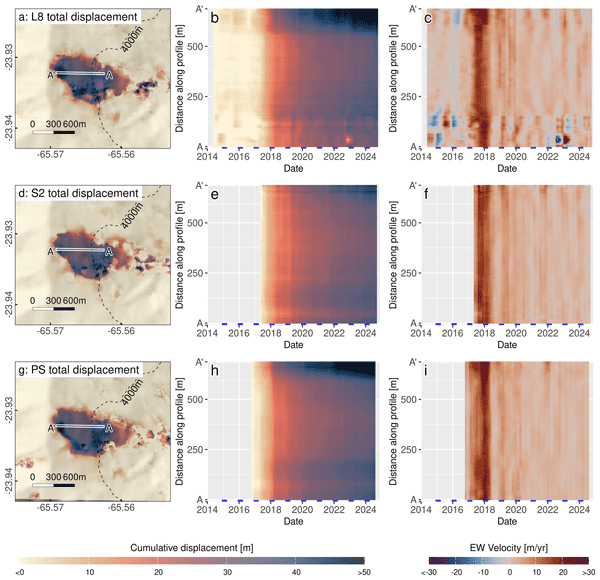
Slow-moving landslides respond to seasonal climate variations, but displacement time series from optical satellite imagery often contain illumination-related biases that obscure true signals. This study assesses methods to mitigate seasonal errors and reveals kinematic changes and controlling factors of a large slow-moving landslide in the Argentinean Andes.
Aljoscha Rheinwalt, Benjamin Purinton, and Bodo Bookhagen
Earth Surf. Dynam., 13, 923–940, https://doi.org/10.5194/esurf-13-923-2025, https://doi.org/10.5194/esurf-13-923-2025, 2025
Short summary
Short summary
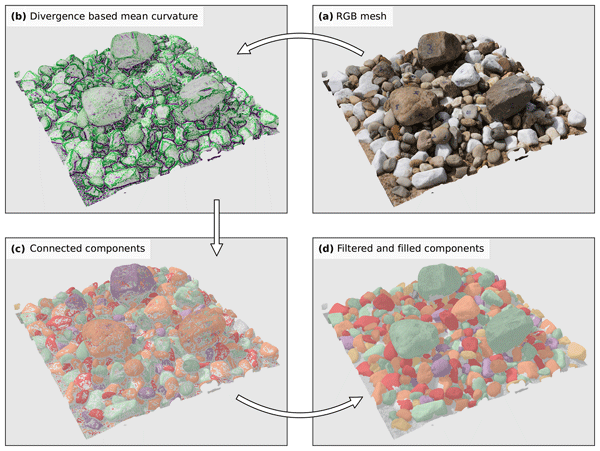
Our study presents a computer-based method to detect and measure pebbles in 3D models reconstructed from camera photos. We tested it in a controlled setup and achieved 98 % accuracy in detecting pebbles. Unlike traditional 2D methods, our approach provides full 3D size and orientation data. This improves sediment analysis and riverbed studies by offering more precise measurements. Our work highlights the potential of 3D modeling for studying natural surfaces.
Natalie Lützow, Bretwood Higman, Martin Truffer, Bodo Bookhagen, Friedrich Knuth, Oliver Korup, Katie E. Hughes, Marten Geertsema, John J. Clague, and Georg Veh
The Cryosphere, 19, 1085–1102, https://doi.org/10.5194/tc-19-1085-2025, https://doi.org/10.5194/tc-19-1085-2025, 2025
Short summary
Short summary
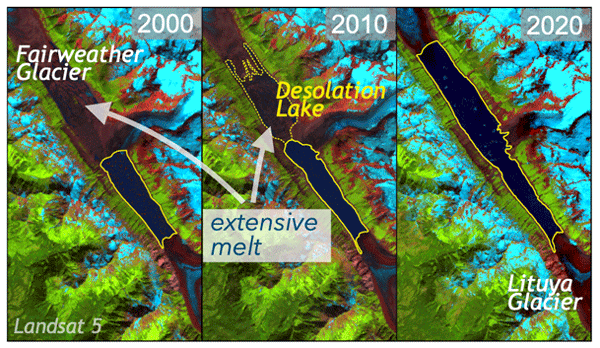
As the atmosphere warms, thinning glacier dams impound smaller lakes at their margins. Yet, some lakes deviate from this trend and have instead grown over time, increasing the risk of glacier floods to downstream populations and infrastructure. In this article, we examine the mechanisms behind the growth of an ice-dammed lake in Alaska. We find that the growth in size and outburst volumes is more controlled by glacier front downwaste than by overall mass loss over the entire glacier surface.
Ariane Mueting and Bodo Bookhagen
Earth Surf. Dynam., 12, 1121–1143, https://doi.org/10.5194/esurf-12-1121-2024, https://doi.org/10.5194/esurf-12-1121-2024, 2024
Short summary
Short summary
This study investigates the use of optical PlanetScope data for offset tracking of the Earth's surface movement. We found that co-registration accuracy is locally degraded when outdated elevation models are used for orthorectification. To mitigate this bias, we propose to only correlate scenes acquired from common perspectives or base orthorectification on more up-to-date elevation models generated from PlanetScope data alone. This enables a more detailed analysis of landslide dynamics.
Cited articles
Bookhagen, B.: Three orthomosaics of the Ravi River in the western Himalaya, at 0.2 mm per pixel resolution, Zenodo [data set], https://doi.org/10.5281/zenodo.16567549, 2025. a
Buscombe, D.: SediNet: a configurable deep learning model for mixed qualitative and quantitative optical granulometry, Earth Surf. Proc. Land., 45, 638–651, https://doi.org/10.1002/esp.4760, 2020. a
Buscombe, D., Rubin, D. M., and Warrick, J. A.: A universal approximation of grain size from images of noncohesive sediment, J. Geophys. Res.-Earth Surf., 115, https://doi.org/10.1029/2009JF001477, 2010. a
Butler, J. B., Lane, S. N., and Chandler, J. H.: Automated extraction of grain-size data from gravel surfaces using digital image processing, J. Hydraul. Res., https://doi.org/10.1080/00221686.2001.9628276, 2001. a
Carbonneau, P. E., Lane, S. N., and Bergeron, N. E.: Catchment-scale mapping of surface grain size in gravel bed rivers using airborne digital imagery, Water Resour. Res., 40, https://doi.org/10.1029/2003WR002759, 2004. a
Carbonneau, P. E., Bergeron, N., and Lane, S. N.: Automated grain size measurements from airborne remote sensing for long profile measurements of fluvial grain sizes, Water Resour. Res., 41, https://doi.org/10.1029/2005WR003994, 2005. a
Carbonneau, P. E., Bizzi, S., and Marchetti, G.: Robotic photosieving from low-cost multirotor sUAS: a proof-of-concept, Earth Surf. Proc. Land., 43, 1160–1166, https://doi.org/10.1002/esp.4298, 2018. a
Cattapan, A., Gurini, A., Paron, P., Ballio, F., and Franca, M. J.: A method for segmentation of pebble images in the presence of shadows, Earth Surf. Proc. Land., 49, 5202, https://doi.org/10.1002/esp.6027, 2024. a
Chan, V., Rheinwalt, A., and Bookhagen, B.: OrthoSAM: multi-scale extension of the Segment Anything Model for river pebble delineation from large orthophotos, Zenodo [code], https://doi.org/10.5281/zenodo.19411461, 2026. a, b
Chen, M., Russell, D., Pallavoor, A., Young, D., and Wu, J.: Zero-Shot Tree Detection and Segmentation from Aerial Forest Imagery, arXiv [preprint], https://doi.org/10.48550/arXiv.2506.03114, 2025. a
Eaton, B. C., Moore, R. D., and MacKenzie, L. G.: Percentile-based grain size distribution analysis tools (GSDtools) – estimating confidence limits and hypothesis tests for comparing two samples, Earth Surf. Dynam., 7, 789–806, https://doi.org/10.5194/esurf-7-789-2019, 2019. a
Hodges, J. L.: The significance probability of the smirnov two-sample test, Ark. Mat., 3, 469–486, https://doi.org/10.1007/BF02589501, 1958. a
Ibbeken, H. and Schleyer, R.: Photo-sieving: A method for grain-size analysis of coarse-grained, unconsolidated bedding surfaces, Earth Surf. Proc. Land., 11, 59–77, https://doi.org/10.1002/esp.3290110108, 1986. a
Israel, U., Marks, M., Dilip, R., Li, Q., Schwartz, M., Pradhan, E., Pao, E., Li, S., Pearson-Goulart, A., Perona, P., Gkioxari, G., Barnowski, R., Yue, Y., and Valen, D. V.: A Foundation Model for Cell Segmentation, arXiv [preprint], https://doi.org/10.48550/arXiv.2311.11004, 2023. a, b
Kirillov, A., Mintun, E., Ravi, N., Mao, H., Rolland, C., Gustafson, L., Xiao, T., Whitehead, S., Berg, A. C., Lo, W.-Y., Dollár, P., and Girshick, R.: Segment Anything, arXiv [preprint], https://doi.org/10.48550/arXiv.2304.02643, 2023. a, b, c, d
Lang, N., Irniger, A., Rozniak, A., Hunziker, R., Wegner, J. D., and Schindler, K.: GRAINet: mapping grain size distributions in river beds from UAV images with convolutional neural networks, Hydrol. Earth Syst. Sci., 25, 2567–2597, https://doi.org/10.5194/hess-25-2567-2021, 2021. a
Leopold, L. B.: An Improved Method for Size Distribution of Stream Bed Gravel, Water Resour. Res., 6, 1357–1366, https://doi.org/10.1029/WR006i005p01357, 1970. a
Mair, D.: Dataset and Model Weights for ImageGrains, Zenodo [data set], https://doi.org/10.5281/zenodo.8005771, 2023. a, b
Mair, D., Do Prado, A. H., Garefalakis, P., Lechmann, A., Whittaker, A., and Schlunegger, F.: Grain size of fluvial gravel bars from close-range UAV imagery – uncertainty in segmentation-based data, Earth Surf. Dynam., 10, 953–973, https://doi.org/10.5194/esurf-10-953-2022, 2022. a, b, c
Mair, D., Witz, G., Do Prado, A. H., Garefalakis, P., and Schlunegger, F.: Automated detecting, segmenting and measuring of grains in images of fluvial sediments: The potential for large and precise data from specialist deep learning models and transfer learning, Earth Surf. Proc. Land., 49, 1099–1116, https://doi.org/10.1002/esp.5755, 2024. a, b, c
Mortl, C., Baratier, A., Berthet, J., Duvillard, P.-A., and De Cesare, G.: GALET: A deep learning image segmentation model for drone-based grain size analysis of gravel bars, in: Proceedings of the 39th IAHR World Congress, International Association for Hydro-Environment Engineering and Research (IAHR), 5326–5335, ISBN 978-90-832612-1-8, https://doi.org/10.3850/IAHR-39WC252171192022895, 2022. a
Na, S., Guo, Y., Jiang, F., Ma, H., and Huang, J.: Segment Any Cell: A SAM-based Auto-prompting Fine-tuning Framework for Nuclei Segmentation, arXiv [preprint], https://doi.org/10.48550/arXiv.2401.13220, 2024. a, b
Parker, G.: Selective Sorting and Abrasion of River Gravel. I: Theory, J. Hydraul. Eng., 117, 131–147, https://doi.org/10.1061/(ASCE)0733-9429(1991)117:2(131), 1991. a
Pokhrel, P., Attal, M., Sinclair, H. D., Mudd, S. M., and Naylor, M.: Downstream rounding rate of pebbles in the Himalaya, Earth Surf. Dynam., 12, 515–536, https://doi.org/10.5194/esurf-12-515-2024, 2024. a, b
Purinton, B. and Bookhagen, B.: Introducing PebbleCounts: a grain-sizing tool for photo surveys of dynamic gravel-bed rivers, Earth Surf. Dynam., 7, 859–877, https://doi.org/10.5194/esurf-7-859-2019, 2019. a, b, c, d
Purinton, B. and Bookhagen, B.: Multiband (X, C, L) radar amplitude analysis for a mixed sand- and gravel-bed river in the eastern Central Andes, Remote Sens. Environ., 246, 111799, https://doi.org/10.1016/j.rse.2020.111799, 2020. a
Purinton, B. and Bookhagen, B.: Tracking Downstream Variability in Large Grain-Size Distributions in the South-Central Andes, J. Geophys. Res.-Earth Surf., 126, e2021JF006260, https://doi.org/10.1029/2021JF006260, 2021. a, b, c
Quick, L., Sinclair, H., Attal, M., and Singh, V.: Conglomerate recycling in the Himalayan foreland basin: Implications for grain size and provenance, GSA Bull., 132, 1639–1656, https://doi.org/10.1130/B35334.1, 2019. a
Ravi, N., Gabeur, V., Hu, Y.-T., Hu, R., Ryali, C., Ma, T., Khedr, H., Rädle, R., Rolland, C., Gustafson, L., Mintun, E., Pan, J., Alwala, K. V., Carion, N., Wu, C.-Y., Girshick, R., Dollár, P., and Feichtenhofer, C.: SAM 2: Segment Anything in Images and Videos, arXiv [preprint], https://doi.org/10.48550/arXiv.2408.00714, 2024. a
Rheinwalt, A., Purinton, B., and Bookhagen, B.: Curvature-based pebble segmentation for reconstructed surface meshes, Earth Surf. Dynam., 13, 923–940, https://doi.org/10.5194/esurf-13-923-2025, 2025. a
Rice, S. and Church, M.: Grain size along two gravel-bed rivers: statistical variation, spatial pattern and sedimentary links, Earth Surf. Proc. Land., 23, 345–363, https://doi.org/10.1002/(SICI)1096-9837(199804)23:4<345::AID-ESP850>3.0.CO;2-B, 1998. a
Rice, S., Greenwood, M. T., and Joyce, C. B.: Tributaries, sediment sources, and the longitudinal organisation of macroinvertebrate fauna along river systems, Can. J. Fish. Aquat. Sci., 58, 824–840, https://doi.org/10.1139/f01-022, 2001. a
Ronneberger, O., Fischer, P., and Brox, T.: U-Net: Convolutional Networks for Biomedical Image Segmentation, arXiv [preprint], https://doi.org/10.48550/arXiv.1505.04597, 2015. a
Rubin, D. M.: A Simple Autocorrelation Algorithm for Determining Grain Size from Digital Images of Sediment, J. Sediment. Res., 74, 160–165, https://doi.org/10.1306/052203740160, 2004. a
Sklar, L. S.: Grain Size in Landscapes, Annu. Rev. Earth Pl. Sc., 52, 663–692, https://doi.org/10.1146/annurev-earth-052623-075856, 2024. a
Soloy, A., Turki, I., Fournier, M., Costa, S., Peuziat, B., and Lecoq, N.: A Deep Learning-Based Method for Quantifying and Mapping the Grain Size on Pebble Beaches, Remote Sens., 12, 3659, https://doi.org/10.3390/rs12213659, 2020. a
Steer, P., Guerit, L., Lague, D., Crave, A., and Gourdon, A.: Size, shape and orientation matter: fast and semi-automatic measurement of grain geometries from 3D point clouds, Earth Surf. Dynam., 10, 1211–1232, https://doi.org/10.5194/esurf-10-1211-2022, 2022. a
Sylvester, Z., Stockli, D. F., Howes, N., Roberts, K., Malkowski, M. A., Poros, Z., Martindale, R. C., and Bai, W.: Segmenteverygrain: A Python module for segmentation of grains in images, Journal of Open Source Software, 10, 7953, https://doi.org/10.21105/joss.07953, 2025. a, b
Weinstein, B. G., Marconi, S., Aubry-Kientz, M., Vincent, G., Senyondo, H., and White, E. P.: DeepForest: A Python package for RGB deep learning tree crown delineation, Meth. Ecol. Evol., 11, 1743–1751, https://doi.org/10.1111/2041-210X.13472, 2020. a
Wolman, M. G.: A method of sampling coarse river‐bed material, Eos, Transactions American Geophysical Union, 35, 951–956, 1954. a
Yu, C., Chen, T., Gan, Z., and Fan, J.: Boost Vision Transformer with GPU-Friendly Sparsity and Quantization, in: 2023 IEEE/CVF Conference on Computer Vision and Pattern Recognition (CVPR), IEEE, Vancouver, BC, Canada, 22658–22668, ISBN 9798350301298, https://doi.org/10.1109/CVPR52729.2023.02170, 2023. a
Short summary
OrthoSAM is a new method that uses Segment Anything Model (SAM) to automatically identify and outline individual pebbles in high-resolution aerial images. OrthoSAM divides large photos into smaller sections that SAM can process effectively, and it improves the way to tell SAM where to look for objects. It uses a multi-resolution approach to handle different sizes, and it can be used to determine the distribution. Tests with computer-generated images and field data show that it is very precise.
OrthoSAM is a new method that uses Segment Anything Model (SAM) to automatically identify and...