
Articles | Volume 14, issue 4
https://doi.org/10.5194/esurf-14-601-2026
© Author(s) 2026. This work is distributed under
the Creative Commons Attribution 4.0 License.
the Creative Commons Attribution 4.0 License.
https://doi.org/10.5194/esurf-14-601-2026
© Author(s) 2026. This work is distributed under
the Creative Commons Attribution 4.0 License.
the Creative Commons Attribution 4.0 License.
Research article
| 
05 Aug 2026
Research article |
| 05 Aug 2026
| 05 Aug 2026
How ice apron loss and permafrost degradation promoted the Platteikogel rock slope failure: a thermo-mechanical reconstruction

Landslide Research Group, TUM School of Engineering and Design, Technical University of Munich, Munich, Germany
Samuel Weber
WSL Institute for Snow and Avalanche Research, SLF, Davos Dorf, Switzerland
Climate Change, Extremes and Natural Hazards in Alpine Regions Research Center CERC, Davos Dorf, Switzerland
Natalie Barbosa
Landslide Research Group, TUM School of Engineering and Design, Technical University of Munich, Munich, Germany
Department of Earth and Environmental Sciences, Faculty of Earth Sciences, GeoBio Center, Ludwig Maximilians University, Munich, Germany
Florentin Hofmeister
Bavarian Academy of Sciences and Humanities, Geodesy and Glaciology, Alfons-Goppel Str. 11, 80539 Munich, Germany
Johannes Leinauer
Landslide Research Group, TUM School of Engineering and Design, Technical University of Munich, Munich, Germany
Peter Wegmann
Department of Computer Science, TUM School of Computation, Information and Technology, Technical University of Munich, Munich, Germany
Michael Krautblatter
Landslide Research Group, TUM School of Engineering and Design, Technical University of Munich, Munich, Germany
Related authors
Samuel Weber, Jan Beutel, Michael Dietze, Alexander Bast, Robert Kenner, Marcia Phillips, Johannes Leinauer, Simon Mühlbauer, Felix Pfluger, and Michael Krautblatter
Earth Surf. Dynam., 13, 1157–1179, https://doi.org/10.5194/esurf-13-1157-2025, https://doi.org/10.5194/esurf-13-1157-2025, 2025
Short summary
Short summary
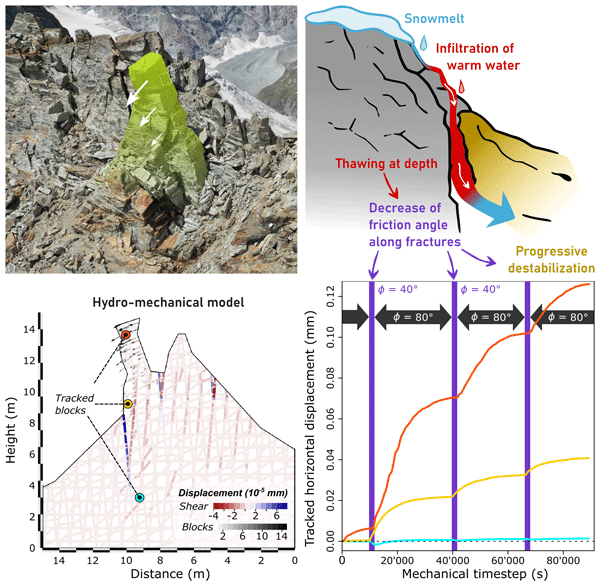
On 13 June 2023, a freestanding rock pillar on the Matterhorn collapsed after years of weakening. Our study examines this progressive destabilization by analyzing field data and integrating lab experiments into a hydro-mechanical model. We highlight the critical role of water infiltration into frozen rock, intensified by climate warming, as a widespread driver of the rising frequency of rockfalls in high mountain permafrost regions.
Felix Pfluger, Samuel Weber, Joseph Steinhauser, Christian Zangerl, Christine Fey, Johannes Fürst, and Michael Krautblatter
Earth Surf. Dynam., 13, 41–70, https://doi.org/10.5194/esurf-13-41-2025, https://doi.org/10.5194/esurf-13-41-2025, 2025
Short summary
Short summary
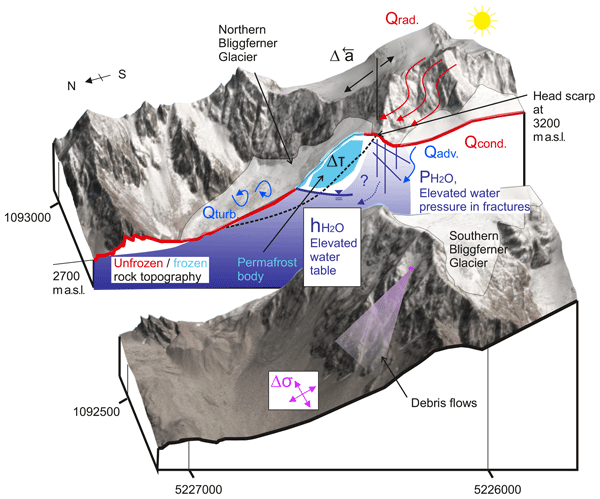
Our study explores permafrost–glacier interactions with a focus on their implications for preparing or triggering high-volume rock slope failures. Using the Bliggspitze rock slide as a case study, we demonstrate a new type of rock slope failure mechanism triggered by the uplift of the cold–warm dividing line in polythermal alpine glaciers, a widespread and currently under-explored phenomenon in alpine environments worldwide.
Maike Offer, Ingo Hartmeyer, Samuel Weber, Markus Keuschnig, and Michael Krautblatter
Earth Surf. Dynam., 14, 661–683, https://doi.org/10.5194/esurf-14-661-2026, https://doi.org/10.5194/esurf-14-661-2026, 2026
Short summary
Short summary
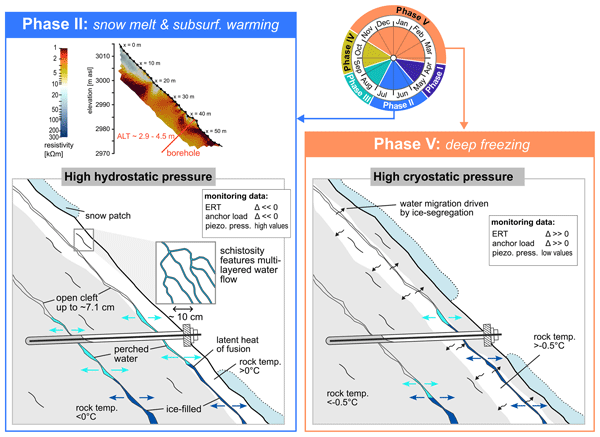
This study presents a year-round automated electrical resistivity tomography monitoring of a steep permafrost rockwall combined with borehole temperature, anchor load and piezometer observations. The joint analysis revealed seasonal phases with enhanced mechanical forcing of rockwalls related to high hydrostatic and cryostatic pressures, which are of particular interest for understanding preconditioning of rock instabilities.
Riccardo Scandroglio, Samuel Weber, Jonas K. Limbrock, and Michael Krautblatter
The Cryosphere, 20, 4787–4809, https://doi.org/10.5194/tc-20-4787-2026, https://doi.org/10.5194/tc-20-4787-2026, 2026
Short summary
Short summary
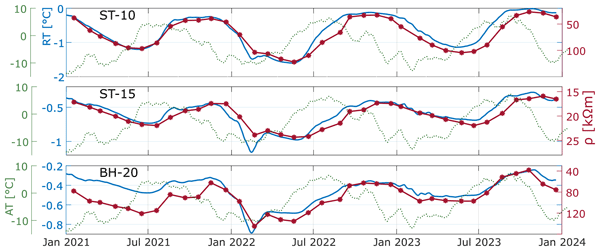
This study monitors changes in frozen rock on Mount Zugspitze over 17 years using monthly electrical resistivity measurements. By linking this data to rock temperature and applying advanced analysis, it reveals a 40 % loss of permafrost in the past decade. Thawing accelerates during summer, highlighting increasing risks of rock instability as temperatures rise.
Philipp Daniel Gewalt, Thomas C. Wagner, and Michael Krautblatter
EGUsphere, https://doi.org/10.5194/egusphere-2026-1699, https://doi.org/10.5194/egusphere-2026-1699, 2026
Short summary
Short summary
Sediments move through mountain landscapes during heavy rainfall. Climate change will alter the occurrence of heavy rainfall, potentially changing sediment transport. To understand how, we investigate how mountain sediment transport responded to past climate changes. We show that sediments in small, steep catchments are moved by less extreme precipitation compared to larger, gentler catchments. This means that catchment form and area control future sediment transport in a changing climate.
Katharina Wetterauer, Sebastian Müller, Michael Krautblatter, Shiva P. Pudasaini, and Ivo Baselt
EGUsphere, https://doi.org/10.5194/egusphere-2026-1235, https://doi.org/10.5194/egusphere-2026-1235, 2026
Short summary
Short summary
Contrasting mobility responses of erosive debris flows are poorly understood. Here, the role of bed inertia in debris-flow evolution and runout is experimentally assessed using distinct bed-density contrasts. Erosion is higher and runout longer over low-density beds, whereas equal- and high-density beds congruently show shallower erosion and shorter runout. The results indicate that solid density alone cannot explain mobility changes and that particle shape and internal friction also contribute.
Benjamin Jacobs, Mohamed Ismael, Mostafa Ezzy, Markus Keuschnig, Alexander Mendler, Johanna Kieser, Michael Krautblatter, Christian U. Grosse, and Hany Helal
Earth Surf. Dynam., 14, 55–74, https://doi.org/10.5194/esurf-14-55-2026, https://doi.org/10.5194/esurf-14-55-2026, 2026
Short summary
Short summary
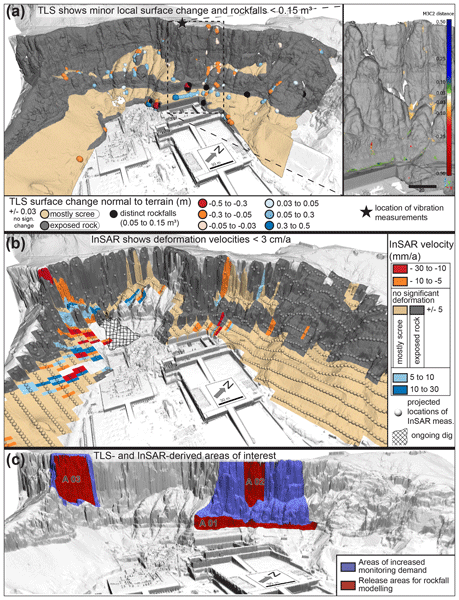
The Mortuary Temple of Hatshepsut is one of Egypt's key heritage sites but is potentially threatened by rockfalls from a 100 m high limestone cliff. We transferred established monitoring techniques from alpine environments to this UNESCO World Heritage Site and evaluated their performance in a historically sensitive desert environment. Our study presents the first evidence-based event and impact analysis of rockfalls at the Temple of Hatshepsut, providing vital data for future risk assessment.
Samuel Weber, Andreas Vieli, Marcia Phillips, and Alessandro Cicoira
The Cryosphere, 19, 6727–6748, https://doi.org/10.5194/tc-19-6727-2025, https://doi.org/10.5194/tc-19-6727-2025, 2025
Short summary
Short summary
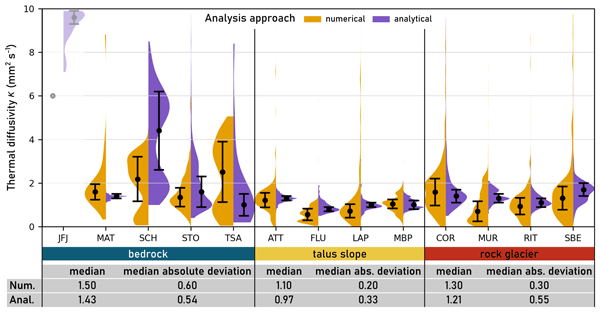
The properties of the permafrost ground depend on its temperature and composition. We used temperature data from 29 boreholes in Switzerland to study how heat moves through different types of mountain permafrost landforms, supporting a physically meaningful interpretation of thermal properties in terms of ice content, water saturation, and porosity. Understanding changes is important because they can affect how stable mountain slopes are and how easy it is to build things in mountain areas.
Xinyang Fan, Florentin Hofmeister, Bettina Schaefli, and Gabriele Chiogna
EGUsphere, https://doi.org/10.5194/egusphere-2025-6065, https://doi.org/10.5194/egusphere-2025-6065, 2025
Short summary
Short summary
We adopt a physics-based, fully-integrated hydrological modeling approach to understand streamflow variations and their interactions with groundwater in a high-elevation glaciated environment. We demonstrate opportunities and challenges of integrating point-scale groundwater observations into a distributed model. This study sheds new lights on surface-subsurface processes in high alpine environments and highlights the importance of improving subsurface representation in hydrological modeling.
Samuel Weber, Jan Beutel, Michael Dietze, Alexander Bast, Robert Kenner, Marcia Phillips, Johannes Leinauer, Simon Mühlbauer, Felix Pfluger, and Michael Krautblatter
Earth Surf. Dynam., 13, 1157–1179, https://doi.org/10.5194/esurf-13-1157-2025, https://doi.org/10.5194/esurf-13-1157-2025, 2025
Short summary
Short summary
On 13 June 2023, a freestanding rock pillar on the Matterhorn collapsed after years of weakening. Our study examines this progressive destabilization by analyzing field data and integrating lab experiments into a hydro-mechanical model. We highlight the critical role of water infiltration into frozen rock, intensified by climate warming, as a widespread driver of the rising frequency of rockfalls in high mountain permafrost regions.
Florentin Hofmeister, Xinyang Fan, Madlene Pfeiffer, Ben Marzeion, Bettina Schaefli, and Gabriele Chiogna
EGUsphere, https://doi.org/10.5194/egusphere-2025-3256, https://doi.org/10.5194/egusphere-2025-3256, 2025
Short summary
Short summary
We use the WRF model for dynamically downscaling a global reanalysis product for the period 1850 to 2015 for the central European Alps. We demonstrate a workflow for transferring coarse-resolution (2 km) WRF temperature and precipitation to a much finer spatial resolution (25 m) of a physics-based hydrological model (WaSiM) and evaluate the results in a multi-data approach covering different simulation periods. Our results highlight the need for plausible and consistent elevation gradients.
Timo Schaffhauser, Florentin Hofmeister, Gabriele Chiogna, Fabian Merk, Ye Tuo, Julian Machnitzke, Lucas Alcamo, Jingshui Huang, and Markus Disse
Hydrol. Earth Syst. Sci., 29, 3227–3256, https://doi.org/10.5194/hess-29-3227-2025, https://doi.org/10.5194/hess-29-3227-2025, 2025
Short summary
Short summary
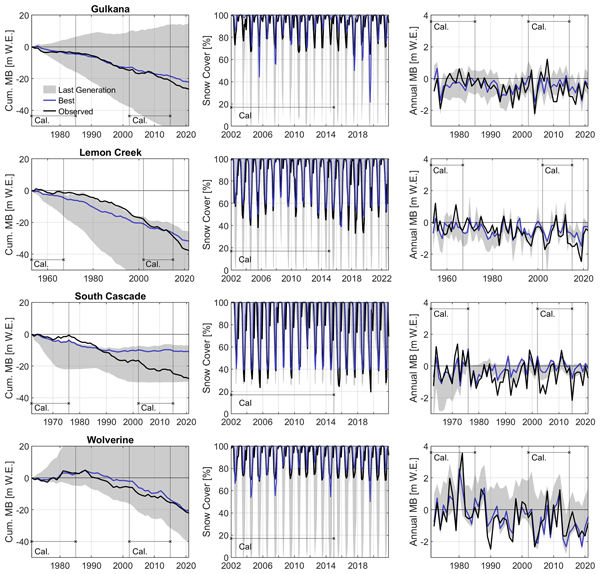
The glacier-expanded SWAT (Soil Water Assessment Tool) version, SWAT-GL, was tested in four different catchments, highlighting the capabilities of the glacier routine. It was evaluated based on the representation of glacier mass balance, snow cover and glacier hypsometry. The glacier changes over a long timescale could be adequately represented, leading to promising potential future applications in glaciated and high mountain environments and significantly outperforming standard SWAT models.
Xinyang Fan, Florentin Hofmeister, Bettina Schaefli, and Gabriele Chiogna
EGUsphere, https://doi.org/10.5194/egusphere-2025-1500, https://doi.org/10.5194/egusphere-2025-1500, 2025
Preprint archived
Short summary
Short summary
We adopt a fully-distributed, physics-based hydrological modeling approach, to understand streamflow variations and their interactions with groundwater in a high-elevation glaciated environment. We demonstrate opportunities and challenges of integrating point-scale groundwater observations into a distributed model. This study sheds new lights on surface-subsurface processes in high alpine environments and highlights the importance of improving subsurface representation in hydrological modeling.
Riccardo Scandroglio, Samuel Weber, Till Rehm, and Michael Krautblatter
Earth Surf. Dynam., 13, 295–314, https://doi.org/10.5194/esurf-13-295-2025, https://doi.org/10.5194/esurf-13-295-2025, 2025
Short summary
Short summary
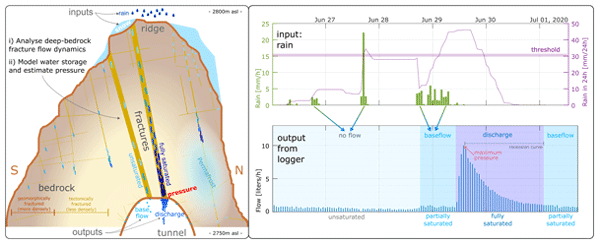
Despite the critical role of water in alpine regions, its presence in bedrock is frequently neglected. This research examines the dynamics of water in fractures using 1 decade of measurements from a tunnel 50 m underground. We provide new insights into alpine groundwater dynamics, revealing that up to 800 L d-1 can flow in one fracture during extreme events. These quantities can saturate the fractures, enhance hydraulic conductivity, and generate pressures that destabilize slopes.
Maike Offer, Samuel Weber, Michael Krautblatter, Ingo Hartmeyer, and Markus Keuschnig
The Cryosphere, 19, 485–506, https://doi.org/10.5194/tc-19-485-2025, https://doi.org/10.5194/tc-19-485-2025, 2025
Short summary
Short summary
We present a unique long-term dataset of measurements of borehole temperature, repeated electrical resistivity tomography, and piezometric pressure to investigate the complex seasonal water flow in permafrost rockwalls. Our joint analysis shows that permafrost rocks are subjected to enhanced pressurised water flow during the thaw period, resulting in push-like warming events and long-lasting rock temperature regime changes.
Felix Pfluger, Samuel Weber, Joseph Steinhauser, Christian Zangerl, Christine Fey, Johannes Fürst, and Michael Krautblatter
Earth Surf. Dynam., 13, 41–70, https://doi.org/10.5194/esurf-13-41-2025, https://doi.org/10.5194/esurf-13-41-2025, 2025
Short summary
Short summary
Our study explores permafrost–glacier interactions with a focus on their implications for preparing or triggering high-volume rock slope failures. Using the Bliggspitze rock slide as a case study, we demonstrate a new type of rock slope failure mechanism triggered by the uplift of the cold–warm dividing line in polythermal alpine glaciers, a widespread and currently under-explored phenomenon in alpine environments worldwide.
Johannes Leinauer, Michael Dietze, Sibylle Knapp, Riccardo Scandroglio, Maximilian Jokel, and Michael Krautblatter
Earth Surf. Dynam., 12, 1027–1048, https://doi.org/10.5194/esurf-12-1027-2024, https://doi.org/10.5194/esurf-12-1027-2024, 2024
Short summary
Short summary
Massive rock slope failures are a significant alpine hazard and change the Earth's surface. Therefore, we must understand what controls the preparation of such events. By correlating 4 years of slope displacements with meteorological and seismic data, we found that water from rain and snowmelt is the most important driver. Our approach is applicable to similar sites and indicates where future climatic changes, e.g. in rain intensity and frequency, may alter the preparation of slope failure.
Jacopo Boaga, Mirko Pavoni, Alexander Bast, and Samuel Weber
The Cryosphere, 18, 3231–3236, https://doi.org/10.5194/tc-18-3231-2024, https://doi.org/10.5194/tc-18-3231-2024, 2024
Short summary
Short summary
Reversal polarity is observed in rock glacier seismic refraction tomography. We collected several datasets observing this phenomenon in Switzerland and Italy. This phase change may be linked to interferences due to the presence of a thin low-velocity layer. Our results are confirmed by the modelling and analysis of synthetic seismograms to demonstrate that the presence of a low-velocity layer produces a polarity reversal on the seismic gather.
Natalie Barbosa, Johannes Leinauer, Juilson Jubanski, Michael Dietze, Ulrich Münzer, Florian Siegert, and Michael Krautblatter
Earth Surf. Dynam., 12, 249–269, https://doi.org/10.5194/esurf-12-249-2024, https://doi.org/10.5194/esurf-12-249-2024, 2024
Short summary
Short summary
Massive sediment pulses in catchments are a key alpine multi-risk component. Combining high-resolution aerial imagery and seismic information, we decipher a multi-stage >130.000 m³ rockfall and subsequent sediment pulses over 4 years, reflecting sediment deposition up to 10 m, redistribution in the basin, and finally debouchure to the outlet. This study provides generic information on spatial and temporal patterns of massive sediment pulses in highly charged alpine catchments.
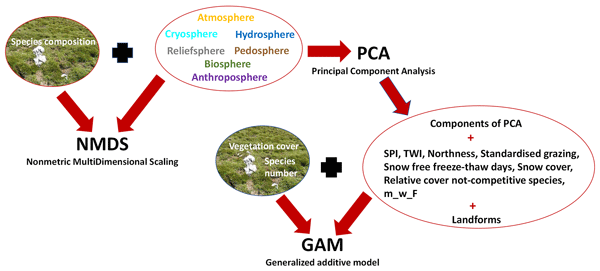
Katharina Ramskogler, Bettina Knoflach, Bernhard Elsner, Brigitta Erschbamer, Florian Haas, Tobias Heckmann, Florentin Hofmeister, Livia Piermattei, Camillo Ressl, Svenja Trautmann, Michael H. Wimmer, Clemens Geitner, Johann Stötter, and Erich Tasser
Biogeosciences, 20, 2919–2939, https://doi.org/10.5194/bg-20-2919-2023, https://doi.org/10.5194/bg-20-2919-2023, 2023
Short summary
Short summary
Primary succession in proglacial areas depends on complex driving forces. To concretise the complex effects and interaction processes, 39 known explanatory variables assigned to seven spheres were analysed via principal component analysis and generalised additive models. Key results show that in addition to time- and elevation-dependent factors, also disturbances alter vegetation development. The results are useful for debates on vegetation development in a warming climate.
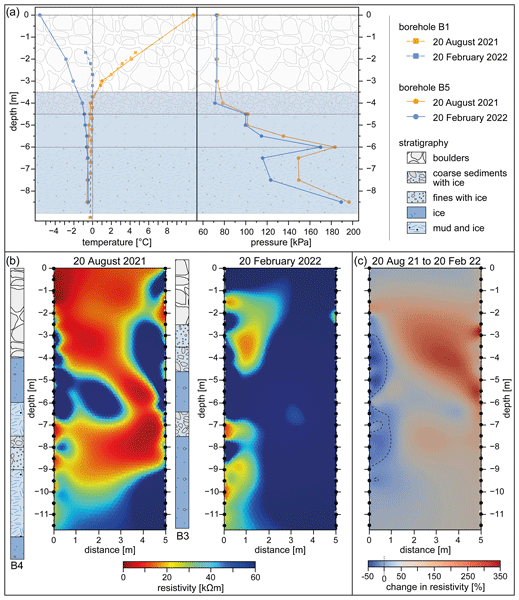
Marcia Phillips, Chasper Buchli, Samuel Weber, Jacopo Boaga, Mirko Pavoni, and Alexander Bast
The Cryosphere, 17, 753–760, https://doi.org/10.5194/tc-17-753-2023, https://doi.org/10.5194/tc-17-753-2023, 2023
Short summary
Short summary
A new combination of temperature, water pressure and cross-borehole electrical resistivity data is used to investigate ice/water contents in an ice-rich rock glacier. The landform is close to 0°C and has locally heterogeneous characteristics, ice/water contents and temperatures. The techniques presented continuously monitor temporal and spatial phase changes to a depth of 12 m and provide the basis for a better understanding of accelerating rock glacier movements and future water availability.
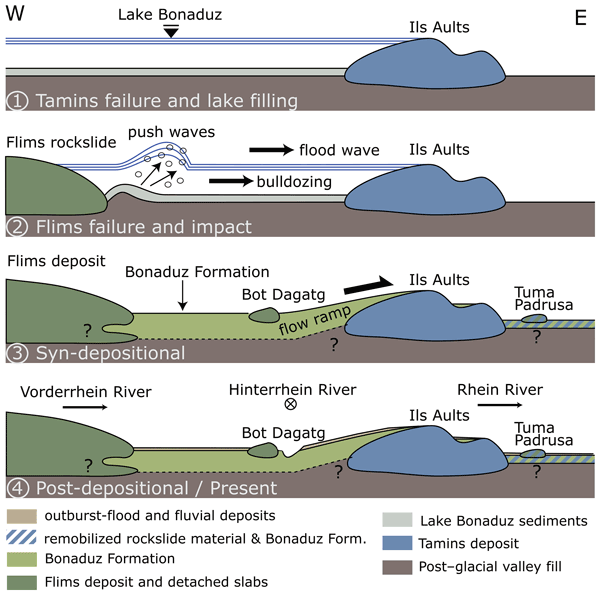
Sibylle Knapp, Michael Schwenk, and Michael Krautblatter
Earth Surf. Dynam., 10, 1185–1193, https://doi.org/10.5194/esurf-10-1185-2022, https://doi.org/10.5194/esurf-10-1185-2022, 2022
Short summary
Short summary
The Flims area in the Swiss Alps has fascinated the researchers with its complex geological history ever since. Especially the order of events related to the Tamins and Flims rockslides has long been debated. This paper presents novel results based on up to 160 m deep geophysical profiles, which show onlaps of the Bonaduz Formation onto the Tamins deposits (Ils Aults) and thus indicate that the Tamins rockslide occurred first. The consecutive evolution of this landscape is shown in four phases.
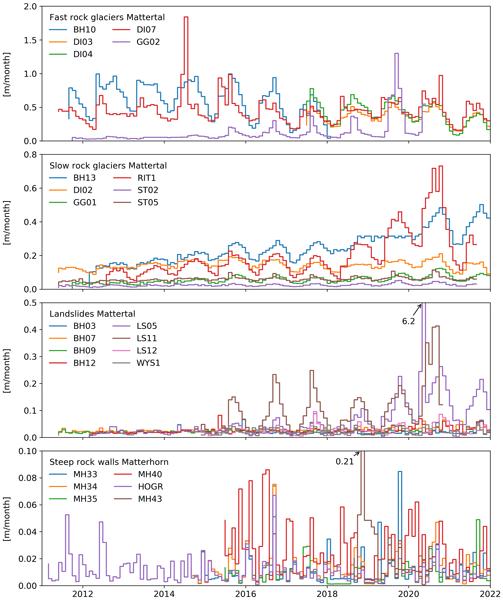
Alessandro Cicoira, Samuel Weber, Andreas Biri, Ben Buchli, Reynald Delaloye, Reto Da Forno, Isabelle Gärtner-Roer, Stephan Gruber, Tonio Gsell, Andreas Hasler, Roman Lim, Philippe Limpach, Raphael Mayoraz, Matthias Meyer, Jeannette Noetzli, Marcia Phillips, Eric Pointner, Hugo Raetzo, Cristian Scapozza, Tazio Strozzi, Lothar Thiele, Andreas Vieli, Daniel Vonder Mühll, Vanessa Wirz, and Jan Beutel
Earth Syst. Sci. Data, 14, 5061–5091, https://doi.org/10.5194/essd-14-5061-2022, https://doi.org/10.5194/essd-14-5061-2022, 2022
Short summary
Short summary
This paper documents a monitoring network of 54 positions, located on different periglacial landforms in the Swiss Alps: rock glaciers, landslides, and steep rock walls. The data serve basic research but also decision-making and mitigation of natural hazards. It is the largest dataset of its kind, comprising over 209 000 daily positions and additional weather data.
Shiva P. Pudasaini and Michael Krautblatter
Earth Surf. Dynam., 10, 165–189, https://doi.org/10.5194/esurf-10-165-2022, https://doi.org/10.5194/esurf-10-165-2022, 2022
Short summary
Short summary
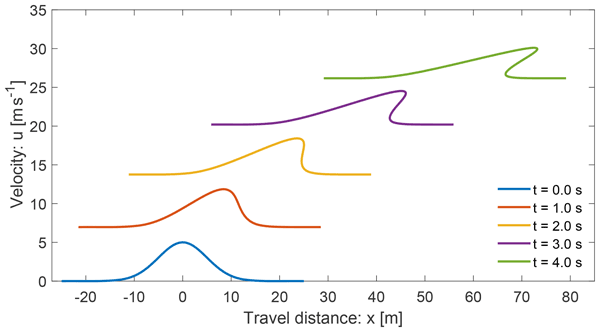
We present the first physics-based general landslide velocity model incorporating internal deformation and external forces. Voellmy–inviscid Burgers' equations are specifications of the novel advective–dissipative system. Unified analytical solutions constitute a new foundation of landslide velocity, providing key information to instantly estimate impact forces and describe breaking waves and folding, revealing that landslide dynamics are architectured by advection and reigned by forcing.
Bernd Etzelmüller, Justyna Czekirda, Florence Magnin, Pierre-Allain Duvillard, Ludovic Ravanel, Emanuelle Malet, Andreas Aspaas, Lene Kristensen, Ingrid Skrede, Gudrun D. Majala, Benjamin Jacobs, Johannes Leinauer, Christian Hauck, Christin Hilbich, Martina Böhme, Reginald Hermanns, Harald Ø. Eriksen, Tom Rune Lauknes, Michael Krautblatter, and Sebastian Westermann
Earth Surf. Dynam., 10, 97–129, https://doi.org/10.5194/esurf-10-97-2022, https://doi.org/10.5194/esurf-10-97-2022, 2022
Short summary
Short summary
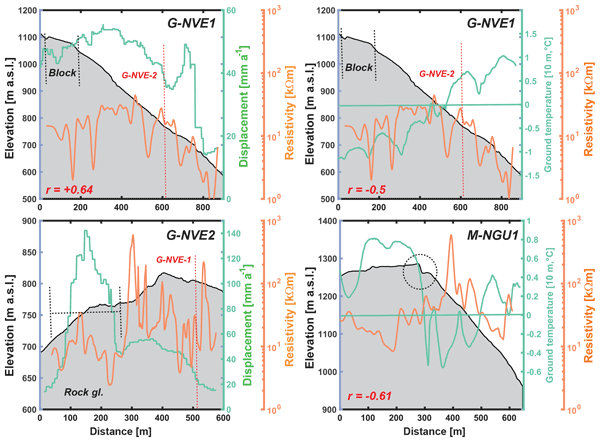
This paper is a multi-authored study documenting the possible existence of permafrost in permanently monitored rockslides in Norway for the first time by combining a multitude of field data, including geophysical surveys in rock walls. The paper discusses the possible role of thermal regime and rockslide movement, and it evaluates the possible impact of atmospheric warming on rockslide dynamics in Norwegian mountains.
Carolin Kiefer, Patrick Oswald, Jasper Moernaut, Stefano Claudio Fabbri, Christoph Mayr, Michael Strasser, and Michael Krautblatter
Earth Surf. Dynam., 9, 1481–1503, https://doi.org/10.5194/esurf-9-1481-2021, https://doi.org/10.5194/esurf-9-1481-2021, 2021
Short summary
Short summary
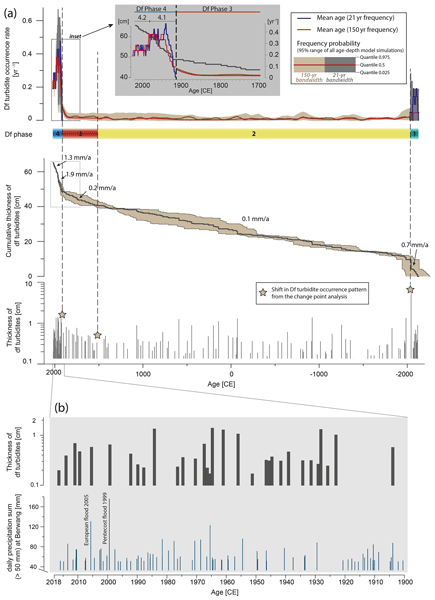
This study provides amphibious investigations of debris flow fans (DFFs). We characterize active DFFs, combining laser scan and sonar surveys at Plansee. We discover a 4000-year debris flow record in sediment cores, providing evidence for a 7-fold debris flow frequency increase in the 20th and 21st centuries, coincident with 2-fold enhanced rainstorm activity in the northern European Alps. Our results indicate climate change as being the main factor controlling debris flow activity.
Cited articles
Aspaas, A., Bievre, G., Lacroix, P., Langet, N., Aga, J., Skrede, I., Kristensen, L., Etzelmuller, B., and Renard, F.: Seasonal and Inter-Annual Evolution of the Deformation of Two Arctic Landslides, EGUsphere [preprint], https://doi.org/10.5194/egusphere-2026-62, 2026. a
Auer, I., Böhm, R., Jurkovic, A., Lipa, W., Orlik, A., Potzmann, R., Schöner, W., Ungersböck, M., Matulla, C., Briffa, K., Jones, P., Efthymiadis, D., Brunetti, M., Nanni, T., Maugeri, M., Mercalli, L., Mestre, O., Moisselin, J.-M., Begert, M., Müller-Westermeier, G., Kveton, V., Bochnicek, O., Stastny, P., Lapin, M., Szalai, S., Szentimrey, T., Cegnar, T., Dolinar, M., Gajic-Capka, M., Zaninovic, K., Majstorovic, Z., and Nieplova, E.: HISTALP – Historical Instrumental Climatological Surface Time Series of the Greater Alpine Region, Int. J. Climatol., 27, 17–46, https://doi.org/10.1002/joc.1377, 2007. a, b
Ballantyne, C. K., Sandeman, G. F., Stone, J. O., and Wilson, P.: Rock-Slope Failure Following Late Pleistocene Deglaciation on Tectonically Stable Mountainous Terrain, Quaternary Sci. Rev., 86, 144–157, https://doi.org/10.1016/j.quascirev.2013.12.021, 2014. a
Barbosa, N., Leinauer, J., Jubanski, J., Dietze, M., Münzer, U., Siegert, F., and Krautblatter, M.: Massive sediment pulses triggered by a multi-stage 130 000 m3 alpine cliff fall (Hochvogel, DE–AT), Earth Surf. Dynam., 12, 249–269, https://doi.org/10.5194/esurf-12-249-2024, 2024. a, b
Benn, D. and Evans, D. J. A.: Glaciers and Glaciation, Routledge, London, 2nd edn., ISBN 978-0-203-78501-0, https://doi.org/10.4324/9780203785010, 2014. a, b, c
Cai, M., Kaiser, P. K., Uno, H., Tasaka, Y., and Minami, M.: Estimation of Rock Mass Deformation Modulus and Strength of Jointed Hard Rock Masses Using the GSI System, Int. J. Rock Mech. Min., 41, 3–19, https://doi.org/10.1016/S1365-1609(03)00025-X, 2004. a, b
Carslaw, H. S. and Jaeger, J. C.: Conduction of Heat in Solids, Clarendon Pr, Oxford, 2nd edn., repr. edn., ISBN 978-0-19-853303-0, 1980. a
Cathala, M., Bock, J., Abdulsamad, F., Deline, P., Josnin, J.-Y., Ravanel, L., Revil, A., Richard, J., Verroust, F., and Magnin, F.: Assessing the Role of Permafrost in the Preconditioning and Triggering Factors of the September 2020 Crête Des Grangettes Rockfall (Southern French Alps), Géomorphologie, 30, https://doi.org/10.4000/12yqn, 2024. a
Dabrowski, M., Krotkiewski, M., and Schmid, D. W.: MILAMIN: MATLAB-based Finite Element Method Solver for Large Problems, Geochem. Geophy. Geosy., 9, https://doi.org/10.1029/2007GC001719, 2008. a
Davies, M. C., Hamza, O., and Harris, C.: The Effect of Rise in Mean Annual Temperature on the Stability of Rock Slopes Containing Ice-Filled Discontinuities, Permafrost Periglac., 12, 137–144, 2001. a
Deline, P., Gruber, S., Delaloye, R., Fischer, L., Geertsema, M., Giardino, M., Hasler, A., Kirkbride, M., Krautblatter, M., Magnin, F., McColl, S., Ravanel, L., and Schoeneich, P.: Chapter 15 – Ice Loss and Slope Stability in High-Mountain Regions, in: Snow and Ice-Related Hazards, Risks, and Disasters, edited by: Shroder, J. F., Haeberli, W., and Whiteman, C., Hazards and Disasters Series, Academic Press, Boston, 521–561, ISBN 978-0-12-394849-6, https://doi.org/10.1016/B978-0-12-394849-6.00015-9, 2015. a, b
Dewez, T. J. B., Girardeau-Montaut, D., Allanic, C., and Rohmer, J.: FACETS: A CLOUDCOMPARE PLUGIN TO EXTRACT GEOLOGICAL PLANES FROM UNSTRUCTURED 3D POINT CLOUDS, Int. Arch. Photogramm. Remote Sens. Spatial Inf. Sci., XLI-B5, 799–804, https://doi.org/10.5194/isprs-archives-XLI-B5-799-2016, 2016. a
Dietze, M., Turowski, J. M., Cook, K. L., and Hovius, N.: Spatiotemporal patterns, triggers and anatomies of seismically detected rockfalls, Earth Surf. Dynam., 5, 757–779, https://doi.org/10.5194/esurf-5-757-2017, 2017. a
Draebing, D. and Krautblatter, M.: P-wave velocity changes in freezing hard low-porosity rocks: a laboratory-based time-average model, The Cryosphere, 6, 1163–1174, https://doi.org/10.5194/tc-6-1163-2012, 2012. a
Draebing, D. and Mayer, T.: Topographic and Geologic Controls on Frost Cracking in Alpine Rockwalls, J. Geophys. Res.-Earth, 126, e2021JF006163, https://doi.org/10.1029/2021JF006163, 2021. a, b
Dwivedi, R. D., Soni, A. K., Goel, R. K., and Dube, A. K.: Fracture Toughness of Rocks under Sub-Zero Temperature Conditions, Int. J. Rock Mech. Min., 37, 1267–1275, https://doi.org/10.1016/S1365-1609(00)00051-4, 2000. a
Eberhardt, E., Stead, D., and Coggan, J. S.: Numerical Analysis of Initiation and Progressive Failure in Natural Rock Slopes – the 1991 Randa Rockslide, Int. J. Rock Mech. Min., 41, 69–87, 2004. a
Etzelmüller, B., Czekirda, J., Magnin, F., Duvillard, P.-A., Ravanel, L., Malet, E., Aspaas, A., Kristensen, L., Skrede, I., Majala, G. D., Jacobs, B., Leinauer, J., Hauck, C., Hilbich, C., Böhme, M., Hermanns, R., Eriksen, H. Ø., Lauknes, T. R., Krautblatter, M., and Westermann, S.: Permafrost in monitored unstable rock slopes in Norway – new insights from temperature and surface velocity measurements, geophysical surveying, and ground temperature modelling, Earth Surf. Dynam., 10, 97–129, https://doi.org/10.5194/esurf-10-97-2022, 2022. a, b
European Space Agency: Sentinel-2 L2A image, tile ID T33TWN, acquired on 10 May 2024, European Space Agency, https://dataspace.copernicus.eu (last access: 1 February 2026), 2024. a
Fey, C., Wichmann, V., and Zangerl, C.: Influence of Permafrost Degradation and Glacier Retreat on Recent High Mountain Rockfall Distribution in the Eastern European Alps, Earth Surf. Proc. Land., 50, e70063, https://doi.org/10.1002/esp.70063, 2025. a
Fischer, L., Kääb, A., Huggel, C., and Noetzli, J.: Geology, glacier retreat and permafrost degradation as controlling factors of slope instabilities in a high-mountain rock wall: the Monte Rosa east face, Nat. Hazards Earth Syst. Sci., 6, 761–772, https://doi.org/10.5194/nhess-6-761-2006, 2006. a
Fischer, L., Amann, F., Moore, J. R., and Huggel, C.: Assessment of Periglacial Slope Stability for the 1988 Tschierva Rock Avalanche (Piz Morteratsch, Switzerland), Eng. Geol., 116, 32–43, https://doi.org/10.1016/j.enggeo.2010.07.005, 2010. a, b, c, d
Francese, R. G., Valentino, R., Haeberli, W., Bondesan, A., Giorgi, M., Picotti, S., Pettenati, F., Sandron, D., Ramponi, G., and Valt, M.: Failure of Marmolada Glacier (Dolomites, Italy) in 2022: data-based back analysis of possible collapse mechanisms, Nat. Hazards Earth Syst. Sci., 25, 3027–3053, https://doi.org/10.5194/nhess-25-3027-2025, 2025. a
Geologische Bundesanstalt Österreich: Geodaten zu GEOFAST – Blatt 173 Sölden (1 : 50 000), Tethys RDR, Geologische Bundesanstalt (GBA), Vienna, https://doi.org/10.24341/tethys.164, 2021. a
Gerstner, R., Fey, C., Kuschel, E., Valentin, G., Voit, K., and Zangerl, C.: Polyphase Rock Slope Failure Controlled by Pre-Existing Geological Structures and Rock Bridges, B. Eng. Geol. Environ., 82, 363, https://doi.org/10.1007/s10064-023-03382-2, 2023. a
Gischig, V., Amann, F., Moore, J. R., Loew, S., Eisenbeiss, H., and Stempfhuber, W.: Composite Rock Slope Kinematics at the Current Randa Instability, Switzerland, Based on Remote Sensing and Numerical Modeling, Eng. Geol., 118, 37–53, https://doi.org/10.1016/j.enggeo.2010.11.006, 2011. a
Gisnås, K., Etzelmüller, B., Farbrot, H., Schuler, T. V., and Westermann, S.: CryoGRID 1.0: Permafrost Distribution in Norway Estimated by a Spatial Numerical Model, Permafrost Periglac., 24, 2–19, https://doi.org/10.1002/ppp.1765, 2013. a
Grämiger, L. M., Moore, J. R., Gischig, V. S., Ivy–Ochs, S., and Loew, S.: Beyond Debuttressing: Mechanics of Paraglacial Rock Slope Damage during Repeat Glacial Cycles, J. Geophys. Res.-Earth, 122, 1004–1036, 2017. a
Grämiger, L. M., Moore, J. R., Gischig, V. S., Loew, S., Funk, M., and Limpach, P.: Hydromechanical Rock Slope Damage During Late Pleistocene and Holocene Glacial Cycles in an Alpine Valley, J. Geophys. Res.-Earth, 125, https://doi.org/10.1029/2019JF005494, 2020. a
Guillet, G. and Ravanel, L.: Variations in Surface Area of Six Ice Aprons in the Mont-Blanc Massif since the Little Ice Age, J. Glaciol., 66, 777–789, https://doi.org/10.1017/jog.2020.46, 2020. a, b
Guillet, G., Preunkert, S., Ravanel, L., Montagnat, M., and Friedrich, R.: Investigation of a Cold-Based Ice Apron on a High-Mountain Permafrost Rock Wall Using Ice Texture Analysis and Micro-14C Dating: A Case Study of the Triangle Du Tacul Ice Apron (Mont Blanc Massif, France), J. Glaciol., 67, 1205–1212, https://doi.org/10.1017/jog.2021.65, 2021. a
Haberkorn, A., Hoelzle, M., Phillips, M., and Kenner, R.: Snow as a Driving Factor of Rock Surface Temperatures in Steep Rough Rock Walls, Cold Reg. Sci. Technol., 118, 64–75, 2015. a
Han, Y., Du, L., and Shen, S.: Study on Shear Test and Shear Displacement of Frozen Joints with Different Opening Degrees, Nat. Hazards, 115, 289–307, https://doi.org/10.1007/s11069-022-05555-w, 2023. a
Hartmeyer, I., Delleske, R., Keuschnig, M., Krautblatter, M., Lang, A., Schrott, L., and Otto, J.-C.: Current glacier recession causes significant rockfall increase: the immediate paraglacial response of deglaciating cirque walls, Earth Surf. Dynam., 8, 729–751, https://doi.org/10.5194/esurf-8-729-2020, 2020. a, b
Hermanns, R. L., Penna, I. M., Oppikofer, T., Noël, F., and Velardi, G.: Rock Avalanche, in: Treatise on Geomorphology, Elsevier, 85–105, ISBN 978-0-12-818235-2, https://doi.org/10.1016/B978-0-12-818234-5.00183-8, 2022. a, b
Hilger, P., Hermanns, R. L., Czekirda, J., Myhra, K. S., Gosse, J. C., and Etzelmüller, B.: Permafrost as a First Order Control on Long-Term Rock-Slope Deformation in (Sub-)Arctic Norway, Quaternary Sci. Rev., 251, 106718, https://doi.org/10.1016/j.quascirev.2020.106718, 2021. a
Hoek, E. and Brown, E. T.: The Hoek–Brown Failure Criterion and GSI – 2018 Edition, Journal of Rock Mechanics and Geotechnical Engineering, 11, 445–463, https://doi.org/10.1016/j.jrmge.2018.08.001, 2019. a, b, c
Huang, S., Cai, H., Xin, Z., and Liu, G.: The temperature-dependent shear strength of ice-filled joints in rock mass considering the effect of joint roughness, opening and shear rates, The Cryosphere, 17, 1205–1223, https://doi.org/10.5194/tc-17-1205-2023, 2023a. a
Huang, S., Liu, G., Liu, F., Xin, Z., and Cai, H.: Experimental investigation and strength model of rough ice-filled joints under tensile and shear loading, Eng. Geol., 325, 107303, https://doi.org/10.1016/j.enggeo.2023.107303, 2023b. a
Intergovernmental Panel on Climate Change: The Ocean and Cryosphere in a Changing Climate: Special Report of the Intergovernmental Panel on Climate Change, Cambridge University Press, 1st edn., ISBN 978-1-009-15796-4, https://doi.org/10.1017/9781009157964, 2022. a
Islam, N., Carrivick, J. L., Coulthard, T., Westoby, M., Dunning, S., and Gindraux, S.: A Growing Threat of Multi-Hazard Cascades Highlighted by the Birch Glacier Collapse and Blatten Landslide in the Swiss Alps, Geology Today, 41, 200–205, https://doi.org/10.1111/gto.12526, 2025. a
Jacquemart, M., Welty, E., Gastaldello, M., and Carcanade, G.: glenglat: a database of global englacial temperatures, Earth Syst. Sci. Data, 17, 1627–1666, https://doi.org/10.5194/essd-17-1627-2025, 2025. a
James, D. W.: The Thermal Diffusivity of Ice and Water between −40 and +60° C, J. Mater. Sci., 3, 540–543, https://doi.org/10.1007/BF00549738, 1968. a
Ji, S.-H., Koh, Y.-K., Kuhlman, K. L., Lee, M. Y., and Choi, J. W.: Influence of Pressure Change During Hydraulic Tests on Fracture Aperture, Groundwater, 51, 298–304, https://doi.org/10.1111/j.1745-6584.2012.00968.x, 2013. a
Jia, H., Xiang, W., and Krautblatter, M.: Quantifying Rock Fatigue and Decreasing Compressive and Tensile Strength after Repeated Freeze–Thaw Cycles, Permafrost Periglac., 26, 368–377, 2015. a
Kaushik, S., Ravanel, L., Magnin, F., Yan, Y., Trouve, E., and Cusicanqui, D.: Effects of topographic and meteorological parameters on the surface area loss of ice aprons in the Mont Blanc massif (European Alps), The Cryosphere, 16, 4251–4271, https://doi.org/10.5194/tc-16-4251-2022, 2022. a, b
Kington: Mplstereonet: A Python Package for Creating Stereonets in Matplotlib, Python Package Index (PyPI) [code], https://pypi.org/project/mplstereonet/ (last access: 1 February 2026), 2024. a
Krautblatter, M. and Hauck, C.: Electrical Resistivity Tomography Monitoring of Permafrost in Solid Rock Walls, J. Geophys. Res.-Earth, 112, https://doi.org/10.1029/2006JF000546, 2007. a
Krautblatter, M. and Leith, K.: Glacier- and Permafrost-Related Slope Instabilities, in: The High-Mountain Cryosphere, edited by: Huggel, C., Cambridge University Press, 147–165, ISBN 978-1107662759, 2015. a
Krautblatter, M. and Moore, J. R.: Rock Slope Instability and Erosion: Toward Improved Process Understanding, Earth Surf. Proc. Land., 39, 1273–1278, https://doi.org/10.1002/esp.3578, 2014. a
Krautblatter, M. and Moser, M.: A nonlinear model coupling rockfall and rainfall intensity based on a four year measurement in a high Alpine rock wall (Reintal, German Alps), Nat. Hazards Earth Syst. Sci., 9, 1425–1432, https://doi.org/10.5194/nhess-9-1425-2009, 2009. a
Krautblatter, M., Funk, D., and Günzel, F. K.: Why Permafrost Rocks Become Unstable: A Rock-Ice-Mechanical Model in Time and Space, Earth Surf. Proc. Land., 38, 876–887, https://doi.org/10.1002/esp.3374, 2013. a, b, c
Krautblatter, M., Weber, S., Dietze, M., Keuschnig, M., Stockinger, G., Brückner, L., Beutel, J., Figl, T., Trepmann, C., Hofmann, R., Rau, M., Pfluger, F., Barbosa Mejia, L., and Siegert, F.: The 2023 Fluchthorn massive permafrost rock slope failure analysed, EGU General Assembly 2024, Vienna, Austria, 14–19 Apr 2024, EGU24-20989, https://doi.org/10.5194/egusphere-egu24-20989, 2024. a, b
Kuhn, D., Hermanns, R. L., Fuchs, M., Schüßler, N., Torizin, J., Aga, J., Bendle, J., Eiken, T., and Balzer, D.: Warming-Induced Destabilization of Polar Coastal Rock Cliffs and the Role of Thermokarst: A Case Study of Forkastningsfjellet on Svalbard, Sci. Total Environ., 968, 178807, https://doi.org/10.1016/j.scitotenv.2025.178807, 2025. a
Leinauer, J., Dietze, M., Knapp, S., Scandroglio, R., Jokel, M., and Krautblatter, M.: How water, temperature, and seismicity control the preconditioning of massive rock slope failure (Hochvogel), Earth Surf. Dynam., 12, 1027–1048, https://doi.org/10.5194/esurf-12-1027-2024, 2024. a
Magnin, F. and Josnin, J.-Y.: Water Flows in Rock Wall Permafrost: A Numerical Approach Coupling Hydrological and Thermal Processes, J. Geophys. Res.-Earth, 126, e2021JF006394, https://doi.org/10.1029/2021JF006394, 2021. a, b
Magnin, F., Etzelmüller, B., Westermann, S., Isaksen, K., Hilger, P., and Hermanns, R. L.: Permafrost distribution in steep rock slopes in Norway: measurements, statistical modelling and implications for geomorphological processes, Earth Surf. Dynam., 7, 1019–1040, https://doi.org/10.5194/esurf-7-1019-2019, 2019. a
Mamot, P., Weber, S., Schröder, T., and Krautblatter, M.: A temperature- and stress-controlled failure criterion for ice-filled permafrost rock joints, The Cryosphere, 12, 3333–3353, https://doi.org/10.5194/tc-12-3333-2018, 2018. a, b, c
Mamot, P., Weber, S., Lanz, M., and Krautblatter, M.: Brief communication: The influence of mica-rich rocks on the shear strength of ice-filled discontinuities, The Cryosphere, 14, 1849–1855, https://doi.org/10.5194/tc-14-1849-2020, 2020. a
Mamot, P., Weber, S., Eppinger, S., and Krautblatter, M.: A temperature-dependent mechanical model to assess the stability of degrading permafrost rock slopes, Earth Surf. Dynam., 9, 1125–1151, https://doi.org/10.5194/esurf-9-1125-2021, 2021. a, b
Marinos, P. and Hoek, E. (Eds.): GSI: a geologically friendly tool for rock mass strength estimation, ISRM international symposium, ISRM, https://www.academia.edu/download/38008118/H2000a.pdf (last access: 3 August 2026), 2000. a
McColl, S. T. and Draebing, D.: Rock Slope Instability in the Proglacial Zone: State of the Art, Geomorphology of Proglacial Systems: Landform and Sediment Dynamics in Recently Deglaciated Alpine Landscapes, 119–141, Springer International Publishing, Cham, ISBN 978-3-319-94184-4, https://doi.org/10.1007/978-3-319-94184-4_8, 2019. a
Mellor, M.: Mechanical Properties of Rocks at Low Temperatures, in: 2nd International Conference on Permafrost, 334–344, 1973. a
Mutschler, T.: Neufassung Der Empfehlung Nr. 1 Des Arbeitskreises “Versuchstechnik Fels” Der Deutschen Gesellschaft Für Geotechnik e. V.: Einaxiale Druckversuche an Zylindrischen Gesteinsprüfkörpern, Bautechnik, 81, 825–834, https://doi.org/10.1002/bate.200490194, 2004. a
Myhra, K. S., Westermann, S., and Etzelmüller, B.: Modelled Distribution and Temporal Evolution of Permafrost in Steep Rock Walls Along a Latitudinal Transect in Norway by CryoGrid 2D, Permafrost Periglac., 28, 172–182, https://doi.org/10.1002/ppp.1884, 2017. a, b, c
Myhra, K. S., Westermann, S., and Etzelmüller, B.: Modeling Conductive Heat Flow Between Steep Rock Walls and Talus Slopes – Thermal Processes and Geomorphological Implications, Front. Earth Sci., 7, https://doi.org/10.3389/feart.2019.00192, 2019. a, b
Noetzli, J., Gruber, S., Kohl, T., Salzmann, N., and Haeberli, W.: Three–Dimensional Distribution and Evolution of Permafrost Temperatures in Idealized High–Mountain Topography, J. Geophys. Res.-Earth, 112, https://doi.org/10.1029/2006JF000545, 2007. a
Offer, M., Weber, S., Krautblatter, M., Hartmeyer, I., and Keuschnig, M.: Pressurised water flow in fractured permafrost rocks revealed by borehole temperature, electrical resistivity tomography, and piezometric pressure, The Cryosphere, 19, 485–506, https://doi.org/10.5194/tc-19-485-2025, 2025. a, b
Otto, J.-C., Schrott, L., and Keller, F.: Map of Permafrost Distribution for Austria, Europe, PANGAEA [data set], https://doi.org/10.1594/PANGAEA.917719, 2020. a
Pfluger, F., Weber, S., Steinhauser, J., Zangerl, C., Fey, C., Fürst, J., and Krautblatter, M.: Massive permafrost rock slide under a warming polythermal glacier deciphered through mechanical modeling (Bliggspitze, Austria), Earth Surf. Dynam., 13, 41–70, https://doi.org/10.5194/esurf-13-41-2025, 2025. a, b, c, d, e
Pfluger, F., Weber, S., Barbosa, N., Hofmeister, F., Leinauer, J., Wegmann, P., and Krautblatter, M.: Data and Scripts for: How ice apron loss and permafrost degradation promote the Platteikogel rock slide: A thermo-mechanical reconstruction, Zenodo [code], https://doi.org/10.5281/zenodo.19028751, 2026. a, b
Phillips, M., Wolter, A., Lüthi, R., Amann, F., Kenner, R., and Bühler, Y.: Rock Slope Failure in a Recently Deglaciated Permafrost Rock Wall at Piz Kesch (Eastern Swiss Alps), February 2014, Earth Surf. Proc. Land., 42, 426–438, https://doi.org/10.1002/esp.3992, 2017. a
Pierhöfer, L., Bartelt, P., Bühler, Y., Hafner, E., Kenner, R., Walter, F., and Phillips, M.: Bergsturz Vom 14. April 2024 Am Piz Scerscen, Graubünden, Swiss Federal Institute for Forest, Snow and Landscape Research WSL, https://doi.org/10.55419/wsl:38392, 2024. a
Prager, C., Zangerl, C., Patzelt, G., and Brandner, R.: Age distribution of fossil landslides in the Tyrol (Austria) and its surrounding areas, Nat. Hazards Earth Syst. Sci., 8, 377–407, https://doi.org/10.5194/nhess-8-377-2008, 2008. a
Ravanel, L., Guillet, G., Kaushik, S., Preunkert, S., Malet, E., Magnin, F., Trouvé, E., Montagnat, M., Yan, Y., and Deline, P.: Ice Aprons on Steep High-Alpine Slopes: Insights from the Mont-Blanc Massif, Western Alps, J. Glaciol., 69, 1275–1291, https://doi.org/10.1017/jog.2023.15, 2023. a, b, c, d, e, f
Rechberger, C. and Zangerl, C.: Rock Mass Characterisation and Distinct Element Modelling of a Deep-Seated Rock Slide Influenced by Glacier Retreat, Eng. Geol., 300, 106584, https://doi.org/10.1016/j.enggeo.2022.106584, 2022. a, b, c, d
Scandroglio, R., Weber, S., Rehm, T., and Krautblatter, M.: Decadal in situ hydrological observations and empirical modeling of pressure head in a high-alpine, fractured calcareous rock slope, Earth Surf. Dynam., 13, 295–314, https://doi.org/10.5194/esurf-13-295-2025, 2025. a, b, c
Shewchuk, J. R.: Triangle: Engineering a 2D Quality Mesh Generator and Delaunay Triangulator, in: Applied Computational Geometry: Towards Geometric Engineering, edited by: Lin, M. C. and Manocha, D., vol. 1148 of Lecture Notes in Computer Science, Springer-Verlag, 203–222, https://doi.org/10.1007/BFb0014497, 1996. a
Smith, M. W. and Riseborough, D. W.: Climate and the Limits of Permafrost: A Zonal Analysis, Permafrost Periglac. Proc., 13, 1–15, https://doi.org/10.1002/ppp.410, 2002. a
Vásárhelyi, B.: A Possible Method for Estimating the Poisson's Rate Values of the Rock Masses, Acta Geod. Geophys. Hu., 44, 313–322, https://doi.org/10.1556/AGeod.44.2009.3.4, 2009. a
Walden, J., Jacquemart, M., Higman, B., Hugonnet, R., Manconi, A., and Farinotti, D.: Landslide activation during deglaciation in a fjord-dominated landscape: observations from southern Alaska (1984–2022), Nat. Hazards Earth Syst. Sci., 25, 2045–2073, https://doi.org/10.5194/nhess-25-2045-2025, 2025. a
Weber, S., Beutel, J., and Cicoira, A.: In-Situ Measurements in Steep Bedrock Permafrost in an Alpine Environment on the Matterhorn Hörnligrat, Zermatt Switzerland: 2008–2023, PANGAEA [data set], https://doi.org/10.1594/PANGAEA.967586, 2024. a, b
Weber, S., Beutel, J., Dietze, M., Bast, A., Kenner, R., Phillips, M., Leinauer, J., Mühlbauer, S., Pfluger, F., and Krautblatter, M.: Progressive destabilization of a freestanding rock pillar in permafrost on the Matterhorn (Swiss Alps): Hydro-mechanical modeling and analysis, Earth Surf. Dynam., 13, 1157–1179, https://doi.org/10.5194/esurf-13-1157-2025, 2025. a
Witherspoon, P. A., Wang, J. S. Y., Iwai, K., and Gale, J. E.: Validity of Cubic Law for Fluid Flow in a Deformable Rock Fracture, Water Resour. Res., 16, 1016–1024, https://doi.org/10.1029/WR016i006p01016, 1980. a
World Glacier Monitoring Service: Fluctuations of Glaciers (FoG) Database, World Glacier Monitoring Service (WGMS), https://doi.org/10.5904/WGMS-FOG-2025-02B, 2025. a
Wyllie, D. C. and Mah, C.: Rock slope engineering, CRC Press, https://doi.org/10.1201/9781315274980, 2004. a
Zangerl, C., Fey, C., and Prager, C.: Deformation Characteristics and Multi-Slab Formation of a Deep-Seated Rock Slide in a High Alpine Environment (Bliggspitze, Austria), B. Eng. Geol. Environ., 78, 6111–6130, https://doi.org/10.1007/s10064-019-01516-z, 2019. a
Short summary
The 2024 Platteikogel rock slope failure (Tyrol, Austria) highlights how cryospheric changes promote slope failure. We demonstrate how the system feedback of ice apron loss, permafrost warming, increase in rockfall activity, and changes in groundwater conditions accelerate mechanical destabilization, and as a consequence likely peaked in the observed failure. Today, rapidly vanishing ice aprons potentially mark source zones for future rock slides.
The 2024 Platteikogel rock slope failure (Tyrol, Austria) highlights how cryospheric changes...


