
Articles | Volume 13, issue 4
https://doi.org/10.5194/esurf-13-647-2025
© Author(s) 2025. This work is distributed under
the Creative Commons Attribution 4.0 License.
the Creative Commons Attribution 4.0 License.
https://doi.org/10.5194/esurf-13-647-2025
© Author(s) 2025. This work is distributed under
the Creative Commons Attribution 4.0 License.
the Creative Commons Attribution 4.0 License.
Research article
| 
30 Jul 2025
Research article |
| 30 Jul 2025
| 30 Jul 2025
Localised geomorphic response to channel-spanning leaky wooden dams
Joshua M. Wolstenholme
CORRESPONDING AUTHOR
Geography and Environment, Loughborough University, Loughborough, UK
Energy and Environment Institute, University of Hull, Hull, UK
Christopher J. Skinner
FloodSkinner, York, UK
Energy and Environment Institute, University of Hull, Hull, UK
David Milan
School of Environmental Sciences, University of Hull, Hull, UK
Robert E. Thomas
Energy and Environment Institute, University of Hull, Hull, UK
Daniel R. Parsons
Geography and Environment, Loughborough University, Loughborough, UK
Related authors
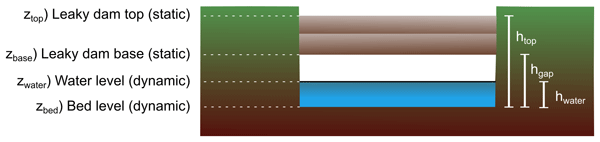
Joshua M. Wolstenholme, Christopher J. Skinner, David Milan, Robert E. Thomas, and Daniel R. Parsons
Geosci. Model Dev., 18, 1395–1411, https://doi.org/10.5194/gmd-18-1395-2025, https://doi.org/10.5194/gmd-18-1395-2025, 2025
Short summary
Short summary
Leaky wooden dams are a type of natural flood management intervention that aims to reduce flood risk downstream by temporarily holding back water during a storm event and releasing it afterwards. These structures alter the river hydrology, and therefore the geomorphology, yet often this is excluded from numerical models. Here we show that by not simulating geomorphology, we are currently underestimating the efficacy of these structures to reduce the flood peak and store water.
Joshua M. Wolstenholme, Christopher J. Skinner, David Milan, Robert E. Thomas, and Daniel R. Parsons
Geosci. Model Dev., 18, 1395–1411, https://doi.org/10.5194/gmd-18-1395-2025, https://doi.org/10.5194/gmd-18-1395-2025, 2025
Short summary
Short summary
Leaky wooden dams are a type of natural flood management intervention that aims to reduce flood risk downstream by temporarily holding back water during a storm event and releasing it afterwards. These structures alter the river hydrology, and therefore the geomorphology, yet often this is excluded from numerical models. Here we show that by not simulating geomorphology, we are currently underestimating the efficacy of these structures to reduce the flood peak and store water.
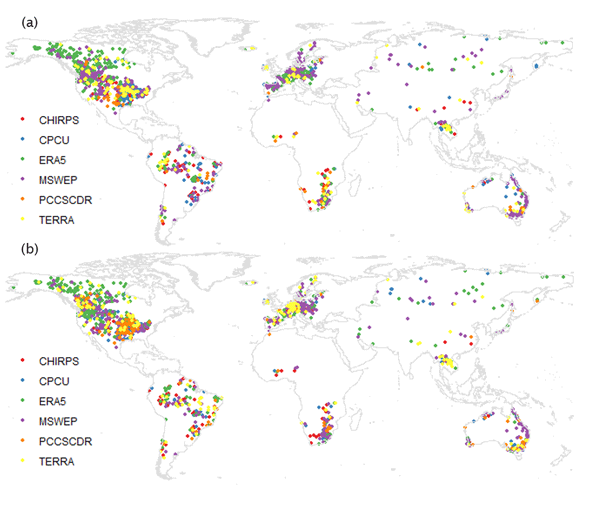
Solomon H. Gebrechorkos, Julian Leyland, Simon J. Dadson, Sagy Cohen, Louise Slater, Michel Wortmann, Philip J. Ashworth, Georgina L. Bennett, Richard Boothroyd, Hannah Cloke, Pauline Delorme, Helen Griffith, Richard Hardy, Laurence Hawker, Stuart McLelland, Jeffrey Neal, Andrew Nicholas, Andrew J. Tatem, Ellie Vahidi, Yinxue Liu, Justin Sheffield, Daniel R. Parsons, and Stephen E. Darby
Hydrol. Earth Syst. Sci., 28, 3099–3118, https://doi.org/10.5194/hess-28-3099-2024, https://doi.org/10.5194/hess-28-3099-2024, 2024
Short summary
Short summary
This study evaluated six high-resolution global precipitation datasets for hydrological modelling. MSWEP and ERA5 showed better performance, but spatial variability was high. The findings highlight the importance of careful dataset selection for river discharge modelling due to the lack of a universally superior dataset. Further improvements in global precipitation data products are needed.
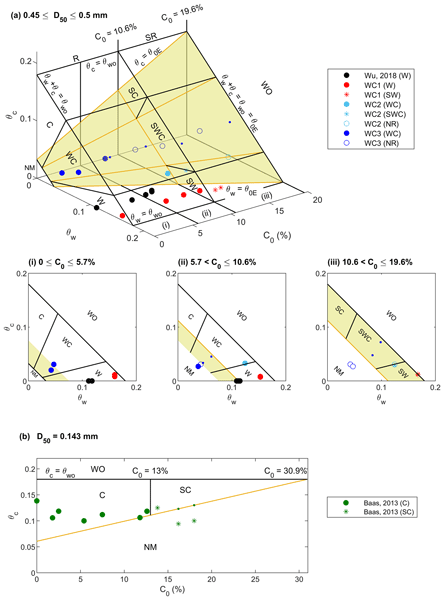
Xuxu Wu, Jonathan Malarkey, Roberto Fernández, Jaco H. Baas, Ellen Pollard, and Daniel R. Parsons
Earth Surf. Dynam., 12, 231–247, https://doi.org/10.5194/esurf-12-231-2024, https://doi.org/10.5194/esurf-12-231-2024, 2024
Short summary
Short summary
The seabed changes from flat to rippled in response to the frictional influence of waves and currents. This experimental study has shown that the speed of this change, the size of ripples that result and even whether ripples appear also depend on the amount of sticky mud present. This new classification on the basis of initial mud content should lead to improvements in models of seabed change in present environments by engineers and the interpretation of past environments by geologists.
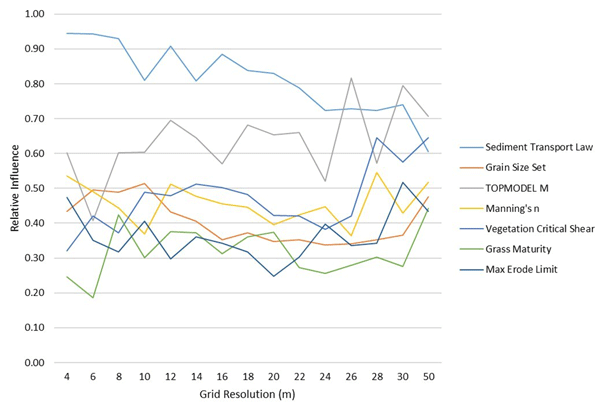
Christopher J. Skinner and Thomas J. Coulthard
Earth Surf. Dynam., 11, 695–711, https://doi.org/10.5194/esurf-11-695-2023, https://doi.org/10.5194/esurf-11-695-2023, 2023
Short summary
Short summary
Landscape evolution models allow us to simulate the way the Earth's surface is shaped and help us to understand relevant processes, in turn helping us to manage landscapes better. The models typically represent the land surface using a grid of square cells of equal size, averaging heights in those squares. This study shows that the size chosen by the modeller for these grid cells is important, with larger sizes making sediment output events larger but less frequent.
Elena Bastianon, Julie A. Hope, Robert M. Dorrell, and Daniel R. Parsons
Earth Surf. Dynam., 10, 1115–1140, https://doi.org/10.5194/esurf-10-1115-2022, https://doi.org/10.5194/esurf-10-1115-2022, 2022
Short summary
Short summary
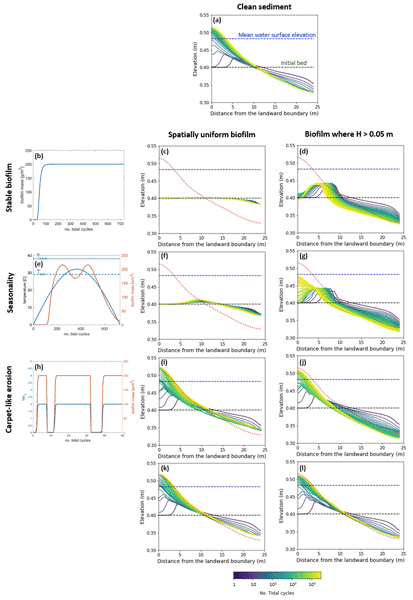
Biological activity in shallow tidal environments significantly influence sediment dynamics and morphology. Here, a bio-morphodynamic model is developed that accounts for hydro-climate variations in biofilm development to estimate the effect of biostabilisation on the bed. Results reveal that key parameters such as growth rate and temperature strongly influence the development of biofilm under a range of disturbance periodicities and intensities, shaping the channel equilibrium profile.
Chengbin Zou, Paul Carling, Zetao Feng, Daniel Parsons, and Xuanmei Fan
The Cryosphere Discuss., https://doi.org/10.5194/tc-2022-119, https://doi.org/10.5194/tc-2022-119, 2022
Manuscript not accepted for further review
Short summary
Short summary
Climate change is causing mountain lakes behind glacier barriers to drain through ice tunnels as catastrophe floods, threatening people and infrastructure downstream. Understanding of how process works can mitigate the impacts by providing advanced warnings. A laboratory study of ice tunnel development improved understanding of how floods evolve. The principles of ice tunnel development were defined numerically and can be used to better model natural floods leading to improved prediction.
Christopher R. Hackney, Grigorios Vasilopoulos, Sokchhay Heng, Vasudha Darbari, Samuel Walker, and Daniel R. Parsons
Earth Surf. Dynam., 9, 1323–1334, https://doi.org/10.5194/esurf-9-1323-2021, https://doi.org/10.5194/esurf-9-1323-2021, 2021
Short summary
Short summary
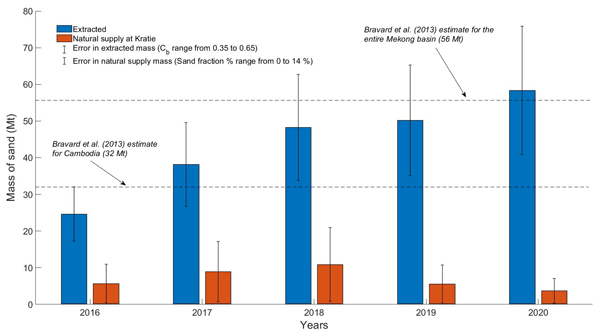
Unsustainable sand mining poses a threat to the stability of river channels. We use satellite imagery to estimate volumes of material removed from the Mekong River, Cambodia, over the period 2016–2020. We demonstrate that current rates of extraction now exceed previous estimates for the entire Mekong Basin and significantly exceed the volume of sand naturally transported by the river. Our work highlights the importance of satellite imagery in monitoring sand mining activity over large areas.
Chloe Leach, Tom Coulthard, Andrew Barkwith, Daniel R. Parsons, and Susan Manson
Geosci. Model Dev., 14, 5507–5523, https://doi.org/10.5194/gmd-14-5507-2021, https://doi.org/10.5194/gmd-14-5507-2021, 2021
Short summary
Short summary
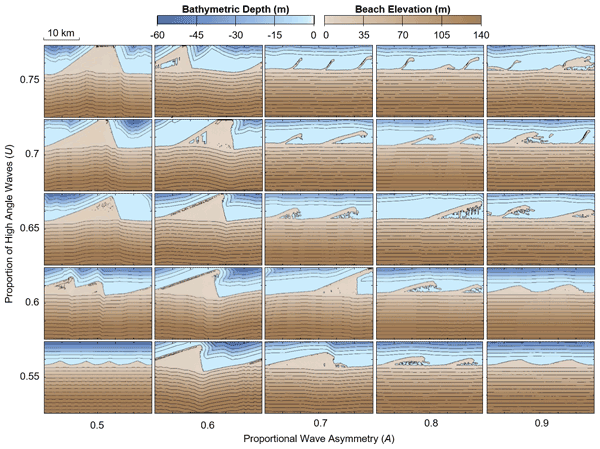
Numerical models can be used to understand how coastal systems evolve over time, including likely responses to climate change. However, many existing models are aimed at simulating 10- to 100-year time periods do not represent a vertical dimension and are thus unable to include the effect of sea-level rise. The Coastline Evolution Model 2D (CEM2D) presented in this paper is an advance in this field, with the inclusion of the vertical coastal profile against which the water level can be altered.
Sepehr Eslami, Piet Hoekstra, Herman W. J. Kernkamp, Nam Nguyen Trung, Dung Do Duc, Hung Nguyen Nghia, Tho Tran Quang, Arthur van Dam, Stephen E. Darby, Daniel R. Parsons, Grigorios Vasilopoulos, Lisanne Braat, and Maarten van der Vegt
Earth Surf. Dynam., 9, 953–976, https://doi.org/10.5194/esurf-9-953-2021, https://doi.org/10.5194/esurf-9-953-2021, 2021
Short summary
Short summary
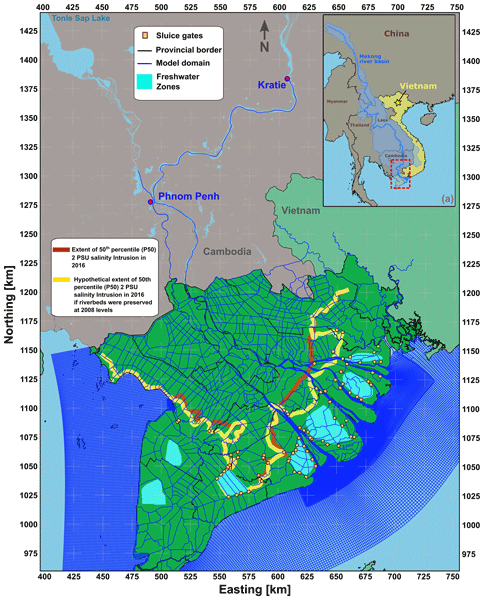
Increased salt intrusion jeopardizes freshwater supply to the Mekong Delta, and the current trends are often inaccurately associated with sea level rise. Using observations and models, we show that salinity is highly sensitive to ocean surge, tides, water demand, and upstream discharge. We show that anthropogenic riverbed incision has significantly amplified salt intrusion, exemplifying the importance of preserving sediment budget and riverbed levels to protect deltas against salt intrusion.
Cited articles
Abbe, T. B. and Montgomery, D. R.: Patterns and processes of wood debris accumulation in the Queets river basin, Washington, Geomorphology, 51, 81–107, https://doi.org/10.1016/S0169-555X(02)00326-4, 2003.
Addy, S. and Wilkinson, M.: An assessment of engineered log jam structures in response to a flood event in an upland gravel-bed river, Earth Surf. Proc. Land., 41, 1658–1670, https://doi.org/10.1002/esp.3936, 2016.
Anderson, S. W.: Uncertainty in quantitative analyses of topographic change: error propagation and the role of thresholding, Earth Surf. Proc. Land., 44, 1015–1033, https://doi.org/10.1002/esp.4551, 2019.
Bednarek, A. T.: Undamming rivers: A review of the ecological impacts of dam removal, Environ. Manage., 27, 803–814, https://doi.org/10.1007/s002670010189, 2001.
Bertoldi, W., Welber, M., Mao, L., Zanella, S., and Comiti, F.: A flume experiment on wood storage and remobilization in braided river systems, Earth Surf. Proc. Land., 39, 804–813, https://doi.org/10.1002/esp.3537, 2014.
Braden, B.: The Surveyor's Area Formula, Coll. Math. J., 17, 326–337, https://doi.org/10.1080/07468342.1986.11972974, 1986.
Brasington, J., Langham, J., and Rumsby, B.: Methodological sensitivity of morphometric estimates of coarse fluvial sediment transport, Geomorphology, 53, 299–316, https://doi.org/10.1016/s0169-555x(02)00320-3, 2003.
Buffington, J. M., Lisle, T. E., Woodsmith, R. D., and Hilton, S.: Controls on the size and occurrence of pools in coarse-grained forest rivers, River Res. Appl., 18, 507–531, https://doi.org/10.1002/rra.693, 2002.
Burgess-Gamble, L., Ngai, R., Wilkinson, M., Nisbet, T., Pontee, N., Harvey, R., Kipling, K., Addy, S., Rose, S., Maslen, S., Jay, H., Nicholson, A., Page, T., Jonczyk, J., and Quinn, P.: Working with Natural Processes-Evidence Directory SC150005, Environment Agency, https://www.gov.uk/flood-and-coastal-erosion-risk-management-research-reports/working-with-natural-processes-to-reduce-flood-risk (last access: 23 July 2024), 2017.
Cadol, D. and Wohl, E.: Coarse sediment movement in the vicinity of a logjam in a neotropical gravel-bed stream, Geomorphology, 128, 191–198, https://doi.org/10.1016/j.geomorph.2011.01.007, 2011.
Cashman, M. J., Wharton, G., Harvey, G. L., Naura, M., and Bryden, A.: Trends in the use of large wood in UK river restoration projects: insights from the National River Restoration Inventory, Water Environ. J., 33, 318–328, https://doi.org/10.1111/wej.12407, 2018.
Cashman, M. J., Harvey, G. L., and Wharton, G.: Structural complexity influences the ecosystem engineering effects of in-stream large wood, Earth Surf. Proc. Land., 46, 2079–2091, https://doi.org/10.1002/esp.5145, 2021.
Clark, M. J., Bennett, G. L., Ryan-Burkett, S. E., Sear, D. A., and Franco, A. M. A.: Untangling the controls on bedload transport in a wood-loaded river with RFID tracers and linear mixed modelling, Earth Surf. Proc. Land., 47, 2283–2298, https://doi.org/10.1002/esp.5376, 2022.
Comiti, F., Lucía, A., and Rickenmann, D.: Large wood recruitment and transport during large floods: A review, Geomorphology, 269, 23–39, https://doi.org/10.1016/j.geomorph.2016.06.016, 2016.
Dadson, S. J., Hall, J. W., Murgatroyd, A., Acreman, M., Bates, P., Beven, K., Heathwaite, L., Holden, J., Holman, I. P., Lane, S. N., O'Connell, E., Penning-Rowsell, E., Reynard, N., Sear, D., Thorne, C., Wilby, R., Connell, E. O., Reynard, N., and Sear, D.: A restatement of the natural science evidence concerning flood management in the UK Subject Areas, P. Roy. Soc. A, 473, 20160706, https://doi.org/10.1098/rspa.2016.0706, 2017.
Dietrich, W. E., Kirchner, J. W., Ikeda, H., and Iseya, F.: Sediment supply and the development of the coarse surface layer in gravel-bedded rivers, Nature, 340, 215–217, https://doi.org/10.1038/340215a0, 1989.
Dixon, S. J. and Sear, D. A.: The influence of geomorphology on large wood dynamics in a low gradient headwater stream, Water Resour. Res., 50, 9194–9210, https://doi.org/10.1002/2014wr015947, 2014.
Dixon, S. J., Sear, D. A., and Nislow, K. H.: A conceptual model of riparian forest restoration for natural flood management, Water Environ. J., 33, 329–341, https://doi.org/10.1111/wej.12425, 2018.
Dodd, J. A., Newton, M., and Adams, C. E.: The effect of natural flood management in-stream wood placements on fish movement in Scotland, James Hutton Institute, https://www.nfm.scot/sites/www.nfm.scot/files/NFM_fish%20movement%20v2.pdf (last access: 23 July 2024), 2016.
Durafour, M., Jarno, A., Le Bot, S., Lafite, R., and Marin, F.: Bedload transport for heterogeneous sediments, Environ. Fluid Mech., 15, 731–751, https://doi.org/10.1007/s10652-014-9380-1, 2015.
Eaton, B. C., Moore, R. D., and MacKenzie, L. G.: Percentile-based grain size distribution analysis tools (GSDtools) – estimating confidence limits and hypothesis tests for comparing two samples, Earth Surf. Dynam., 7, 789–806, https://doi.org/10.5194/esurf-7-789-2019, 2019.
Ellis, N., Anderson, K., and Brazier, R.: Mainstreaming natural flood management: A proposed research framework derived from a critical evaluation of current knowledge, Prog. Phys. Geog., 45, 819–841, https://doi.org/10.1177/0309133321997299, 2021.
Faustini, J. M. and Jones, J. A.: Influence of large woody debris on channel morphology and dynamics in steep, boulder-rich mountain streams, western Cascades, Oregon, Geomorphology, 51, 187–205, https://doi.org/10.1016/S0169-555X(02)00336-7, 2003.
Follett, E., Schalko, I., and Nepf, H.: Logjams With a Lower Gap: Backwater Rise and Flow Distribution Beneath and Through Logjam Predicted by Two-Box Momentum Balance, Geophys. Res. Lett., 48, e2021GL094279, https://doi.org/10.1029/2021gl094279, 2021.
Gallisdorfer, M. S., Bennett, S. J., Atkinson, J. F., Ghaneeizad, S. M., Brooks, A. P., Simon, A., and Langendoen, E. J.: Physical-scale model designs for engineered log jams in rivers, J. Hydro-Environ. Res., 8, 115–128, https://doi.org/10.1016/j.jher.2013.10.002, 2014.
Gippel, C. J.: Environmental hydraulics of large woody debris in streams and rivers, J. Environ. Eng., 121, 388–395, 1995.
Grabowski, R. C., Gurnell, A. M., Burgess-Gamble, L., England, J., Holland, D., Klaar, M. J., Morrissey, I., Uttley, C., and Wharton, G.: The current state of the use of large wood in river restoration and management, Water Environ. J., 33, 366–377, https://doi.org/10.1111/wej.12465, 2019.
Green, J. C.: The precision of sampling grain-size percentiles using the Wolman method, Earth Surf. Proc. Land., 28, 979–991, https://doi.org/10.1002/esp.513, 2003.
Gurnell, A.: Wood and river landscapes, Nat. Geosci., 5, 93–94, https://doi.org/10.1038/ngeo1382, 2012.
Gurnell, A., England, J., and Burgess-Gamble, L.: Trees and wood: working with natural river processes, Water Environ. J., 33, 342–352, https://doi.org/10.1111/wej.12426, 2018.
Gurnell, A. M., Piégay, H., Swanson, F. J., and Gregory, S. V.: Large wood and fluvial processes, Freshw. Biol., 47, 601–619, https://doi.org/10.1046/j.1365-2427.2002.00916.x, 2002.
Hafs, A. W., Harrison, L. R., Utz, R. M., and Dunne, T.: Quantifying the role of woody debris in providing bioenergetically favorable habitat for juvenile salmon, Ecol. Model., 285, 30–38, https://doi.org/10.1016/j.ecolmodel.2014.04.015, 2014.
Hankin, B., Hewitt, I., Sander, G., Danieli, F., Formetta, G., Kamilova, A., Kretzschmar, A., Kiradjiev, K., Wong, C., Pegler, S., and Lamb, R.: A risk-based network analysis of distributed in-stream leaky barriers for flood risk management, Nat. Hazards Earth Syst. Sci., 20, 2567–2584, https://doi.org/10.5194/nhess-20-2567-2020, 2020.
Heritage, G. and Hetherington, D.: Towards a protocol for laser scanning in fluvial geomorphology, Earth Surf. Proc. Land., 32, 66–74, https://doi.org/10.1002/esp.1375, 2007.
Heritage, G. L., Milan, D. J., Large, A. R. G., and Fuller, I. C.: Influence of survey strategy and interpolation model on DEM quality, Geomorphology, 112, 334–344, https://doi.org/10.1016/j.geomorph.2009.06.024, 2009.
Hydrology NE Environment Agency: Stage data from gauging stations L2725 and F25110, The National Archives, http://nationalarchives.gov.uk (last access: 23 July 2024), 2024.
Kendon, M., McCarthy, M., Jevrejeva, S., Matthews, A., Sparks, T., Garforth, J., and Kennedy, J.: State of the UK Climate 2021, Int. J. Climatol., 42, 1–80, https://doi.org/10.1002/joc.7787, 2022.
Klaar, M. J., Hill, D. F., Maddock, I., and Milner, A. M.: Interactions between instream wood and hydrogeomorphic development within recently deglaciated streams in Glacier Bay National Park, Alaska, Geomorphology, 130, 208–220, https://doi.org/10.1016/j.geomorph.2011.03.017, 2011.
Kondolf, G. M.: Hungry Water: Effects of Dams and Gravel Mining on River Channels, Environ. Manage., 21, 533–551, https://doi.org/10.1007/s002679900048, 1997.
Larson, M. G., Booth, D. B., and Morley, S. A.: Effectiveness of large woody debris in stream rehabilitation projects in urban basins, Ecol. Eng., 18, 211–226, https://doi.org/10.1016/S0925-8574(01)00079-9, 2001.
Lavelle, B., Fyfe, D., and Cross, M.: Yorkshire Derwent Catchment Partnership Annual Report, Yorkshire Derwent Catchment Partnership, https://catchmentbasedapproach.org/wp-content/uploads/2020/07/200716-YDCP-Report_20_FINAL-WEB.pdf (last access: 23 July 2024), 2019.
Lepesqueur, J., Hostache, R., Martínez-Carreras, N., Montargès-Pelletier, E., and Hissler, C.: Sediment transport modelling in riverine environments: on the importance of grain-size distribution, sediment density, and suspended sediment concentrations at the upstream boundary, Hydrol. Earth Syst. Sci., 23, 3901–3915, https://doi.org/10.5194/hess-23-3901-2019, 2019.
Lo, H. W., Smith, M., Klaar, M., and Woulds, C.: Potential secondary effects of in-stream wood structures installed for natural flood management: A conceptual model, WIREs Water, 8, e1546, https://doi.org/10.1002/wat2.1546, 2021.
Lo, H. W., van Leeuwen, Z., Klaar, M., Woulds, C., and Smith, M.: Geomorphic effects of natural flood management woody dams in upland streams, River Res. Appl., 38, 1787–1802, https://doi.org/10.1002/rra.4045, 2022.
Lo, H. W., Klaar, M., Smith, M., and Woulds, C.: Effects of natural flood management woody dams on benthic macroinvertebrates and benthic metabolism in upland streams: Importance of wood-induced geomorphic changes, Ecohydrology, 17, e2654, https://doi.org/10.1002/eco.2654, 2024.
Lockwood, T., Freer, J., Michaelides, K., Brazier, R. E., and Coxon, G.: Assessing the efficacy of offline water storage ponds for Natural Flood Management, Hydrol. Process., 36, e14618, https://doi.org/10.1002/hyp.14618, 2022.
Marston, C., Rowland, C. S., O'Neil, A. W., and Morton, R. D.: Land Cover Map 2021 (10 m classified pixels, GB), NERC EDS Environmental Information Data Centre [data set], https://doi.org/10.5285/a22baa7c-5809-4a02-87e0-3cf87d4e223a, 2022.
Met Office: Met Office Rain Radar Data from the NIMROD System, NCAS British Atmospheric Data Centre, http://catalogue.ceda.ac.uk/uuid/82adec1f896af6169112d09cc1174499 (last access: 23 July 2024), 2003.
Met Office: UK Climate Averages, Met Office, https://www.metoffice.gov.uk/research/climate/maps-and-data/uk-climate-averages/gcxt28mct (last access: 25 July 2022), 2020.
Milan, D. J.: Geomorphic impact and system recovery following an extreme flood in an upland stream: Thinhope Burn, northern England, UK, Geomorphology, 138, 319–328, https://doi.org/10.1016/j.geomorph.2011.09.017, 2012.
Milan, D. J., Heritage, G. L., Large, A. R. G., and Fuller, I. C.: Filtering spatial error from DEMs: Implications for morphological change estimation, Geomorphology, 125, 160–171, https://doi.org/10.1016/j.geomorph.2010.09.012, 2011.
Montgomery, D. R., Buffington, J. M., Smith, R. D., Schmidt, K. M., and Pess, G.: Pool Spacing in Forest Channels, Water Resour. Res., 31, 1097–1105, https://doi.org/10.1029/94WR03285, 1995.
Montgomery, D. R., Massong, T. M., and Hawley, S. C. S.: Influence of debris flows and log jams on the location of pools and alluvial channel reaches, Oregon Coast Range, Bull. Geol. Soc. Am., 115, 78–88, https://doi.org/10.1130/0016-7606(2003)115<0078:IODFAL>2.0.CO;2, 2003.
Morris, M. D.: Factorial sampling plans for preliminary computational experiments, Technometrics, 33, 161–174, 1991.
Nisbet, T., Roe, P., Marrington, S., Thomas, H., Broadmeadow, S., and Valatin, G.: Project RMP5455: Slowing the Flow at Pickering Final Report: Phase II, Department for environment, food and rural affairs, UK, https://cdn.forestresearch.gov.uk/2022/02/fr_stf_pickering_p2_may2015_mwh9jja.pdf (last access: 23 July 2024), 2015.
Ordnance Survey: OS Terrain 5 DTM [ASC geospatial data], Scale 1 : 20 000, Tile(s): Dalby Forest, Ordnance Survey, https://www.data.gov.uk/dataset/f0db0249-f17b-4036-9e65-309148c97ce4/national-lidar-programme (last access: 22 June 2022), 2020.
Parker, C., Henshaw, A. J., Harvey, G. L., and Sayer, C. D.: Reintroduced large wood modifies fine sediment transport and storage in a lowland river channel, Earth Surf. Proc. Land., 42, 1693–1703, https://doi.org/10.1002/esp.4123, 2017.
Piégay, H., Arnaud, F., Belletti, B., Bertrand, M., Bizzi, S., Carbonneau, P., Dufour, S., Liebault, F., Ruiz-Villanueva, V., and Slater, L.: Remotely Sensed Rivers in the Anthropocene: State of the Art and Prospects, Earth Surf. Proc. Land., 188, 157–188, https://doi.org/10.1002/esp.4787, 2019.
Pilotto, F., Harvey, G. L., Wharton, G., and Pusch, M. T.: Simple large wood structures promote hydromorphological heterogeneity and benthic macroinvertebrate diversity in low-gradient rivers, Aquat. Sci., 78, 755–766, https://doi.org/10.1007/s00027-016-0467-2, 2016.
Poeppl, R. E., Perez, J. E., Fergg, H., and Morche, D.: Introducing indices to assess the effects of in-stream large wood on water and sediment connectivity in small streams, Geomorphology, 444, 108936, https://doi.org/10.1016/J.GEOMORPH.2023.108936, 2023.
Quinn, P., O'Donnell, G., Nicholson, A., Wilkinson, M., Owen, G., Jonczyk, J., Barber, N., Hardwick, M., and Davies, G.: Potential Use of Runoff Attenuation Features in Small Rural Catchments for Flood Mitigation, Report, Newcastle University, https://research.ncl.ac.uk/proactive/belford/newcastlenfmrafreport/reportpdf/June%20NFM%20RAF%20Report.pdf (last access: 23 July 2024), 2013.
Roberts, M. T., Geris, J., Hallett, P. D., and Wilkinson, M. E.: Mitigating floods and attenuating surface runoff with temporary storage areas in headwaters, WIREs Water, 10, e1634, https://doi.org/10.1002/wat2.1634, 2023.
Roni, P., Beechie, T., Pess, G., and Hanson, K.: Wood placement in river restoration: fact, fiction, and future direction, Can. J. Fish. Aquat. Sci., 72, 466–478, https://doi.org/10.1139/cjfas-2014-0344, 2015.
Ruiz-Villanueva, V., Mazzorana, B., Bladé, E., Bürkli, L., Iribarren-Anacona, P., Mao, L., Nakamura, F., Ravazzolo, D., Rickenmann, D., Sanz-Ramos, M., Stoffel, M., and Wohl, E.: Characterization of wood-laden flows in rivers, Earth Surf. Proc. Land., 44, 1694–1709, https://doi.org/10.1002/esp.4603, 2019.
Schalko, I., Schmocker, L., Weitbrecht, V., and Boes, R. M.: Backwater Rise due to Large Wood Accumulations, J. Hydraul. Eng., 144, 04018056, https://doi.org/10.1061/(ASCE)HY.1943-7900.0001501, 2018.
Schalko, I., Wohl, E., and Nepf, H. M.: Flow and wake characteristics associated with large wood to inform river restoration, Sci. Rep., 11, 8644, https://doi.org/10.1038/s41598-021-87892-7, 2021.
Schalko, I., Follett, E., and Nepf, H.: Impact of Lateral Gap on Flow Distribution, Backwater Rise, and Turbulence Generated by a Logjam, Water Resour. Res., 59, e2023WR034689, https://doi.org/10.1029/2023WR034689, 2023.
Skinner, C. J., Coulthard, T. J., Schwanghart, W., Van De Wiel, M. J., and Hancock, G.: Global sensitivity analysis of parameter uncertainty in landscape evolution models, Geosci. Model Dev., 11, 4873–4888, https://doi.org/10.5194/gmd-11-4873-2018, 2018.
Spreitzer, G., Tunnicliffe, J., and Friedrich, H.: Effects of large wood (LW) blockage on bedload connectivity in the presence of a hydraulic structure, Ecol. Eng., 161, 106156, https://doi.org/10.1016/j.ecoleng.2021.106156, 2021.
Strahler, A. N.: Quantitative analysis of watershed geomorphology, Eos, 38, 913–920, 1957.
Walsh, P., Jakeman, A., and Thompson, C.: Modelling headwater channel response and suspended sediment yield to in-channel large wood using the Caesar-Lisflood landscape evolution model, Geomorphology, 363, 107209, https://doi.org/10.1016/j.geomorph.2020.107209, 2020.
Welling, R. T., Wilcox, A. C., and Dixon, J. L.: Large wood and sediment storage in a mixed bedrock-alluvial stream, western Montana, USA, Geomorphology, 384, 107703, https://doi.org/10.1016/j.geomorph.2021.107703, 2021.
Wenzel, R., Reinhardt-Imjela, C., Schulte, A., and Bölscher, J.: The potential of in-channel large woody debris in transforming discharge hydrographs in headwater areas (Ore Mountains, Southeastern Germany), Ecol. Eng., 71, 1–9, https://doi.org/10.1016/j.ecoleng.2014.07.004, 2014.
Wheaton, J. M., Brasington, J., Darby, S. E., and Sear, D. A.: Accounting for uncertainty in DEMs from repeat topographic surveys: improved sediment budgets, Earth Surf. Proc. Land., 35, 136–156, https://doi.org/10.1002/esp.1886, 2010.
Wingfield, T., Macdonald, N., Peters, K., and Spees, J.: Barriers to mainstream adoption of catchment-wide natural flood management: a transdisciplinary problem-framing study of delivery practice, Hydrol. Earth Syst. Sci., 25, 6239–6259, https://doi.org/10.5194/hess-25-6239-2021, 2021.
Wohl, E.: Floodplains and wood, Earth-Sci. Rev., 123, 194–212, https://doi.org/10.1016/j.earscirev.2013.04.009, 2013.
Wohl, E.: Of wood and rivers: bridging the perception gap, WIREs Water, 2, 167–176, https://doi.org/10.1002/wat2.1076, 2015.
Wohl, E.: Wood process domains and wood loads on floodplains, Earth Surf. Proc. Land., 45, 144–156, https://doi.org/10.1002/esp.4771, 2019.
Wohl, E. and Beckman, N. D.: Leaky rivers: Implications of the loss of longitudinal fluvial disconnectivity in headwater streams, Geomorphology, 205, 27–35, https://doi.org/10.1016/j.geomorph.2011.10.022, 2014.
Wohl, E. and Scott, D. N.: Wood and sediment storage and dynamics in river corridors, Earth Surf. Proc. Land., 42, 5–23, https://doi.org/10.1002/esp.3909, 2017.
Wohl, E., Bledsoe, B. P., Fausch, K. D., Kramer, N., Bestgen, K. R., and Gooseff, M. N.: Management of Large Wood in Streams: An Overview and Proposed Framework for Hazard Evaluation, JAWRA J. Am. Water Resour. As., 52, 315–335, https://doi.org/10.1111/1752-1688.12388, 2016.
Wohl, E., Kramer, N., Ruiz-Villanueva, V., Scott, D. N., Comiti, F., Gurnell, A. M., Piegay, H., Lininger, K. B., Jaeger, K. L., Walters, D. M., and Fausch, K. D.: The natural wood regime in rivers, BioScience, 69, 259–273, https://doi.org/10.1093/biosci/biz013, 2019.
Wolman, M. G.: A method of sampling coarse river-bed material, Eos, 35, 951–956, https://doi.org/10.1029/TR035i006p00951, 1954.
Wolstenholme, J., Skinner, C., Milan, D., Thomas, R., and Parsons, D.: Localised geomorphic response to channel-spanning leaky wooden dams dataset, Zenodo [data set], https://doi.org/10.5281/zenodo.13832285, 2024.
Wren, E., Barnes, M., Kitchen, A., Nutt, N., Patterson, C., Piggott, M., Ross, M., Timbrell, S., Down, P., Janes, M., Robins, J., Simons, C., Taylor, M., and Turner, D.: The natural flood management manual, CIRIA, London, UK, ISBN 978-0-86017-945-0, 2022.
Wyżga, B., Liro, M., Mikuś, P., Radecki-Pawlik, A., Jeleński, J., Zawiejska, J., and Plesiński, K.: Changes of fluvial processes caused by the restoration of an incised mountain stream, Ecol. Eng., 168, 106286, https://doi.org/10.1016/j.ecoleng.2021.106286, 2021.
Short summary
Leaky wooden dams are a popular form of natural flood management used to slow the flow of water by increasing floodplain connectivity whilst decreasing connectivity along the river profile. By monitoring two leaky wooden dams in North Yorkshire, UK, we present the geomorphological response to their installation, highlighting that the structures significantly increase channel complexity in response to different river flow conditions.
Leaky wooden dams are a popular form of natural flood management used to slow the flow of water...


