
Articles | Volume 9, issue 1
https://doi.org/10.5194/esurf-9-123-2021
© Author(s) 2021. This work is distributed under
the Creative Commons Attribution 4.0 License.
the Creative Commons Attribution 4.0 License.
https://doi.org/10.5194/esurf-9-123-2021
© Author(s) 2021. This work is distributed under
the Creative Commons Attribution 4.0 License.
the Creative Commons Attribution 4.0 License.
Research article
| 
03 Mar 2021
Research article |
| 03 Mar 2021
| 03 Mar 2021
How do modeling choices and erosion zone locations impact the representation of connectivity and the dynamics of suspended sediments in a multi-source soil erosion model?
Magdalena Uber
Univ. Grenoble Alpes, CNRS, IRD, Grenoble INP, IGE, 38000 Grenoble, France
Guillaume Nord
Univ. Grenoble Alpes, CNRS, IRD, Grenoble INP, IGE, 38000 Grenoble, France
Cédric Legout
CORRESPONDING AUTHOR
Univ. Grenoble Alpes, CNRS, IRD, Grenoble INP, IGE, 38000 Grenoble, France
Environmental and Water Engineering Group, Department of Civil Engineering, Universidade da Coruña, A Coruña, Spain
Related authors
Magdalena Uber, Michael Haller, Christoph Brendel, Gudrun Hillebrand, and Thomas Hoffmann
Hydrol. Earth Syst. Sci., 28, 87–102, https://doi.org/10.5194/hess-28-87-2024, https://doi.org/10.5194/hess-28-87-2024, 2024
Short summary
Short summary
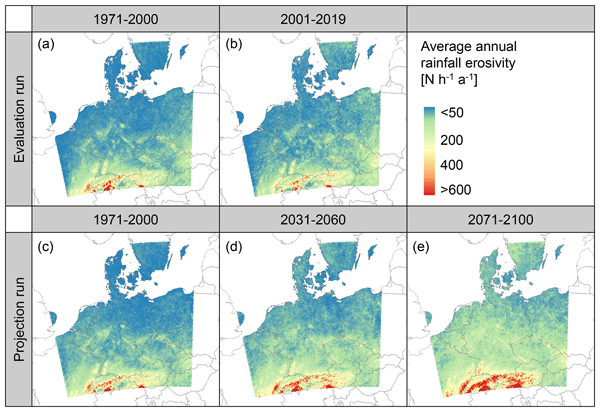
We calculated past, present and future rainfall erosivity in central Europe from high-resolution precipitation data (3 km and 1 h) generated by the COSMO-CLM convection-permitting climate model. Future rainfall erosivity can be up to 84 % higher than it was in the past. Such increases are much higher than estimated previously from regional climate model output. Convection-permitting simulations have an enormous and, to date, unexploited potential for the calculation of future rainfall erosivity.
Ophélie Fischer, Cédric Legout, Caroline Le Bouteiller, Guillaume Nord, Guilhem Freche, Sophie Darfeuil, Laure Jullien, and Zahra Rastegar
EGUsphere, https://doi.org/10.5194/egusphere-2025-5899, https://doi.org/10.5194/egusphere-2025-5899, 2026
This preprint is open for discussion and under review for Earth Surface Dynamics (ESurf).
Short summary
Short summary
This study analyzes how the seasonal variability of groundwater input to river controls suspended sediment dynamics in a Mediterranean mountain catchment. Groundwater inputs play a crucial role in controlling conditions for riverbed sediment remobilization. This highlights the importance of separating groundwater and surface runoff before analyzing sediment export dynamics, and of integrating these seasonal hydrological controls into hydrosedimentary models.
Luis Cea, Manuel Álvarez, and Jerónimo Puertas
Nat. Hazards Earth Syst. Sci., 24, 225–243, https://doi.org/10.5194/nhess-24-225-2024, https://doi.org/10.5194/nhess-24-225-2024, 2024
Short summary
Short summary
Mozambique is highly exposed to the impact of floods. To reduce flood damage, it is necessary to develop mitigation measures. Hydrological software is a very useful tool for that purpose, since it allows for a precise quantification of flood hazard in different scenarios. We present a methodology to quantify flood hazard in data-scarce regions, using freely available data and software, and we show its potential by analysing the flood event that took place in the Umbeluzi Basin in February 2023.
Magdalena Uber, Michael Haller, Christoph Brendel, Gudrun Hillebrand, and Thomas Hoffmann
Hydrol. Earth Syst. Sci., 28, 87–102, https://doi.org/10.5194/hess-28-87-2024, https://doi.org/10.5194/hess-28-87-2024, 2024
Short summary
Short summary
We calculated past, present and future rainfall erosivity in central Europe from high-resolution precipitation data (3 km and 1 h) generated by the COSMO-CLM convection-permitting climate model. Future rainfall erosivity can be up to 84 % higher than it was in the past. Such increases are much higher than estimated previously from regional climate model output. Convection-permitting simulations have an enormous and, to date, unexploited potential for the calculation of future rainfall erosivity.

Virginie Sellier, Oldrich Navratil, John Patrick Laceby, Cédric Legout, Anthony Foucher, Michel Allenbach, Irène Lefèvre, and Olivier Evrard
SOIL, 7, 743–766, https://doi.org/10.5194/soil-7-743-2021, https://doi.org/10.5194/soil-7-743-2021, 2021
Short summary
Short summary
Open-cast mining increases soil erosion and transfer of sediment in river systems. Providing a methodology to better understand the sediment dynamic of these catchments is essential to manage this pollution. In this study, different tracers such as elemental geochemistry or colour properties were tested to trace and quantify the mining source contributions to the sediment inputs in the Thio River catchment, one of the first areas exploited for nickel mining in New Caledonia (i.e. since 1880).
Cited articles
Alpert, P., Ben-Gai, T., Baharad, A., Benjamini, Y., Yekutieli, D., Colacino, M., Diodato, L., Ramis, C., Homar, V., Romero, R., Michaelides, S., and Manes, A.: The paradoxical increase of Mediterranean extreme daily rainfall in spite of decrease in total values, Geophys. Res. Lett., 29, 31-1–31-4, 2002.
Bača, P.: Hysteresis effect in suspended sediment concentration in the Rybárik basin, Slovakia, Hydrolog. Sci. J., 53, 224–235, 2008.
Baffaut, C., Nearing, M., Ascough II, J., and Liu, B.: The WEPP watershed model: II. sensitivity analysis and discretization on small watersheds, T. ASABE, 40, 935–943, 1997.
Barnes, H. H.: Roughness characteristics of natural channels, US Government Printing Office, Washington, 1967.
Battista, G., Molnar, P., and Burlando, P.: Modelling impacts of spatially variable erosion drivers on suspended sediment dynamics, Earth Surf. Dynam., 8, 619–635, https://doi.org/10.5194/esurf-8-619-2020, 2020.
Bhowmik, A. K., Metz, M., and Schäfer, R. B.: An automated, objective and open source tool for stream threshold selection and upstream riparian corridor delineation, Environ. Model. Softw., 63, 240–250, 2015.
Bischetti, G., Gandolfi, C. and Whelan, M.: The definition of stream channel head location using digital elevation data, IAHS-AISH, 248, 545–552, 1998.
Bladé, E., Cea, L., Corestein, G., Escolano, E., Puertas, J., Vázquez-Cendón, E., Dolz, J., and Coll, A.: Iber: Herramienta de simulación numérica del flujo en ríos, Rev. Int. Metod. Numer., 30, 1–10, https://doi.org/10.1016/j.rimni.2012.07.004, 2014.
Blanchet, J., Molinié, G., and Touati, J.: Spatial analysis of trend in extreme daily rainfall in southern France, Clim. Dynam., 51, 799–812, 2018.
Boardman, J., Vandaele, K., Evans, R., and Foster, I. D.: Off-site impacts of soil erosion and runoff: Why connectivity is more important than erosion rates, Soil Use Manage., 35, 245–256, https://doi.org/10.1111/sum.12496, 2019.
Borselli, L., Cassi, P., and Torri, D.: Prolegomena to sediment and flow connectivity in the landscape: A GIS and field numerical assessment, Catena, 75, 268–277, https://doi.org/10.1016/j.Catena.2008.07.006, 2008.
Boudevillain, B., Delrieu, G., Galabertier, B., Bonnifait, L., Bouilloud, L., Kirstetter, P.-E., and Mosini, M.-L.: The Cévennes-Vivarais Mediterranean Hydrometeorological Observatory database, Water Resour. Res., 47, W07701, https://doi.org/10.1029/2010WR010353, 2011.
Braud, I., Ayral, P.-A., Bouvier, C., Branger, F., Delrieu, G., Le Coz, J., Nord, G., Vandervaere, J.-P., Anquetin, S., Adamovic, M., Andrieu, J., Batiot, C., Boudevillain, B., Brunet, P., Carreau, J., Confoland, A., Didon-Lescot, J.-F., Domergue, J.-M., Douvinet, J., Dramais, G., Freydier, R., Gérard, S., Huza, J., Leblois, E., Le Bourgeois, O., Le Boursicaud, R., Marchand, P., Martin, P., Nottale, L., Patris, N., Renard, B., Seidel, J.-L., Taupin, J.-D., Vannier, O., Vincendon, B., and Wijbrans, A.: Multi-scale hydrometeorological observation and modelling for flash flood understanding, Hydrol. Earth Syst. Sci., 18, 3733–3761, https://doi.org/10.5194/hess-18-3733-2014, 2014.
Brils, J.: Sediment monitoring and the European Water Framework Directive, Ann. Ist. Super. Sanita, 44, 218–223, 2008.
Brosinsky, A., Foerster, S., Segl, K., López-Tarazón, J. A., Piqué, G., and Bronstert, A.: Spectral fingerprinting: Characterizing suspended sediment sources by the use of VNIR-SWIR spectral information, J. Soils Sediments, 14, 1965–1981, https://doi.org/10.1007/s11368-014-0927-z, 2014.
Cavalli, M., Trevisani, S., Comiti, F., and Marchi, L.: Geomorphometric assessment of spatial sediment connectivity in small alpine catchments, Geomorphology, 188, 31–41, 2013.
Cea, L. and Bladé, E.: A simple and efficient unstructured finite volume scheme for solving the shallow water equations in overland flow applications, Water Resour. Res., 51, 5464–5486, 2015.
Cea, L. and Vázquez-Cendón, M. E.: Unstructured finite volume discretisation of bed friction and convective flux in solute transport models linked to the shallow water equations, J. Comput. Phys., 231, 3317–3339, 2012.
Cea, L., Legout, C., Grangeon, T., and Nord, G.: Impact of model simplifications on soil erosion predictions: Application of the GLUE methodology to a distributed event-based model at the hillslope scale, Hydrol. Process., 30, 1096–1113, https://doi.org/10.1002/hyp.10697, 2016.
Colombo, R., Vogt, J. V., Soille, P., Paracchini, M. L., and de Jager, A.: Deriving river networks and catchments at the European scale from medium resolution digital elevation data, Catena, 70, 296–305, 2007.
Cooper, R. J., Krueger, T., Hiscock, K. M., and Rawlins, B. G.: High-temporal resolution fluvial sediment source fingerprinting with uncertainty: A Bayesian approach, Earth Surf. Proc. Land., 40, 78–92, https://doi.org/10.1002/esp.3621, 2015.
Cossart, E., Viel, V., Lissak, C., Reulier, R., Fressard, M., and Delahaye, D.: How might sediment connectivity change in space and time?, Land Degrad. Dev., 29, 2595–2613, 2018.
Courant, R., Friedrichs, K., and Lewy, H.: On the partial difference equations of mathematical physics, IBM J. Res. Dev., 11, 215–234, 1967.
Crema, S. and Cavalli, M.: SedInConnect: A stand-alone, free and open source tool for the assessment of sediment connectivity, Comput. Geosci., 111, 39–45, https://doi.org/10.1016/j.cageo.2017.10.009, 2018.
Engman, E. T.: Roughness coefficients for routing surface runoff, J. Irrig. Drain. Eng., 112, 39–53, 1986.
Esteves, M., Legout, C., Navratil, O., and Evrard, O.: Medium term high frequency observation of discharges and suspended sediment in a Mediterranean mountainous catchment, J. Hydrol., 568, 562–574, 2019.
Evrard, O., Navratil, O., Ayrault, S., Ahmadi, M., Némery, J., Legout, C., Lefèvre, I., Poirel, A., Bonté, P., and Esteves, M.: Combining suspended sediment monitoring and fingerprinting to determine the spatial origin of fine sediment in a mountainous river catchment, Earth Surf. Proc. Land., 36, 1072–1089, 2011.
Fraga, I., Cea, L., and Puertas, J.: Experimental study of the water depth and rainfall intensity effects on the bed roughness coefficient used in distributed urban drainage models, J. Hydrol., 505, 266–275, 2013.
Fryirs, K.: (Dis)Connectivity in catchment sediment cascades: A fresh look at the sediment delivery problem, Earth Surf. Proc. Land., 38, 30–46, 2013.
Gellis, A. and Gorman Sanisaca, L.: Sediment fingerprinting to delineate sources of sediment in the agricultural and forested Smith Creek watershed, Virginia, USA, J. Am. Water Resour. As., 54, 1197–1221, https://doi.org/10.1111/1752-1688.12680, 2018.
Gericke, O. J. and Smithers, J. C.: Review of methods used to estimate catchment response time for the purpose of peak discharge estimation, Hydrolog. Sci. J., 59, 1935–1971, 2014.
Gourdin, E., Evrard, O., Huon, S., Lefèvre, I., Ribolzi, O., Reyss, J.-L., Sengtaheuanghoung, O., and Ayrault, S.: Suspended sediment dynamics in a Southeast Asian mountainous catchment: Combining river monitoring and fallout radionuclide tracers, J. Hydrol., 519, 1811–1823, https://doi.org/10.1016/j.jhydrol.2014.09.056, 2014.
Hallema, D. W., Moussa, R., Andrieux, P., and Voltz, M.: Parameterization and multi-criteria calibration of a distributed storm flow model applied to a Mediterranean agricultural catchment, Hydrol. Process., 27, 1379–1398, 2013.
Hancock, G., Lowry, J., Coulthard, T., Evans, K., and Moliere, D.: A catchment scale evaluation of the siberia and caesar landscape evolution models, Earth Surf. Proc. Land., 35, 863–875, 2010.
Hanley, N., Faichney, R., Munro, A., and Shortle, J. S.: Economic and environmental modelling for pollution control in an estuary, J. Environ. Manage., 52, 211–225, 1998.
Heckmann, T., Cavalli, M., Cerdan, O., Foerster, S., Javaux, M., Lode, E., Smetanová, A., Vericat, D., and Brardinoni, F.: Indices of sediment connectivity: Opportunities, challenges and limitations, Earth Sci. Rev., 187, 77–108, https://doi.org/10.1016/j.earscirev.2018.08.004, 2018.
Hessel, R., Jetten, V., and Guanghui, Z.: Estimating manning's n for steep slopes, Catena, 54, 77–91, 2003.
Huza, J., Teuling, A. J., Braud, I., Grazioli, J., Melsen, L. A., Nord, G., Raupach, T. H., and Uijlenhoet, R.: Precipitation, soil moisture and runoff variability in a small river catchment (Ardèche, France) during HyMeX Special Observation Period 1, J. Hydrol., 516, 330–342, https://doi.org/10.1016/j.jhydrol.2014.01.041, 2014.
Inglada, J., Vincent, A., and Thierion, V.: Theia OSO land cover map 2106, Zenodo, https://doi.org/10.5281/zenodo.1048161, 2017.
Laflen, J. M., Lane, L. J., and Foster, G. R.: WEPP: A new generation of erosion prediction technology, J. Soil Water Conserv., 46, 34–38, 1991.
Legout, C., Poulenard, J., Nemery, J., Navratil, O., Grangeon, T., Evrard, O., and Esteves, M.: Quantifying suspended sediment sources during runoff events in headwater catchments using spectrocolorimetry, J. Soils Sediments, 13, 1478–1492, https://doi.org/10.1007/s11368-013-0728-9, 2013.
Legout, C., Freche, G., Biron, R., Esteves, M., Navratil, O., Nord, G., Uber, M., Grangeon, T., Hachgenei, N., Boudevillain, B., Voiron, C., and Spadini, L.: A critical zone observatory dedicated to suspended sediment transport: the meso‐scale Galabre catchment (southern French Alps), Hydrol. Process., https://doi.org/10.1002/hyp.14084, in press, 2021.
Limerinos, J. T.: Determination of the manning coefficient from measured bed roughness in natural channels, US Geol. Surv. Water Supply Pap. 1898, US Geological Survey, Washington, 47 pp., https://doi.org/10.3133/wsp1898B, 1970.
López-Vicente, M. and Ben-Salem, N.: Computing structural and functional flow and sediment connectivity with a new aggregated index: A case study in a large mediterranean catchment, Sci. Total Environ., 651, 179–191, 2019.
Merritt, W., Letcher, R., and Jakeman, A.: A review of erosion and sediment transport models, Environ. Model. Softw., 18, 761–799, https://doi.org/10.1016/S1364-8152(03)00078-1, 2003.
Misset, C., Recking, A., Legout, C., Poirel, A., Cazihlac, M., Esteves, M., and Bertrand, M.: An attempt to link suspended load hysteresis patterns and sediment sources configuration in alpine catchments, J. Hydrol., 576, 72–84, https://doi.org/10.1016/j.jhydrol.2019.06.039, 2019.
Montgomery, D. R. and Foufoula-Georgiou, E.: Channel network source representation using digital elevation models, Water Resour. Res., 29, 3925–3934, 1993.
Mukundan, R., Radcliffe, D. E., Ritchie, J. C., Risse, L. M., and McKinley, R. A.: Sediment fingerprinting to determine the source of suspended sediment in a southern piedmont stream, J. Environ. Qual., 39, 1328, https://doi.org/10.2134/jeq2009.0405, 2010a.
Mukundan, R., Radcliffe, D., and Risse, L.: Spatial resolution of soil data and channel erosion effects on swat model predictions of flow and sediment, J. Soil Water Conserv., 65, 92–104, 2010b.
Navratil, O., Evrard, O., Esteves, M., Ayrault, S., Lefèvre, I., Legout, C., Reyss, J.-L., Gratiot, N., Nemery, J., Mathys, N., Poirel, A., and Bonté, P.: Core-derived historical records of suspended sediment origin in a mesoscale mountainous catchment: The River Bléone, French Alps, J. Soils Sediments, 12, 1463–1478, https://doi.org/10.1007/s11368-012-0565-2, 2012.
Nord, G., Boudevillain, B., Berne, A., Branger, F., Braud, I., Dramais, G., Gérard, S., Le Coz, J., Legoût, C., Molinié, G., Van Baelen, J., Vandervaere, J.-P., Andrieu, J., Aubert, C., Calianno, M., Delrieu, G., Grazioli, J., Hachani, S., Horner, I., Huza, J., Le Boursicaud, R., Raupach, T. H., Teuling, A. J., Uber, M., Vincendon, B., and Wijbrans, A.: A high space–time resolution dataset linking meteorological forcing and hydro-sedimentary response in a mesoscale Mediterranean catchment (Auzon) of the Ardèche region, France, Earth Syst. Sci. Data, 9, 221–249, https://doi.org/10.5194/essd-9-221-2017, 2017.
OSUG: Modeled contributions of sediment sources to total suspended sediment flux, available at: https://shiny.osug.fr/app/EROSION_MODEL.2020, last access: 2 March 2021.
Owens, P., Batalla, R., Collins, A., Gomez, B., Hicks, D., Horowitz, A., Kondolf, G., Marden, M., Page, M., Peacock, D., Petticrew, E., Salomons, W., and Trustrum, N.: Fine-grained sediment in river systems: Environmental significance and management issues, River Res. Appl., 21, 693–717, 2005.
Palazón, L., Gaspar, L., Latorre, B., Blake, W. H., and Navas, A.: Evaluating the importance of surface soil contributions to reservoir sediment in alpine environments: a combined modelling and fingerprinting approach in the Posets-Maladeta Natural Park, Solid Earth, 5, 963–978, https://doi.org/10.5194/se-5-963-2014, 2014.
Palazón, L., Latorre, B., Gaspar, L., Blake, W. H., Smith, H. G., and Navas, A.: Combining catchment modelling and sediment fingerprinting to assess sediment dynamics in a Spanish Pyrenean river system, Sci. Total Environ., 569–570, 1136–1148, https://doi.org/10.1016/j.scitotenv.2016.06.189, 2016.
Panagos, P., Meusburger, K., Van Liedekerke, M., Alewell, C., Hiederer, R., and Montanarella, L.: Assessing soil erosion in Europe based on data collected through a European network, Soil Sci. Plant Nutr., 60, 15–29, 2014.
Pandey, A., Himanshu, S. K., Mishra, S., and Singh, V. P.: Physically based soil erosion and sediment yield models revisited, Catena, 147, 595–620, 2016.
Pianosi, F., Beven, K., Freer, J., Hall, J. W., Rougier, J., Stephenson, D. B., and Wagener, T.: Sensitivity analysis of environmental models: A systematic review with practical workflow, Environ. Model. Softw., 79, 214–232, 2016.
Poulenard, J., Legout, C., Némery, J., Bramorski, J., Navratil, O., Douchin, A., Fanget, B., Perrette, Y., Evrard, O., and Esteves, M.: Tracing sediment sources during floods using Diffuse Reflectance Infrared Fourier Transform Spectrometry (DRIFTS): A case study in a highly erosive mountainous catchment (Southern French Alps), J. Hydrol., 414–415, 452–462, https://doi.org/10.1016/j.jhydrol.2011.11.022, 2012.
Pradhanang, S. M. and Briggs, R. D.: Effects of critical source area on sediment yield and streamflow, Water Environ. J., 28, 222–232, 2014.
Tarboton, D.: TauDEM (Terrain Analysis Using Digital Elevation Models), available at: http://hydrology.usu.edu/taudem/taudem5/ (last access: 2 March 2021), 2010.
Tarboton, D. G., Bras, R. L., and Rodriguez-Iturbe, I.: On the extraction of channel networks from digital elevation data, Hydrol. Process., 5, 81–100, 1991.
Te Chow, V.: Open-channel hydraulics, McGraw-Hill, New York, 1959.
Theuring, P., Rode, M., Behrens, S., Kirchner, G., and Jha, A.: Identification of fluvial sediment sources in the Kharaa River catchment, northern Mongolia, Hydrol. Process., 27, 845–856, 2013.
Tiemeyer, B., Moussa, R., Lennartz, B., and Voltz, M.: MHYDAS-DRAIN: A spatially distributed model for small, artificially drained lowland catchments, Ecol. Model., 209, 2–20, 2007.
Tramblay, Y., Neppel, L., Carreau, J., and Sanchez-Gomez, E.: Extreme value modelling of daily areal rainfall over mediterranean catchments in a changing climate, Hydrol. Process., 26, 3934–3944, 2012.
Turcotte, R., Fortin, J.-P., Rousseau, A., Massicotte, S., and Villeneuve, J.-P.: Determination of the drainage structure of a watershed using a digital elevation model and a digital river and lake network, J. Hydrol., 240, 225–242, 2001.
Uber, M.: Suspended sediment production and transfer in mesoscale catchments: A new approach combining flux monitoring, fingerprinting and distributed numerical modeling, Dissertation, Université Grenoble Alpes, Grenoble, available at: http://theses.fr/2020GRALU011 (last access: 22 January 2021), 2020.
Uber, M., Legout, C., Nord, G., Crouzet, C., Demory, F., and Poulenard, J.: Comparing alternative tracing measurements and mixing models to fingerprint suspended sediment sources in a mesoscale Mediterranean catchment, J. Soils Sediments, 19, 3255–3273, 2019.
Uber, M., Nord, G., Legout, C., and Cea, L.: Modeled contributions of sediment sources to total suspended sediment flux in two mesoscale catchments, Université Grenoble Alpes, Grenoble https://doi.org/10.17178/EROSION_MODEL.2020, 2020.
Vanmaercke, M., Poesen, J., Verstraeten, G., de Vente, J., and Ocakoglu, F.: Sediment yield in Europe: Spatial patterns and scale dependency, Geomorphology, 130, 142–161, 2011.
Vercruysse, K. and Grabowski, R. C.: Temporal variation in suspended sediment transport: Linking sediment sources and hydro-meteorological drivers, Earth Surf. Proc. Land., 44, 2587–2599, 2019.
Vercruysse, K., Grabowski, R. C., and Rickson, R.: Suspended sediment transport dynamics in rivers: Multi-scale drivers of temporal variation, Earth Sci. Rev., 166, 38–52, https://doi.org/10.1016/j.earscirev.2016.12.016, 2017.
Vogt, J., Soille, P., Colombo, R., Paracchini, M. L., and de Jager, A.: Development of a pan-European River and Catchment Database, in: Digital Terrain Modelling, Lecture Notes in Geoinformation and Cartography, edited by: Peckham, R. J. and Jordan, G., Springer, Berlin, Heidelberg, https://doi.org/10.1007/978-3-540-36731-4_6, 2007.
Wainwright, J., Parsons, A. J., Müller, E. N., Brazier, R. E., Powell, D. M., and Fenti, B.: A transport-distance approach to scaling erosion rates: 1. background and model development, Earth Surf. Proc. Land., 33, 813–826, https://doi.org/10.1002/esp.1624, 2008.
Wainwright, J., Turnbull, L., Ibrahim, T. G., Lexartza-Artza, I., Thornton, S. F., and Brazier, R. E.: Linking environmental régimes, space and time: Interpretations of structural and functional connectivity, Geomorphology, 126, 387–404, https://doi.org/10.1016/j.geomorph.2010.07.027, 2011.
Wilkinson, S. N., Hancock, G. J., Bartley, R., Hawdon, A. A., and Keen, R. J.: Using sediment tracing to assess processes and spatial patterns of erosion in grazed rangelands, Burdekin River basin, Australia, Agr. Ecosyst. Environ., 180, 90–102, 2013.
Woolhiser, D., Smith, R., and Goodrich, D.: KINEROS: A kinematic runoff and erosion model: Documentation and user manual, ars-77, US Department of Agriculture, Agricultural Research Service, 130 pp., 1990.
Short summary
Understanding soil erosion and suspended sediment transport is an important issue in terms of soil and water resources management. This study analyzes the impact of choices made during numerical model setup on the modeled suspended sediment dynamics at the outlet of two mesoscale watersheds. While the modeled liquid and solid discharges were found to be sensitive to these choices, the actual location of sediment sources in each catchment was the most important feature.
Understanding soil erosion and suspended sediment transport is an important issue in terms of...


